Koi Fish Tattoo in Traditional Irezumi
Traditional symbolism, sleeve composition, and the structural logic of koi tattoos in Japanese irezumi.
Introduction
The koi fish is one of the most respected and widely used motifs in traditional Japanese irezumi.
Across centuries of Japanese art and folklore, the koi has come to represent perseverance, transformation, and the quiet strength required to move through life’s currents.
In tattooing, the koi is not only valued for its symbolism but also for its visual structure. The long, flowing body allows the composition to follow the natural movement of the human form, which is why koi designs are often used in sleeves, back pieces, and large-scale body compositions.
Understanding the koi in traditional tattooing therefore requires looking at two things together: its cultural meaning and the compositional logic that allows the motif to flow naturally with the body.
Koi Fish Tattoo Meaning at a Glance
Koi tattoos are traditionally associated with perseverance, transformation, and the strength to move against the current. In Japanese folklore the koi that successfully climbs the Dragon Gate waterfall transforms into a dragon, making the fish a symbol of determination and spiritual growth.
Because of its long body and flowing fins, the koi motif also works exceptionally well in large-scale tattoo compositions. It allows the design to follow the natural flow of the arm or back, which is why koi tattoos are often used in sleeves, back pieces, and full body compositions.
Common symbolic associations include:
• perseverance and resilience
• transformation and personal growth
• courage in adversity
• the journey toward mastery
The Meaning of Koi in Japanese Art
Koi represents steady strength, endurance, and controlled forward motion. It is not an aggressive symbol. It is a symbol of persistence. In visual terms, that meaning must be expressed through movement. A koi that does not travel through the body loses its narrative power.
For the deeper mythological background, see:
Here we focus on structure.
Traditional Pairings and Seasonal Balance
In traditional irezumi, koi is rarely shown alone. Supporting elements provide seasonal context and emotional tone to the composition.
Common pairings include:
• Peonies - richness, strength, and full bloom energy
• Maple leaves - the passage of time, change, and maturity
• Lotus - clarity, resilience, and spiritual rebirth
These elements are not decorative additions. They define the seasonal atmosphere of the tattoo and guide the visual rhythm of the composition.
The strongest designs usually focus on one supporting theme rather than combining several. When the pairing is clear and restrained, the koi remains the primary subject and the composition ages with greater clarity.
Sakura and Seasonal Balance
The most requested pairing with koi is sakura. Cherry blossoms introduce seasonality and fragility. They contrast the muscular mass of the koi and create softness around the composition.
However:
- Sakura must support, not dominate
- Petals should guide flow, not break the body
- The koi must remain the primary subject
Excess blossom density fragments the fish visually and weakens aging potential.
Head Up: The Most Common Request
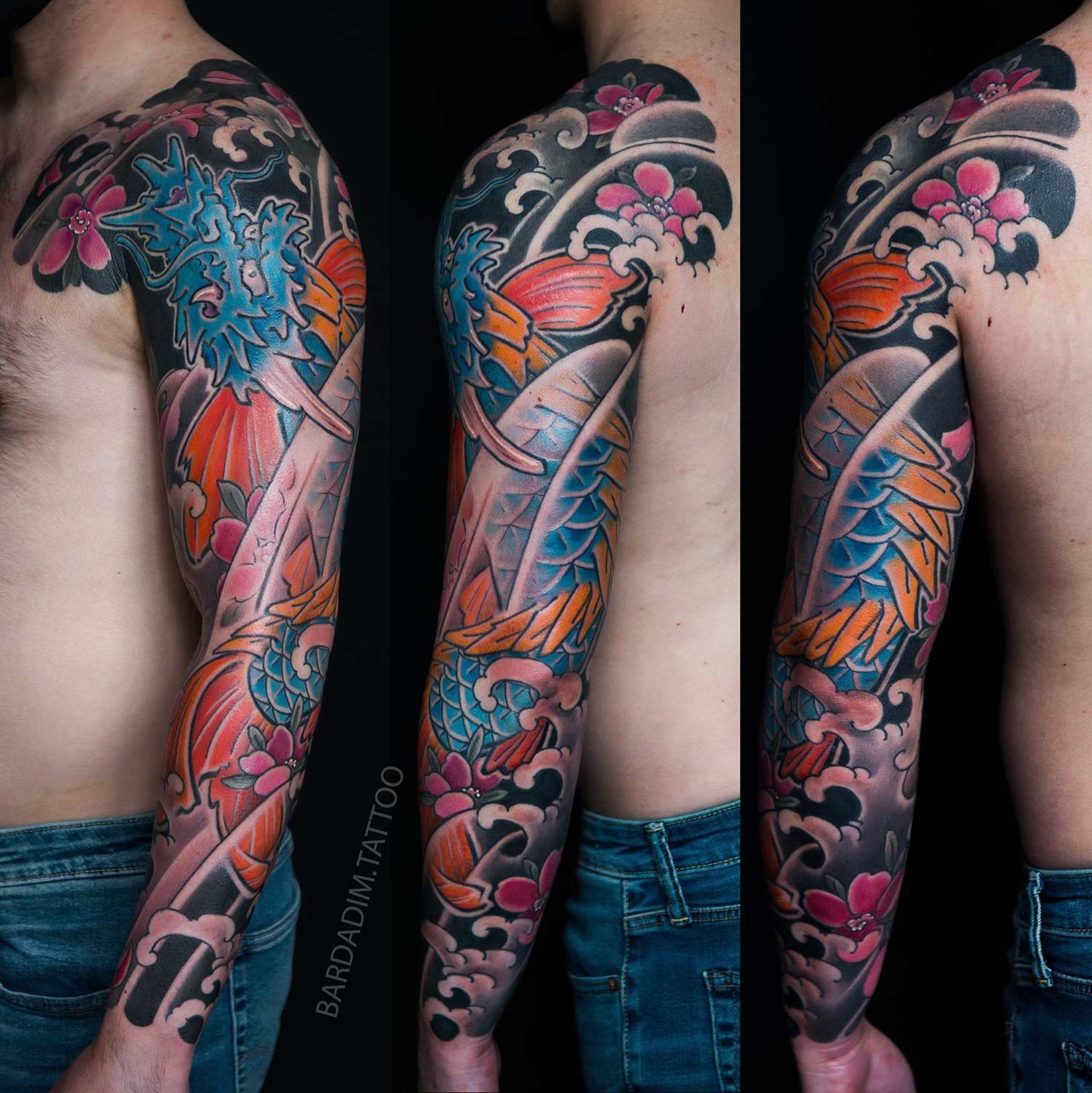
Most clients request a koi swimming upward, referencing resistance against the current. Anatomically, this choice leaves very limited compositional freedom. A stable head-up sleeve requires:
- One clearly readable koi
- Continuous directional water
- A shoulder-to-forearm flow that respects arm rotation
There is essentially one structurally sound solution for this layout. Deviations often compromise long-term balance.
Why One Sleeve Should Contain One Koi
A frequent request is to place two or more koi on one arm. The problem is space. A sleeve does not provide enough surface area to maintain:
- Clear focal hierarchy
- Proper water structure
- Clean breathing room
- Stable aging over decades
Multiple koi create competing focal points and weaken the ascent narrative. In traditional logic: One sleeve - one main subject.
Common Mistakes in Koi Tattoos
The popularity of koi tattoos often leads to design decisions that weaken the composition over time. Many ideas look appealing in sketches or small images online but fail when translated onto the body.
Some of the most common issues include:
Too many main subjects
A sleeve that contains several koi or multiple dominant elements quickly loses hierarchy. In traditional irezumi, a strong composition usually revolves around one primary subject.
Mixing koi and dragon without transformation logic
Placing a koi and a fully formed dragon in the same sleeve often breaks both the narrative and the visual balance. If transformation is the theme, the correct solution is usually a transitional form such as Ryuugyo.
Overloaded backgrounds
Highly detailed waves, excessive wind bars, and dense secondary motifs can overpower the koi itself. Water and background elements should guide movement, not compete with the main subject.
Ignoring body structure
A koi that does not follow the natural flow of the arm or leg will appear static. Traditional irezumi compositions are built around anatomy, allowing the tattoo to move with the body.
Strong koi tattoos rely on clarity, hierarchy, and controlled restraint. When these principles are respected, the design remains readable and powerful for decades.
Koi and Dragon in the Same Sleeve
Another common idea is to combine koi and dragon in one tattoo to represent the Dragon Gate story.
In practice, this fails for two reasons.
First, symbolic contradiction. If the koi transforms into a dragon, showing both fully formed weakens the narrative of transformation.
Second, physical limitation.
A properly executed koi requires space. A properly executed dragon requires more. Combining both compresses the design and sacrifices clarity.
The Correct Transformation Approach: Ryuugyo
A stronger solution is Ryuugyo - the transitional form between koi and dragon.
Instead of placing two separate main subjects, the transformation is shown within one unified body. This preserves hierarchy and respects the story.
See:
Koi-Dragon. Mystical Creature of Japanese Art ➜
Water as Structural Framework
Water is not decoration in a koi sleeve. It determines direction, rhythm, and separation of zones. When water becomes excessive detail, the koi loses dominance. When water is simplified and controlled, the fish becomes powerful and readable from distance.
In many cases, spiral or restrained water works better than hyper-detailed wave structures.
Key Concepts in Koi Tattoo Symbolism
One of the most important legends connected with the koi tells of a fish that swims upstream and successfully climbs the Dragon Gate waterfall. According to the story, the koi that reaches the top transforms into a dragon. In tattoo symbolism this legend represents perseverance, determination, and personal transformation.
Head-Up Composition
Many traditional koi tattoos show the fish swimming upward. This direction symbolizes moving against the current of life and striving toward growth. In sleeve compositions this also works naturally with the anatomy of the arm, allowing the body of the fish to flow along the muscles.
Ryuugyo is a mythical creature representing the moment of transformation between koi and dragon. In tattoo design it allows artists to express the Dragon Gate legend within a single figure, without overcrowding a composition with both a koi and a dragon.
Koi Tattoo Placement
Koi tattoos work best in large anatomical compositions where movement can travel across the body.
The most common placements include:
• Half sleeve with chest extension
Small isolated koi tattoos rarely preserve the sense of movement that defines traditional irezumi composition.
Real Koi Projects
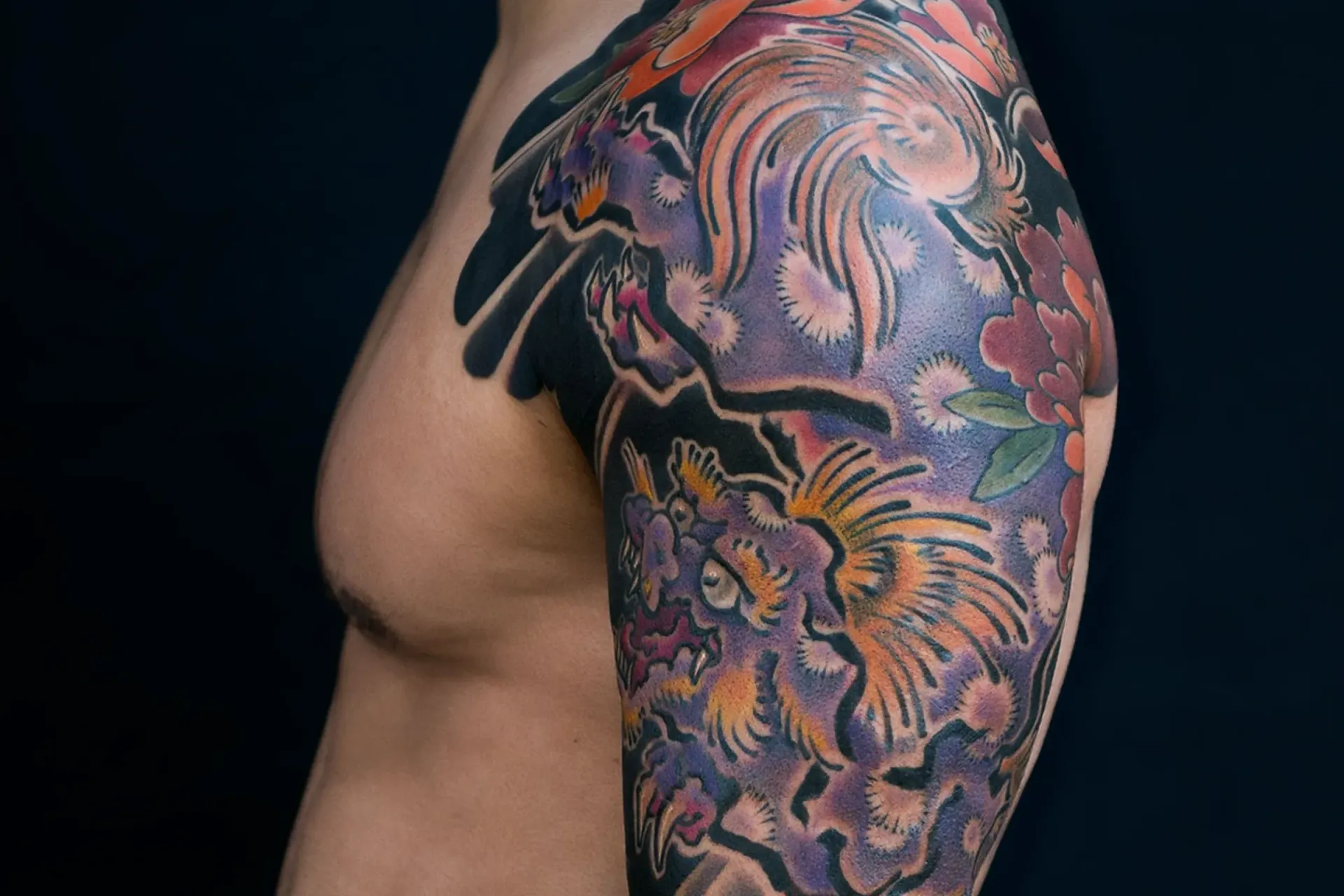
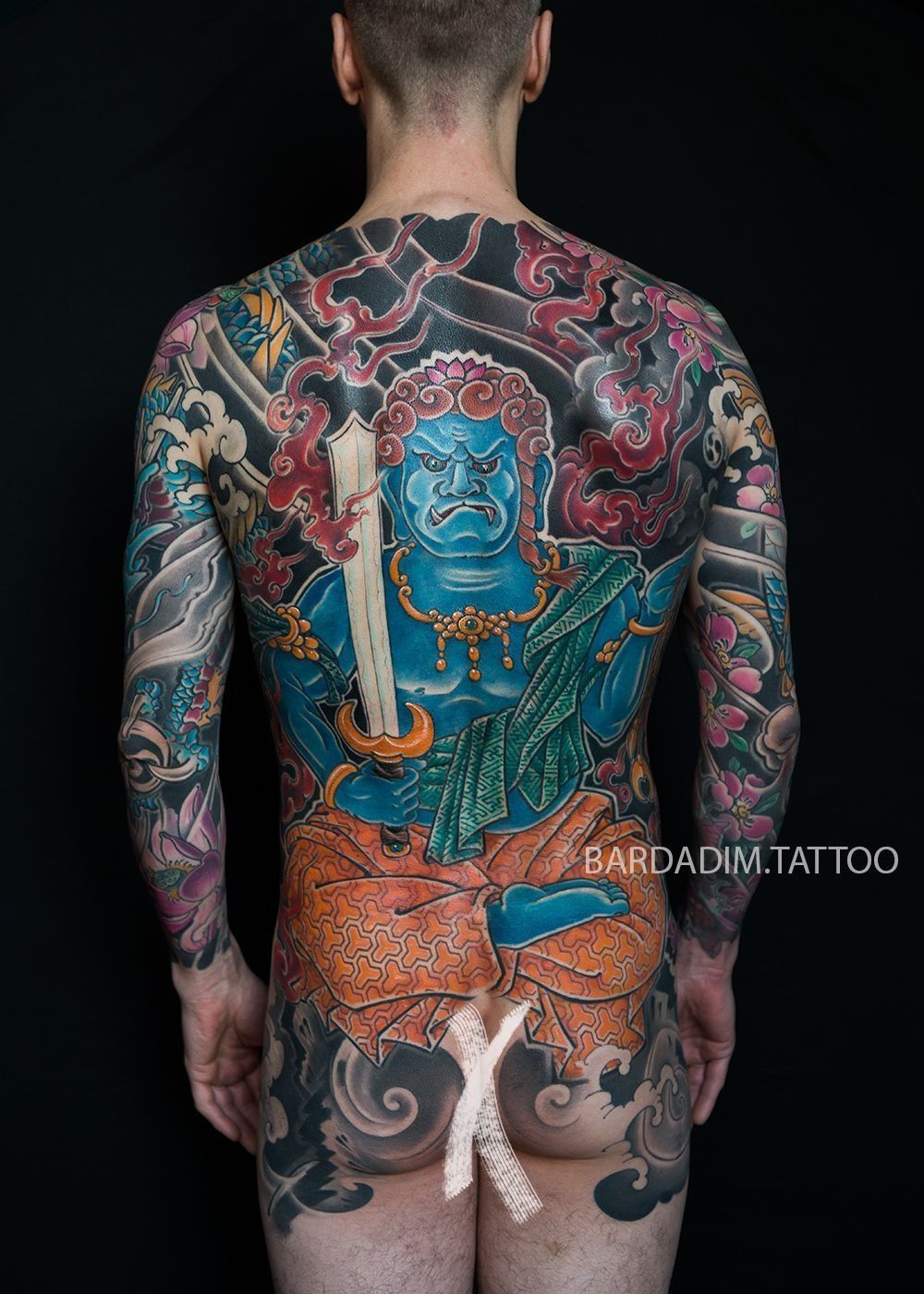
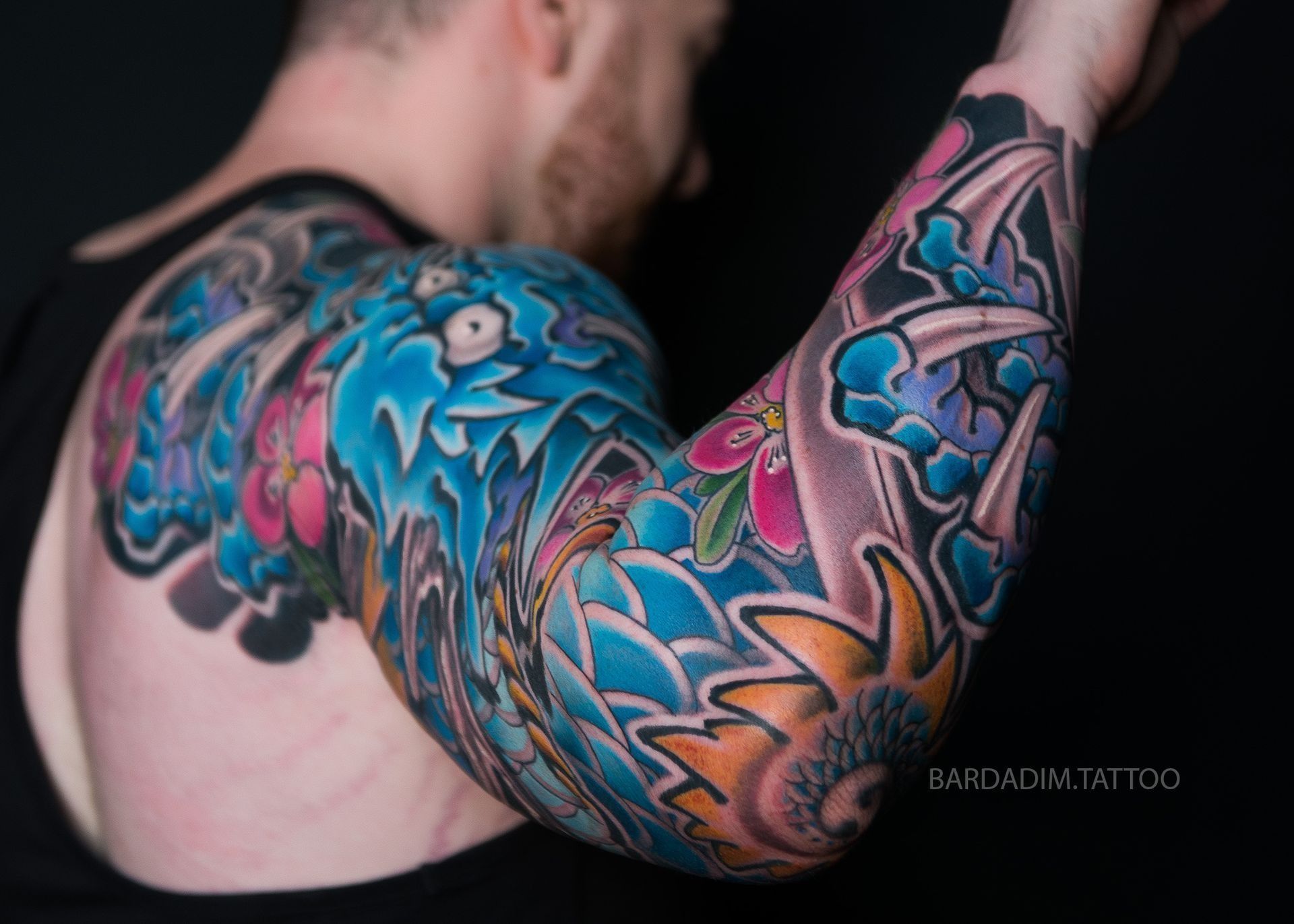
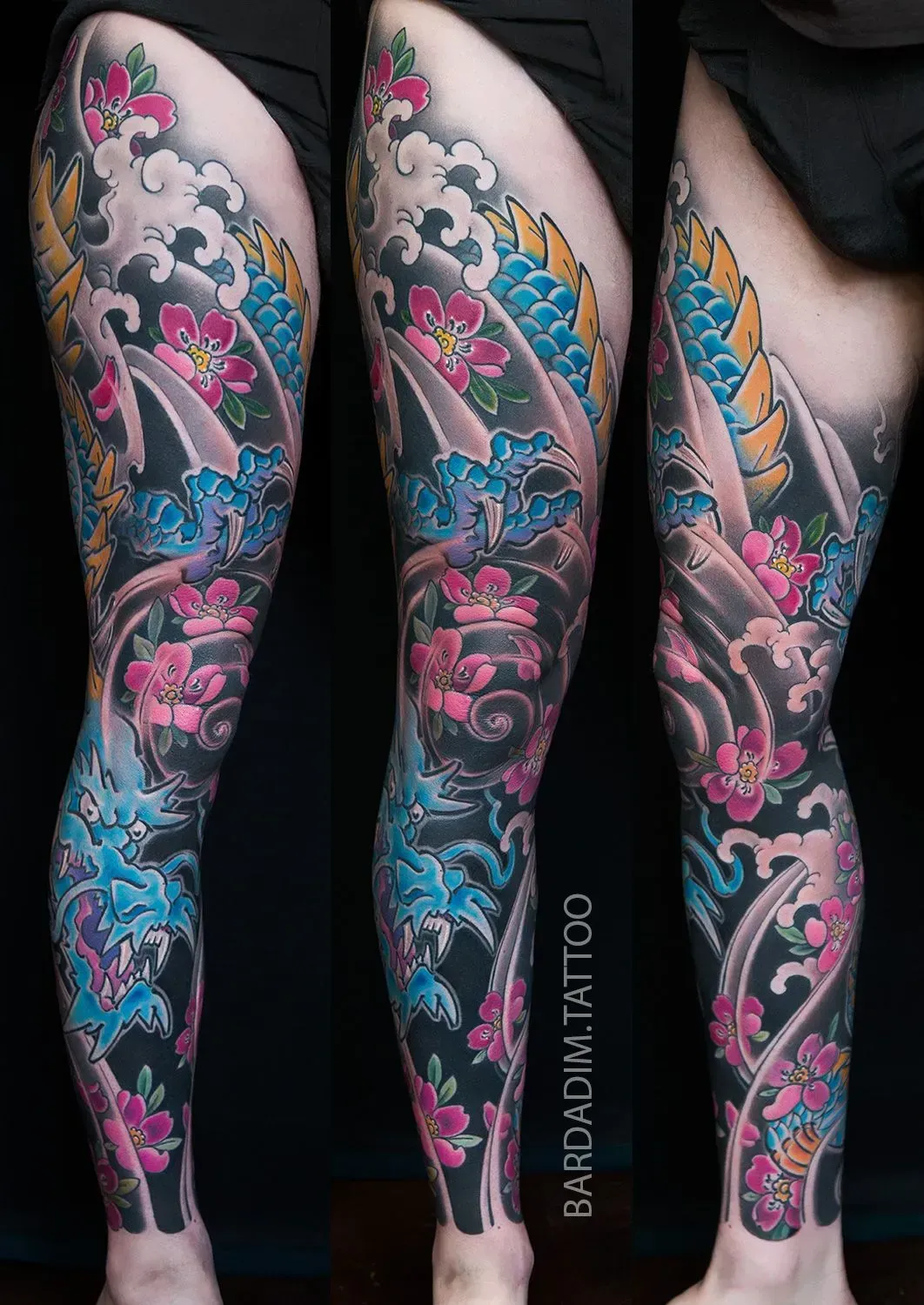
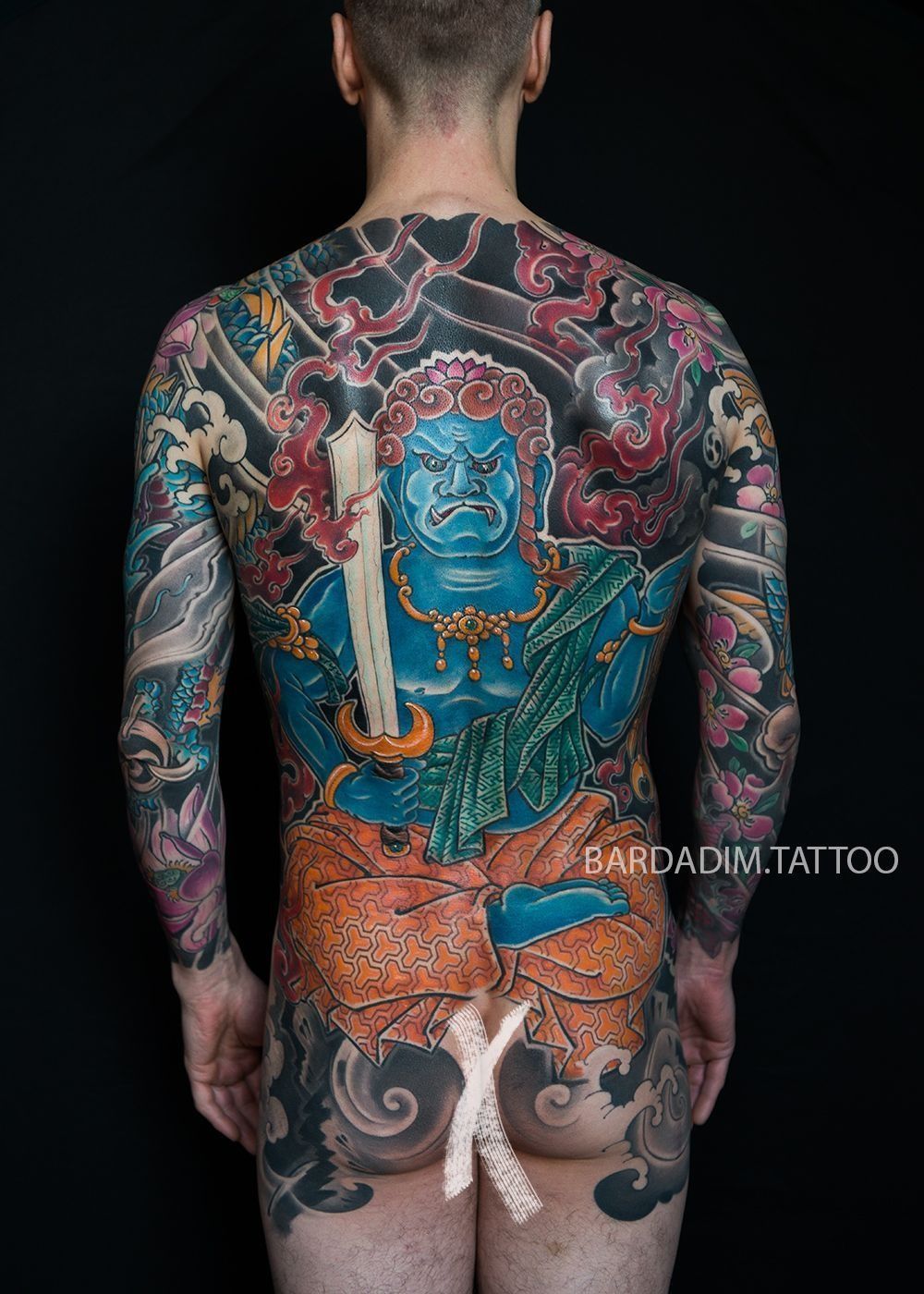
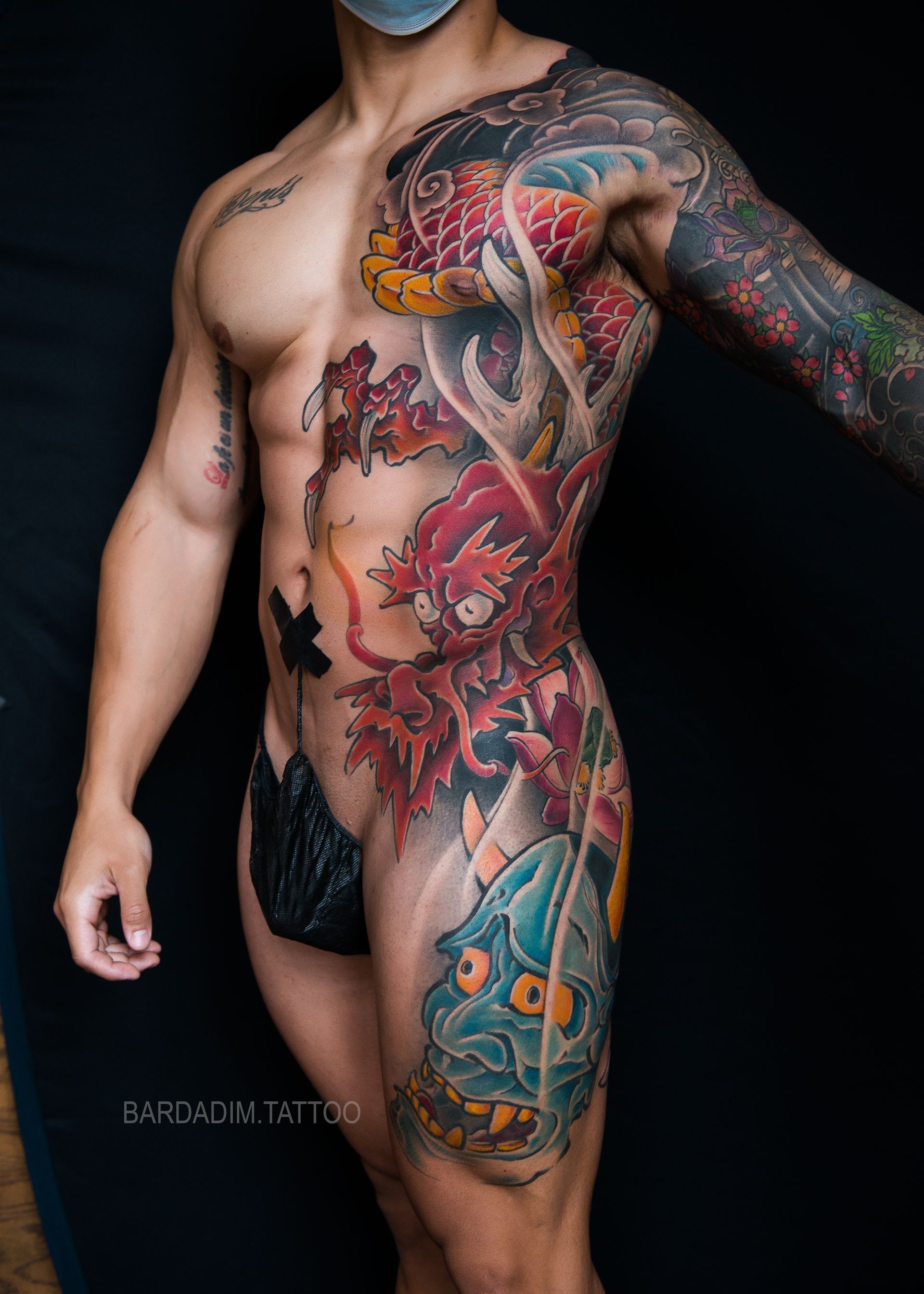
Below are examples of koi tattoo projects created in my studio. Each project shows how the koi motif adapts to different body compositions and supporting elements such as peonies, maple leaves, or water.
Explore these projects to see how traditional symbolism translates into real tattoo compositions.
Frequently Asked Questions
Does koi have to face upward?
No. Direction is secondary to structural stability.
Can I do two koi in one sleeve?
Usually not without sacrificing clarity and aging quality.
Can I combine koi and dragon?
Only through transformation logic such as Ryuugyo.
Final Note
A koi tattoo should not be built as a collage of ideas. It should be constructed as a complete irezumi composition that respects anatomy, symbolism, and time. If you are considering a koi sleeve, begin with a consultation. The concept must be developed before it is placed.
And about the artist:
If you want to learn more about my approach to Japanese tattoo composition, see the Artist page ➜
Planning a koi sleeve?
A koi tattoo should be developed as a full composition, not as isolated imagery. If you are considering a koi sleeve or large-scale irezumi project, begin with a consultation.
from The Symbolic Way
“Symbols speak where words fall silent.”