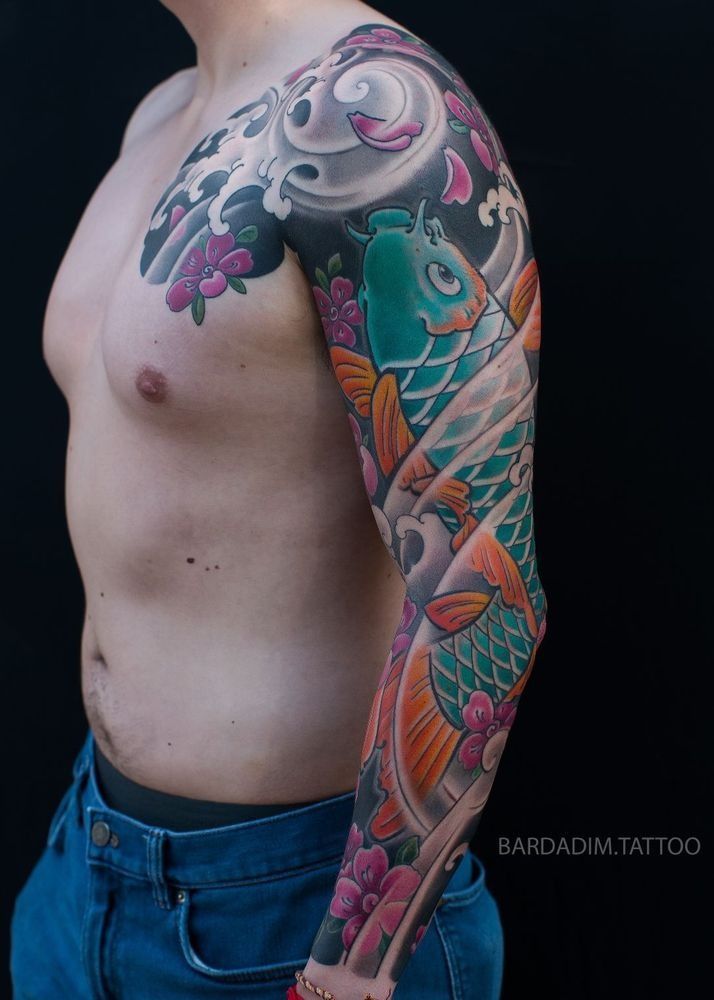
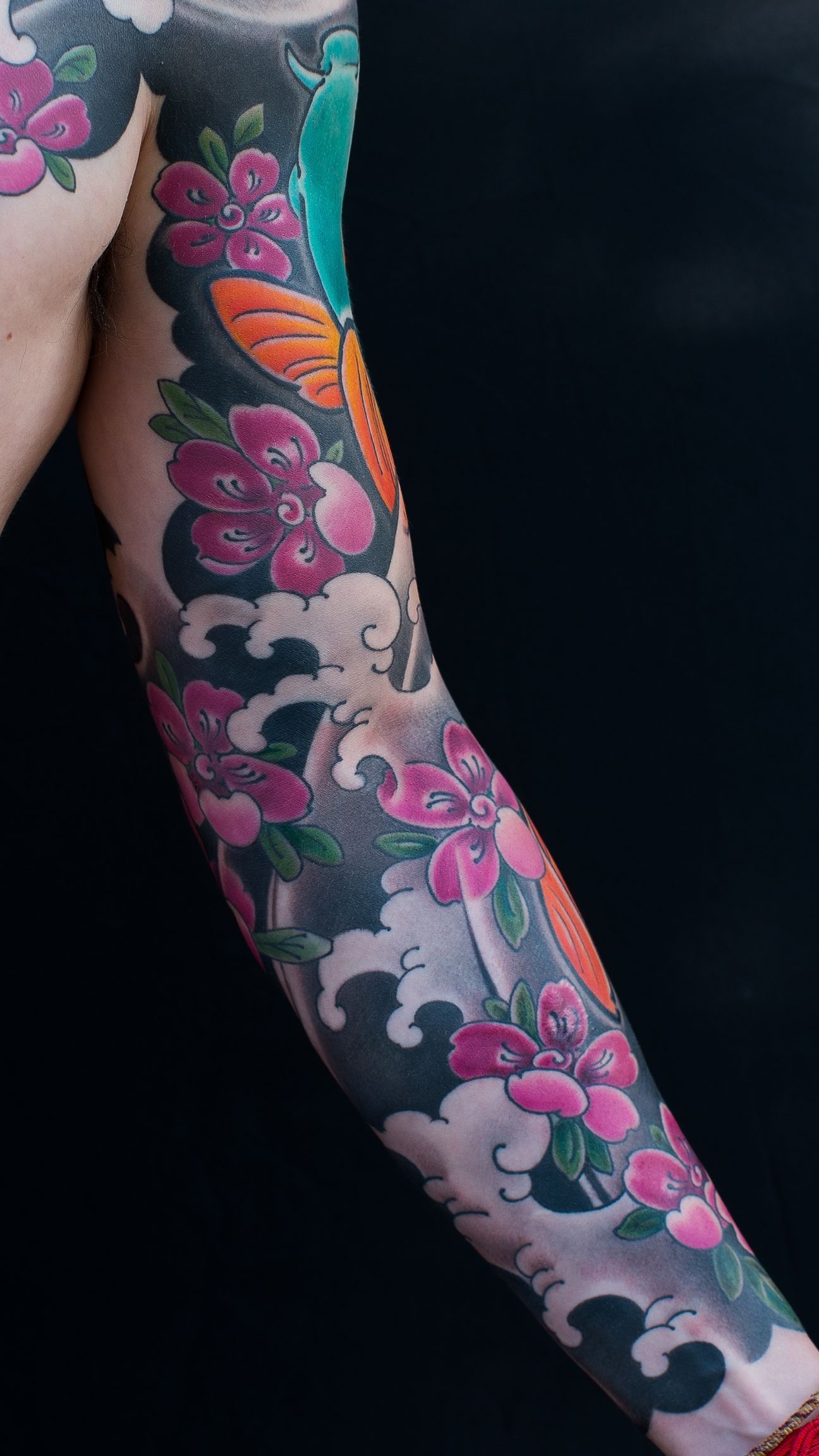
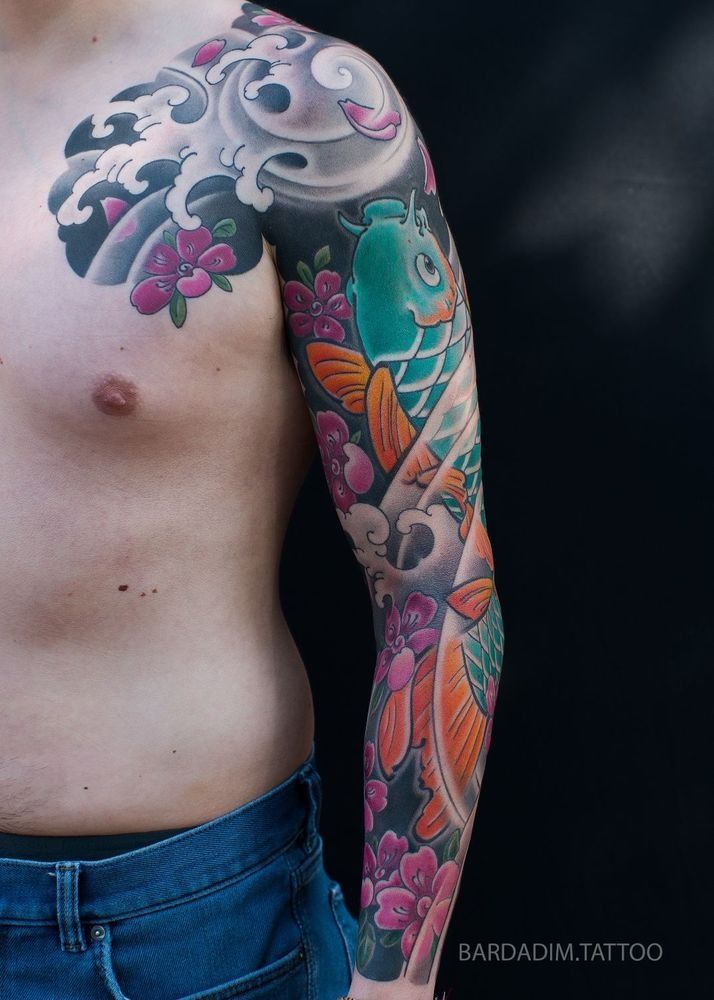
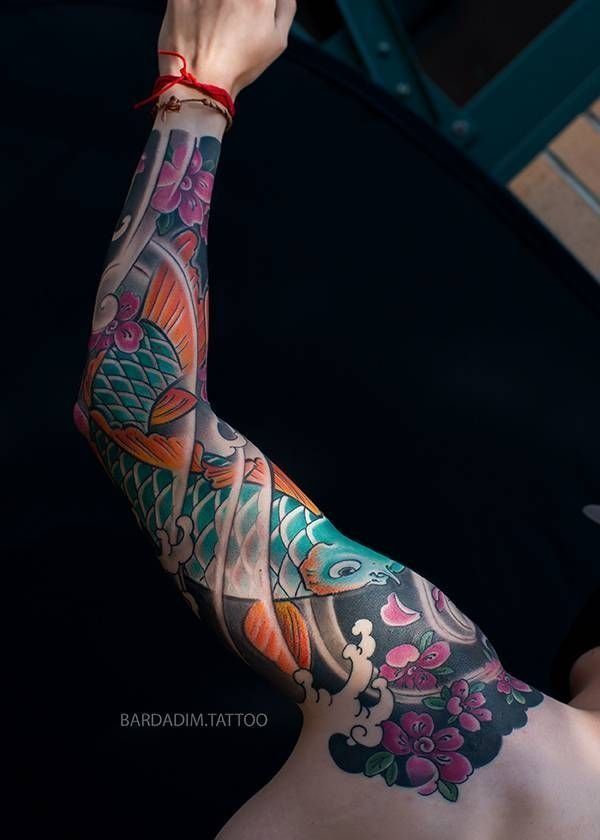
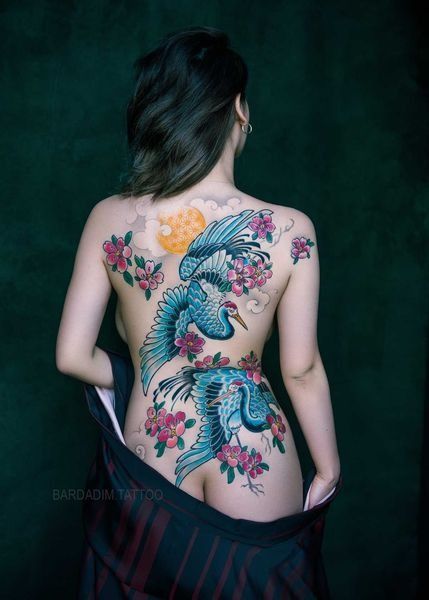
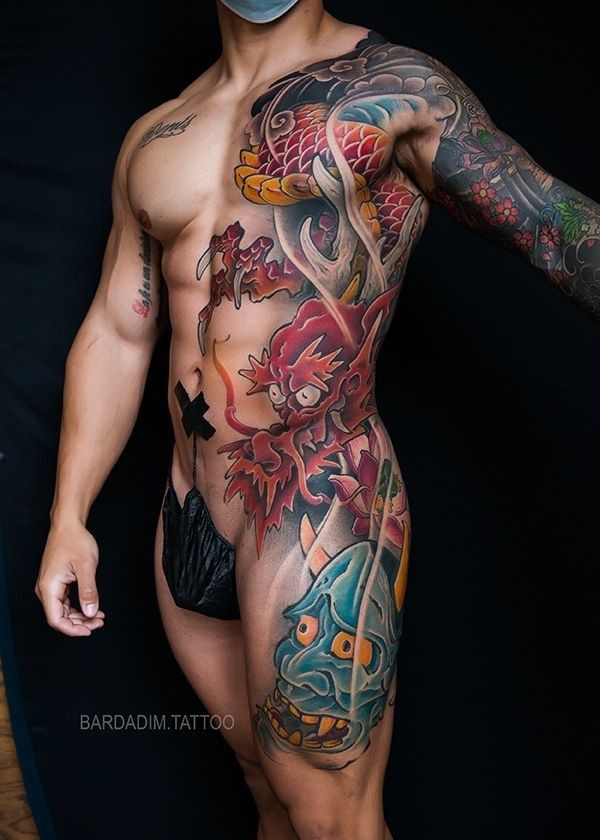
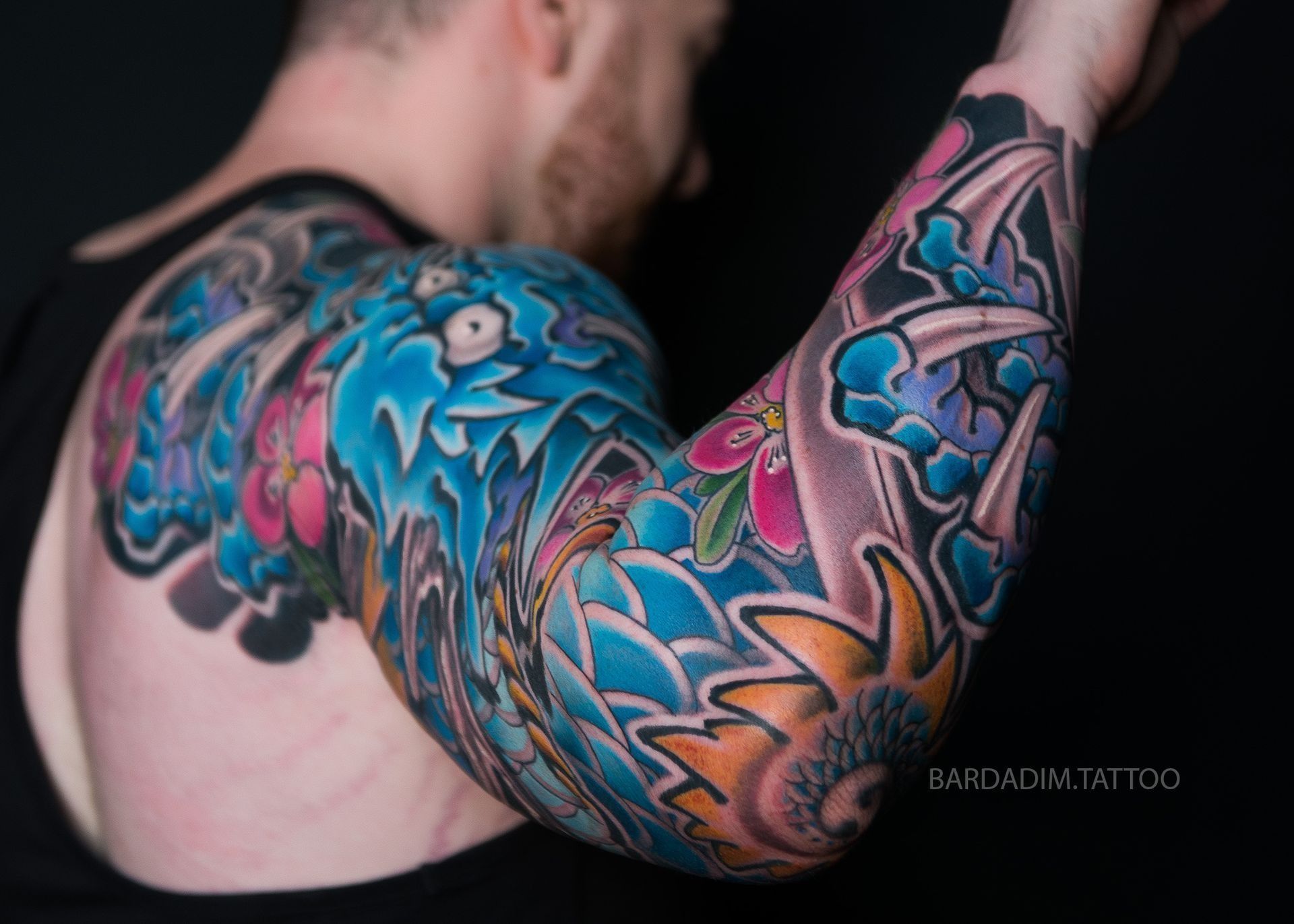
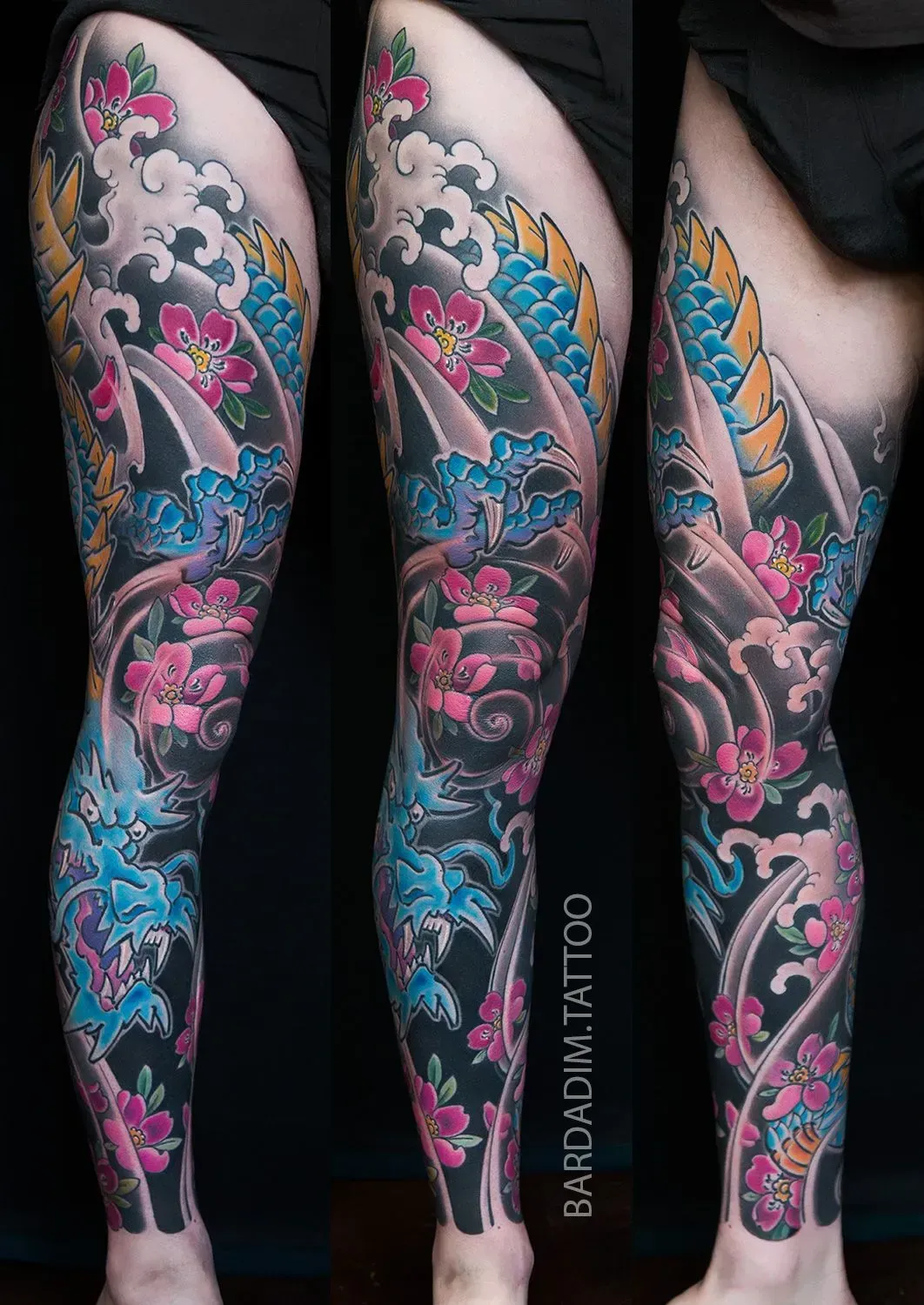
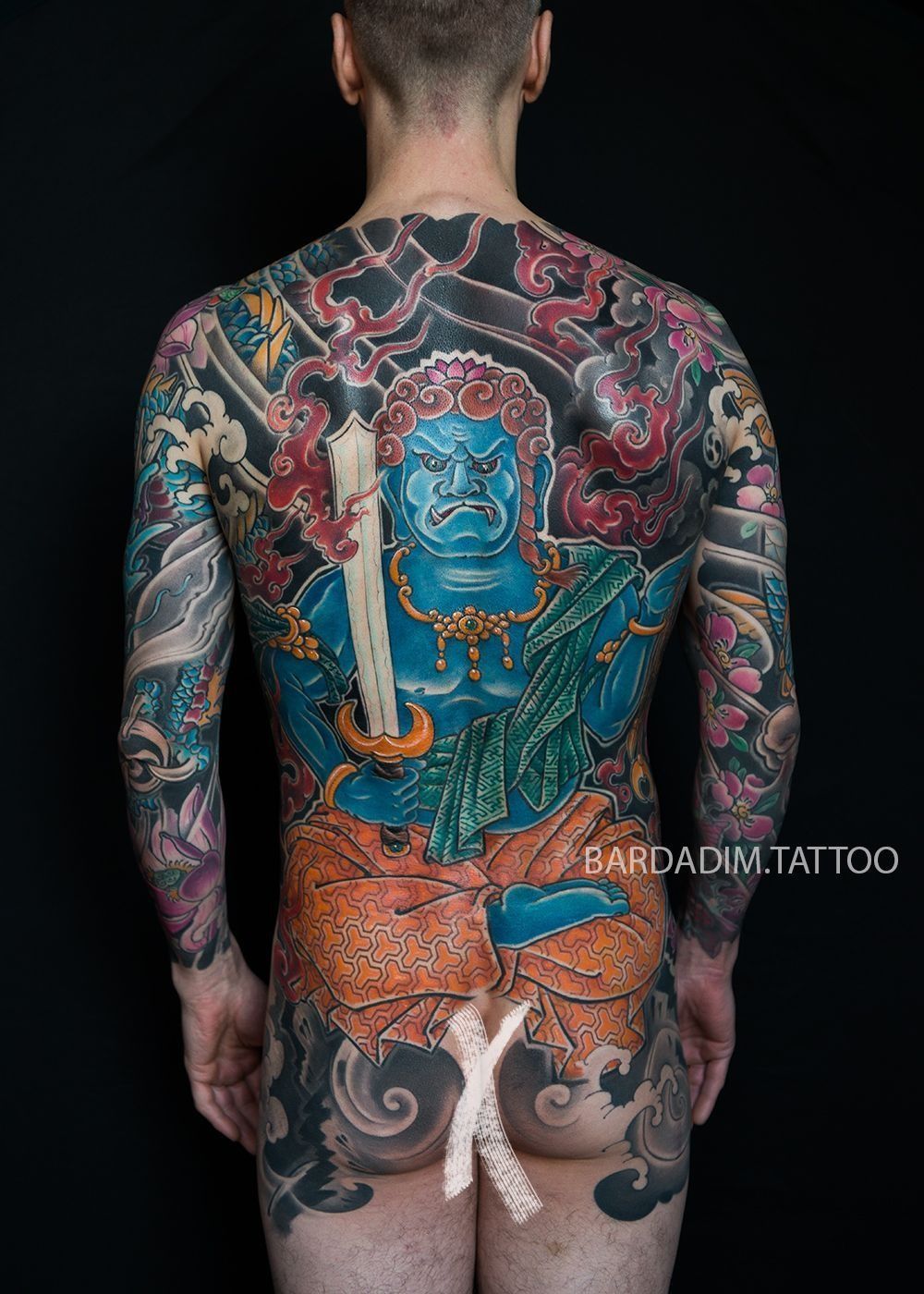
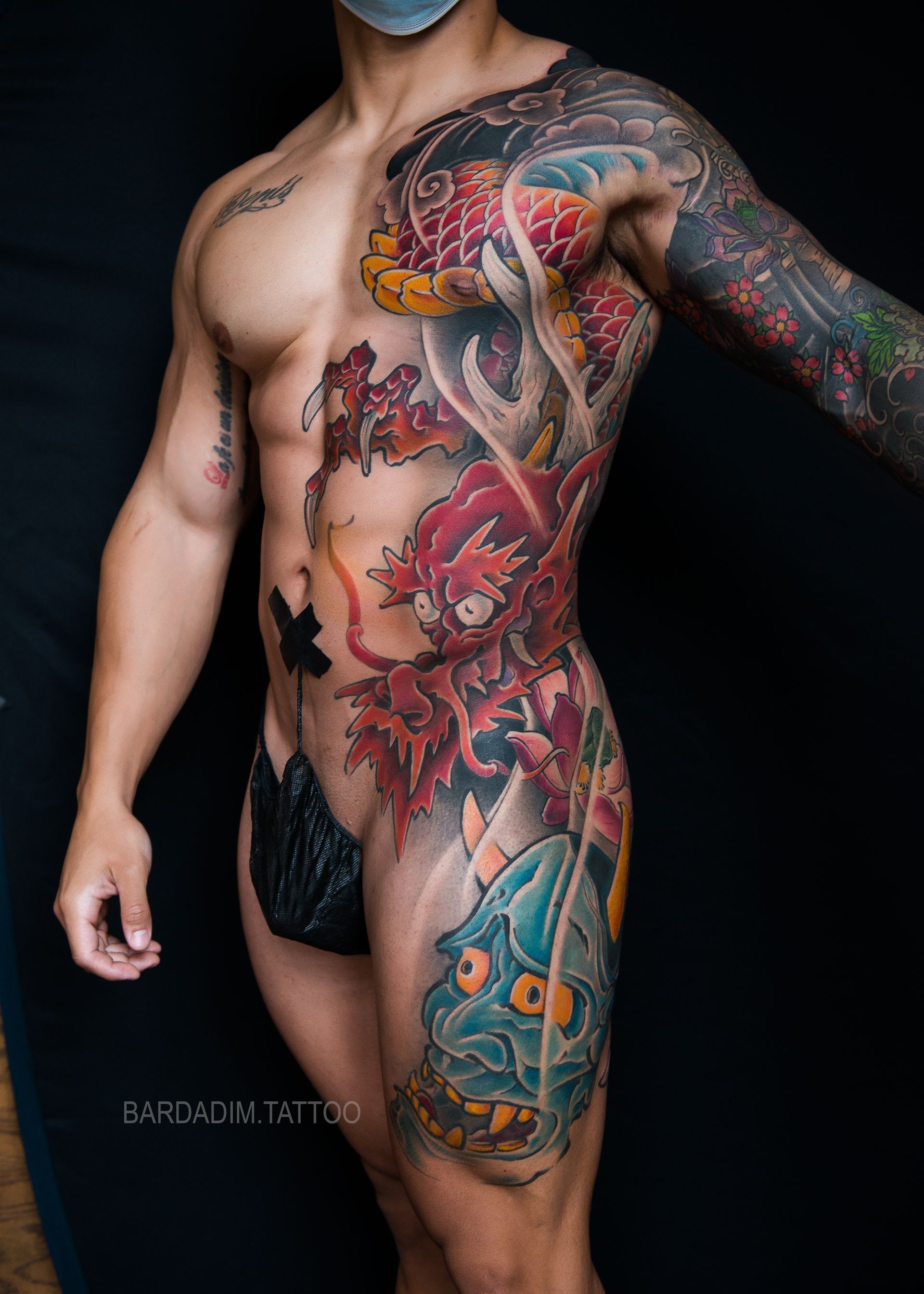
A hallmark ofclassic Irezumi tattoosis their harmony with the body. Unlike many modern designs that work as isolated patches,traditional Japanese tattoo compositiontransforms the human form into a unified canvas, with each part of the tattoo flowing naturally along anatomy.
Shudai
The Main Motif
The shudai tattoo motif is the focal point of every composition.
Dragons, koi fishes, masks, warriors, and deities embody strength, wisdom, and transformation.
The Shudai establishes the story that the rest of the tattoo builds upon.
Composition in Irezumi is never random, it is a carefully constructed system where shudai, keshoubori, and background form a seamless flow across the body.
Irezumi Layouts
Entire body beyond
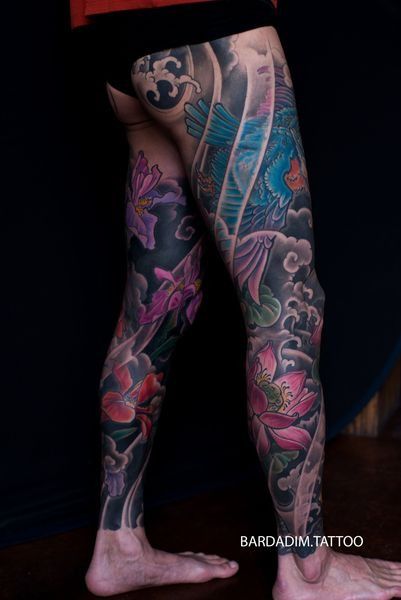
Irezumi flows across the whole body. Explore layouts for legs, back, body suits, and more to see where your story may unfold.
The Irezumi Style Section
Related Pages
Explore other aspects of traditional Japanese tattoo style and learn more about Irezumi layouts, borders, and philosophy.
HIKAE
SHOULDERS AND ARMS
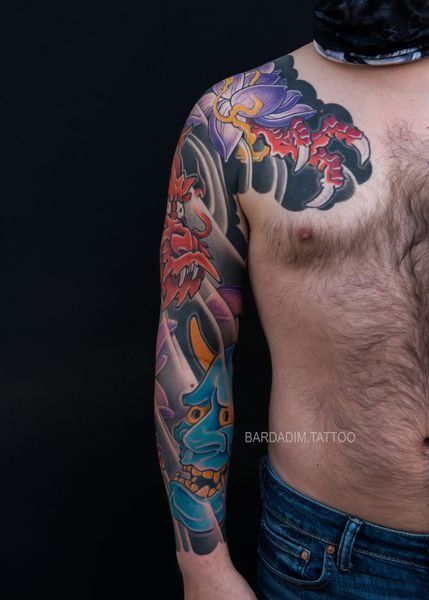
The term ‘Hikae’ means “to restrain oneself,” reflecting this classic tattoo layout. Hikae covers the shoulders and arms, allowing tattoos to be easily concealed with a v-neck shirt. Three common types exist: ‘light,’ covering about one-third of the chest; ‘shallow,’ which stays below the chest muscle; and ‘deep,’ extending over the chest and sometimes around the nipples.