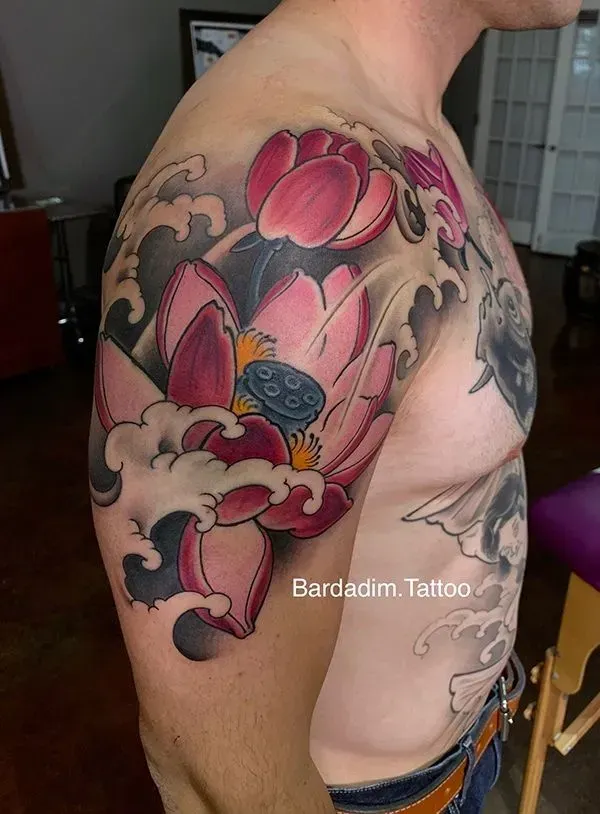
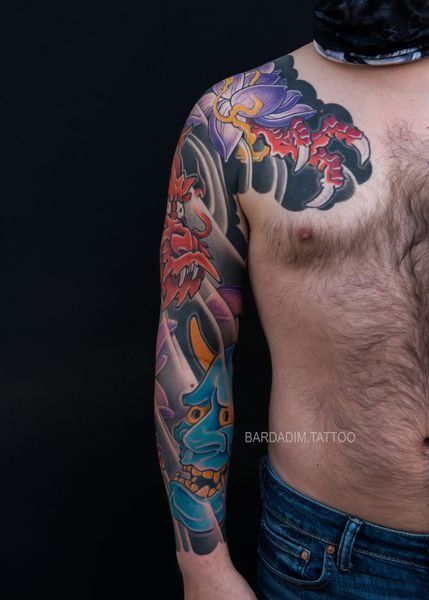
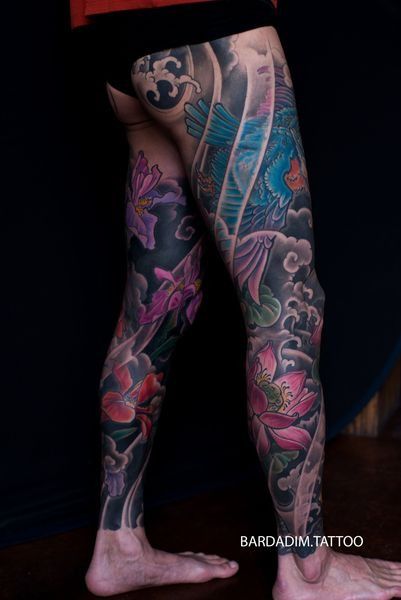
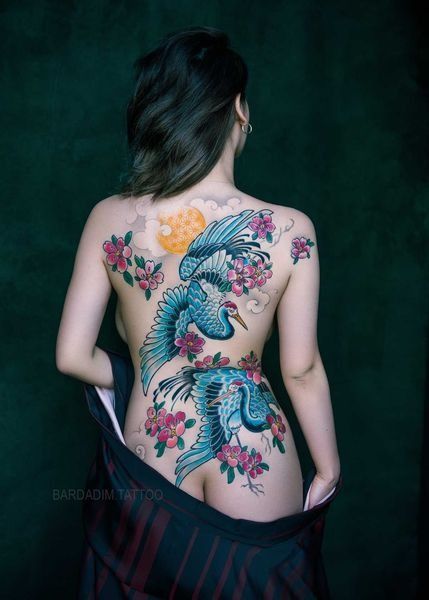
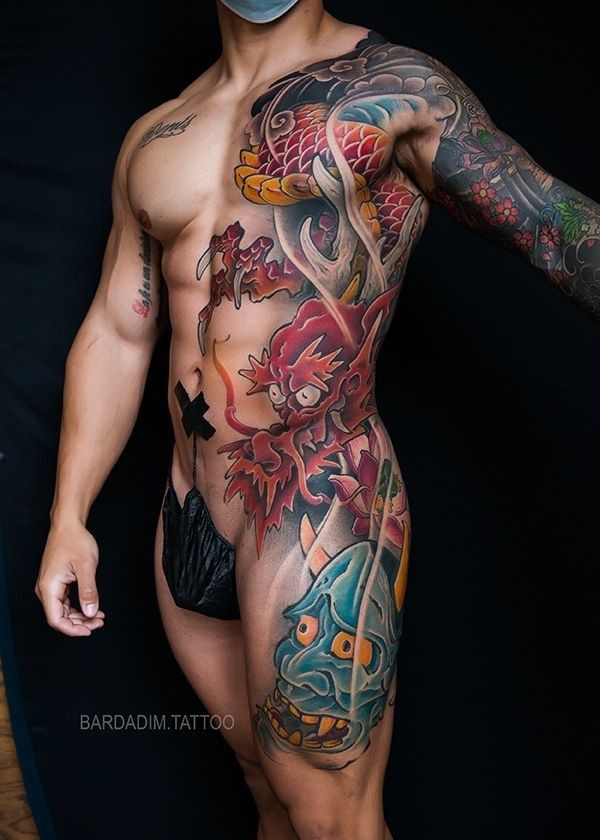
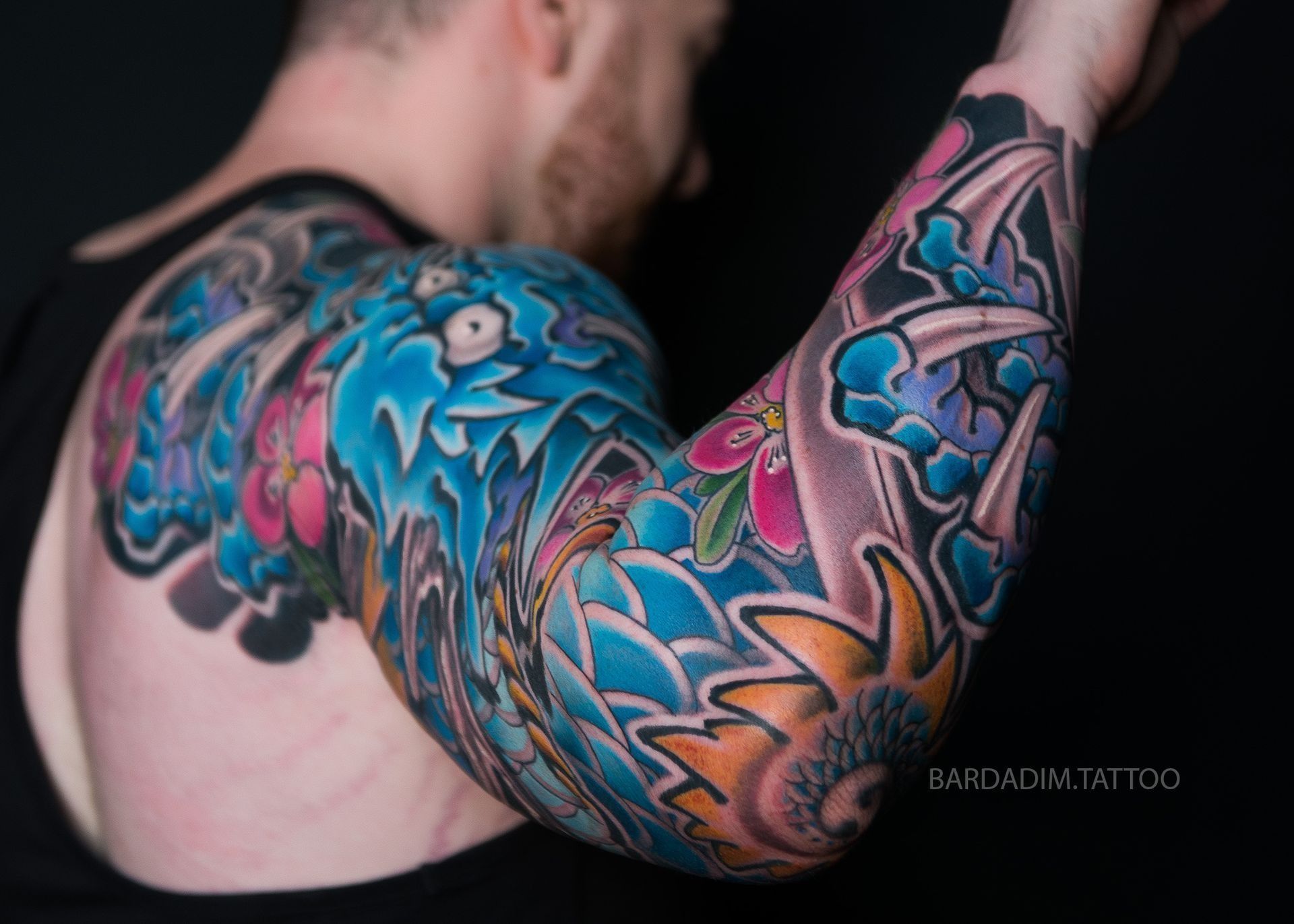
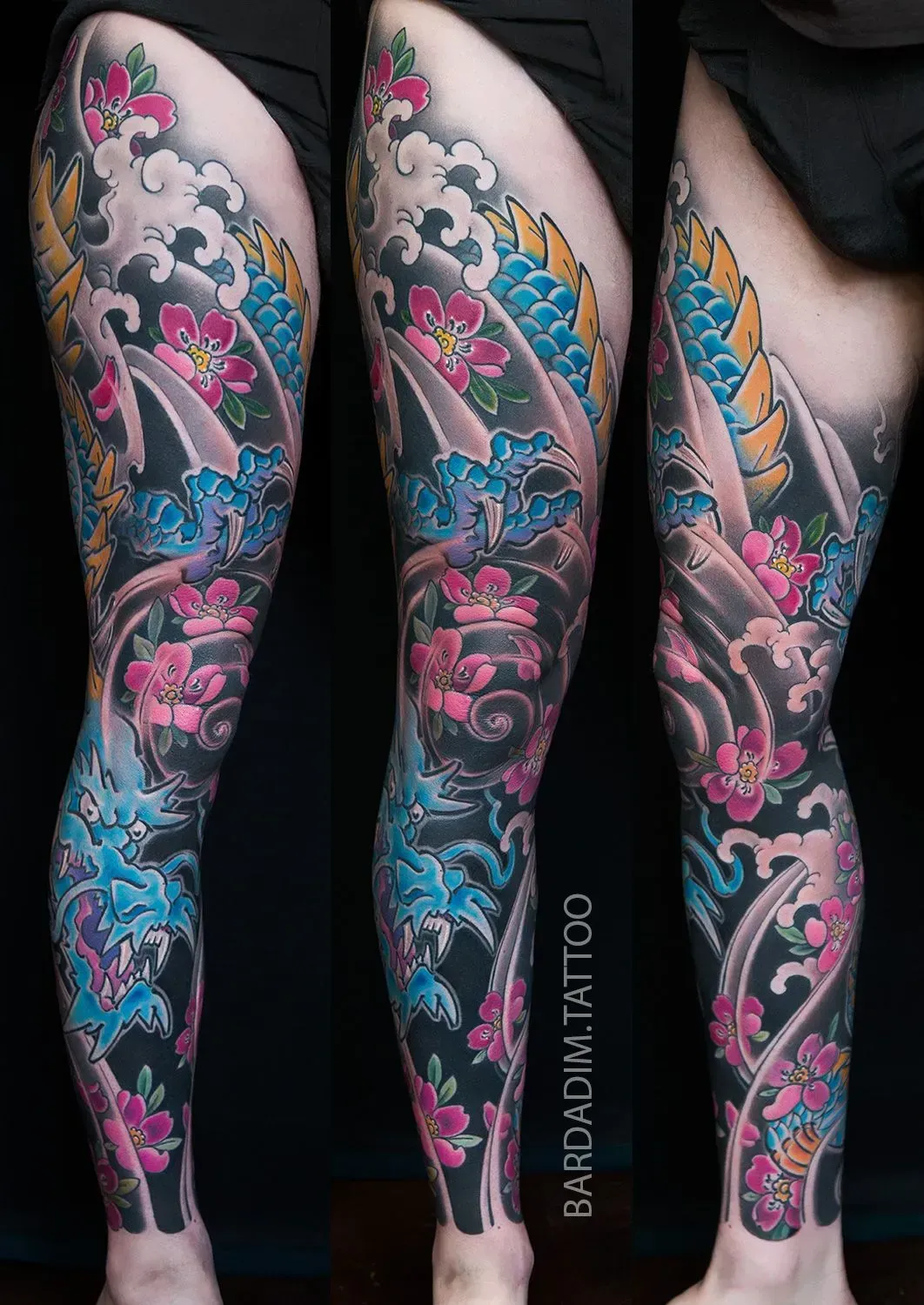
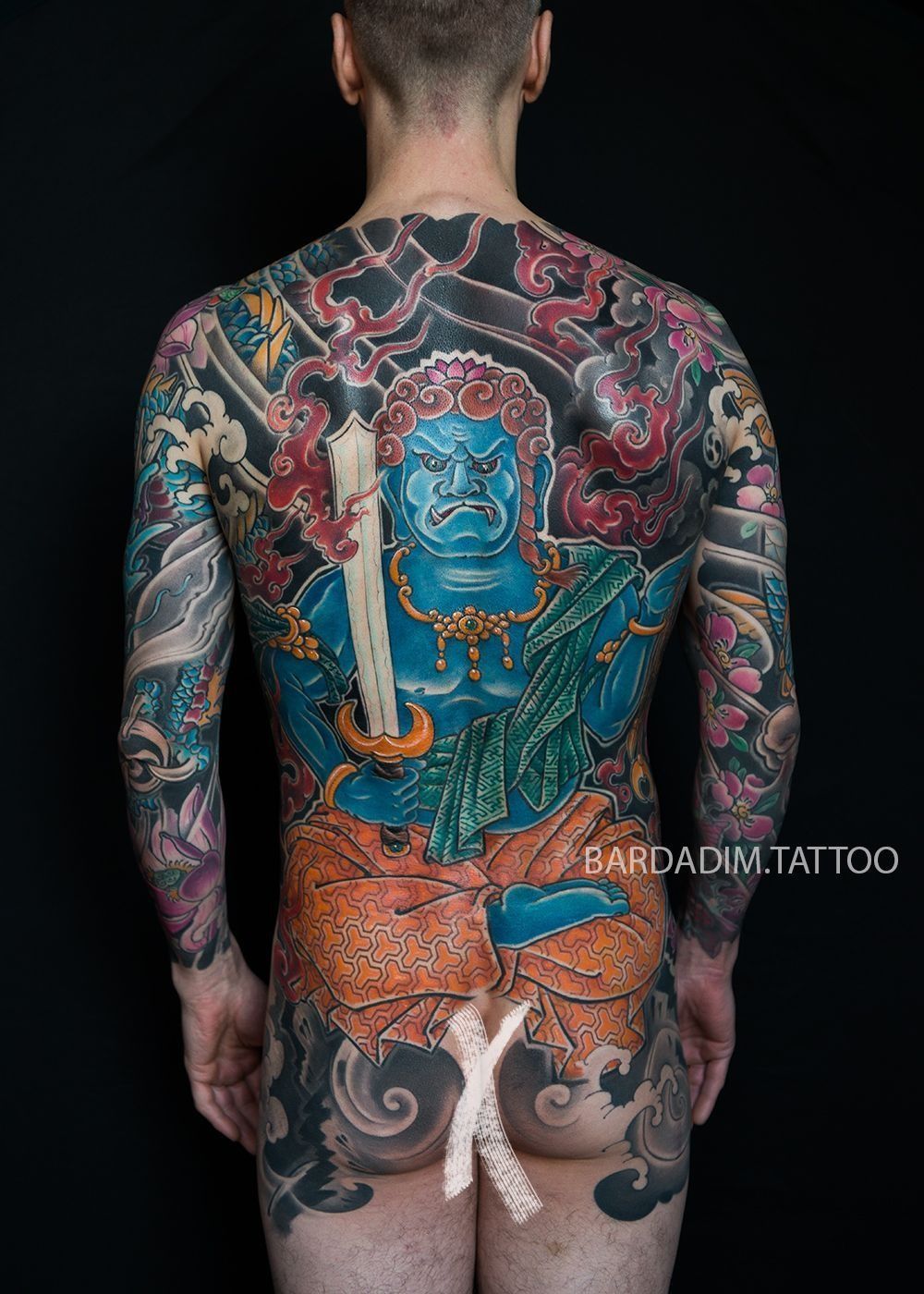
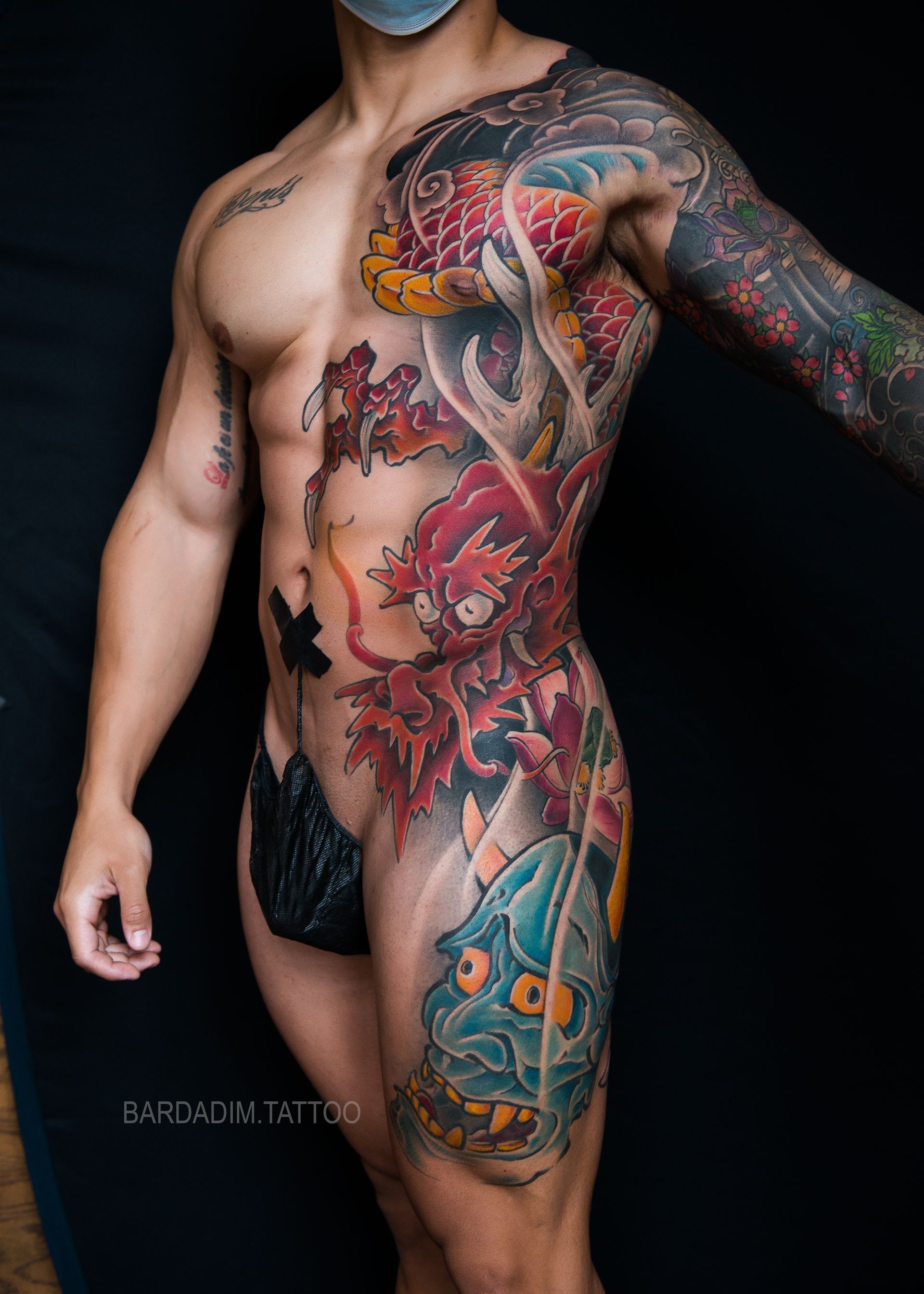
One of the most distinctive elements of traditional Japanese tattoo style is the use of Mikiri. In Irezumi, mikiri tattoo borders define the edge between tattooed and bare skin, giving each piece a sense of completion and visual balance.
Mikiri completes Gaku-bori framing, one of the core Irezumi styles
Mikiri Borders
Mikiri borders are not simply edges - they complete the rhythm of Irezumi. From the bold lines of Bukkiri to the soft fade of Jari, each type carries its own mood and role in Japanese tattoo composition.
In traditional Japanese tattooing, sleeve layouts must follow the body’s natural muscle structure. We honor this principle and do not offer designs that disregard these anatomical limits.
The term ‘Hikae’ means “to restrain oneself,” reflecting this classic tattoo layout. Hikae covers the shoulders and arms, allowing tattoos to be easily concealed with a v-neck shirt. Three common types exist: ‘light,’ covering about one-third of the chest; ‘shallow,’ which stays below the chest muscle; and ‘deep,’ extending over the chest and sometimes around the nipples.