Bodysuit
The ultimate form of traditional Irezumi. It's a single, flowing composition that unites the body in one harmonious work of art.
A bodysuit, or
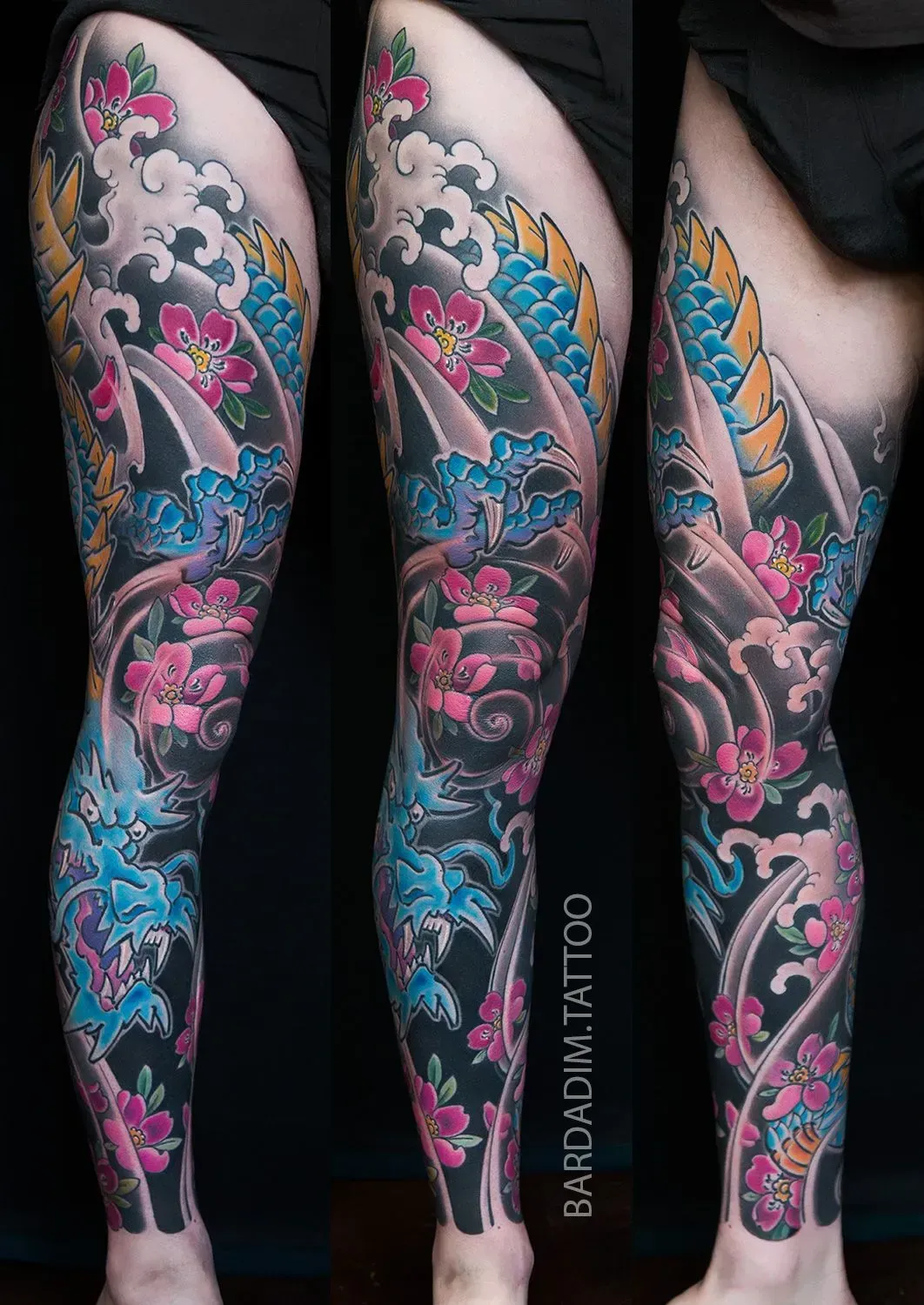
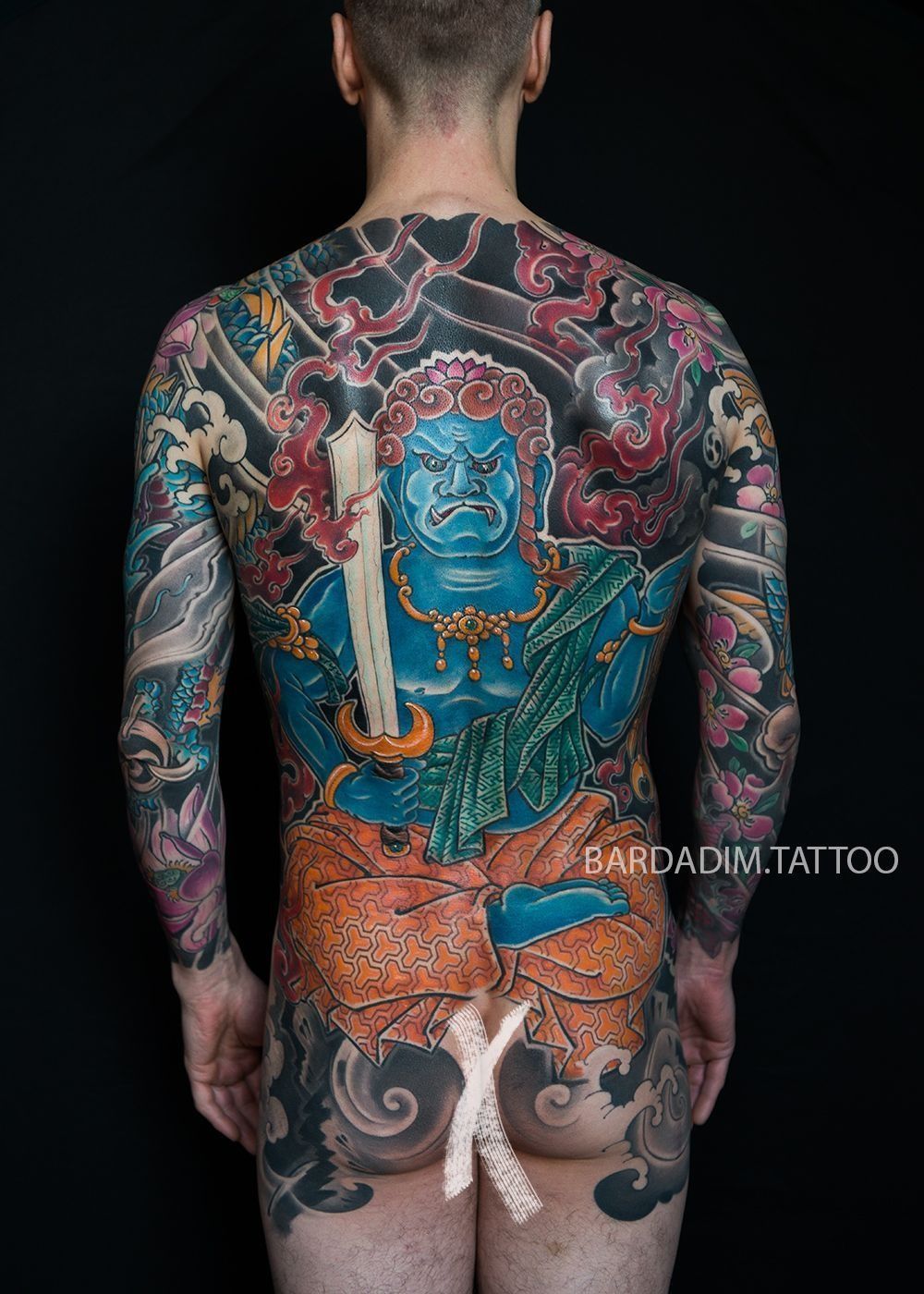
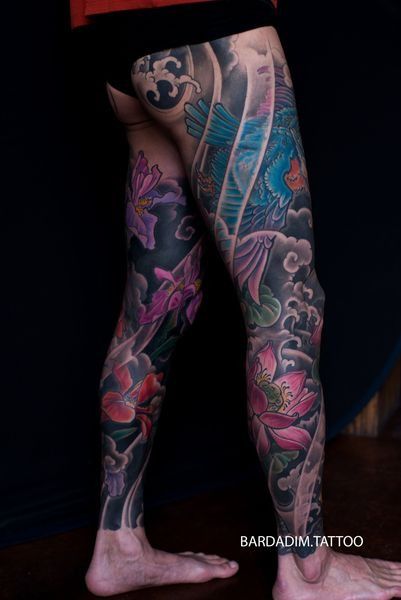
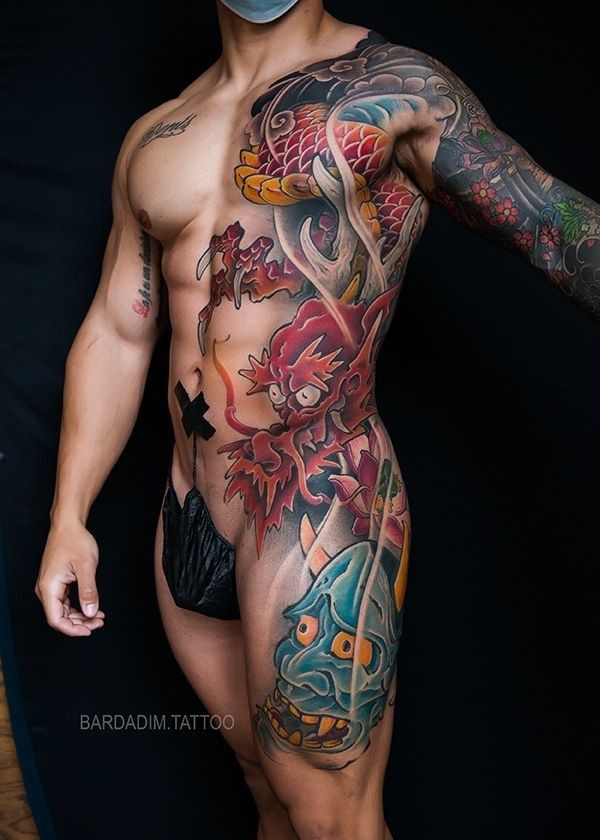
soushinbori, is a continuous tattoo composition planned as one unified artwork across the body. It begins with a strong backpiece and extends to sleeves, legs, and chest, while leaving intentional blank areas (nukibori) for balance and concealment. Framing edges (mikiri) and atmospheric backgrounds (gakubori such as waves, clouds, or wind bars) bind every element into a single, readable suit.
Concept
What is a Bodysuit?
This grand form of tattooing is not just decoration, but a statement of personal identity, cultural heritage, and the wearer’s commitment to a long and often challenging creative journey.
Bodysuit
Soushinbori - Full bodysuit with continuous coverage.
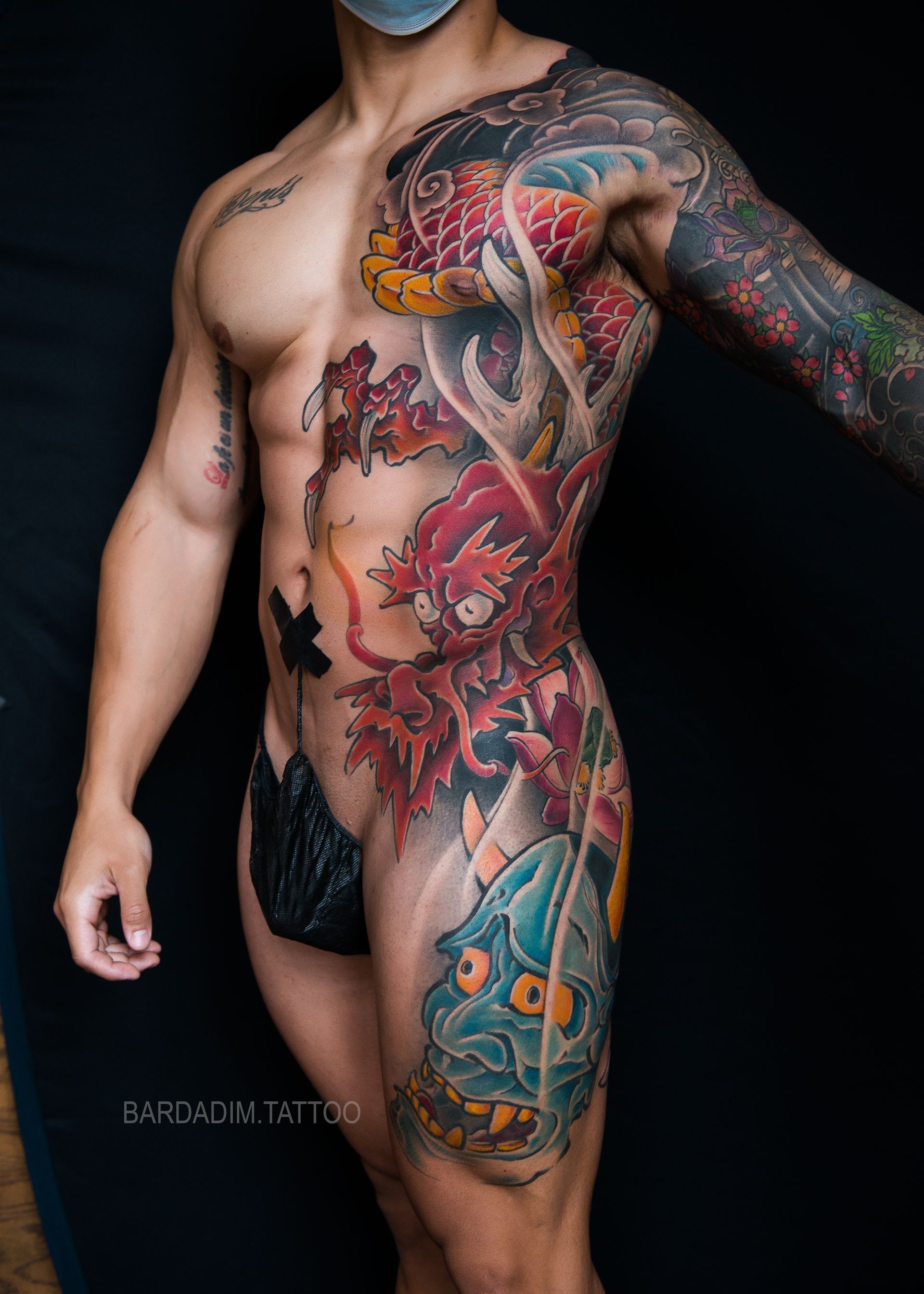
Munewari - “Split chest” layout, leaving a vertical blank strip at the front. Concealable and visually dramatic, it creates strong negative space.
Donburi - A Bold full body layout with fully filled front.
HIKAE
SHOULDERS AND ARMS
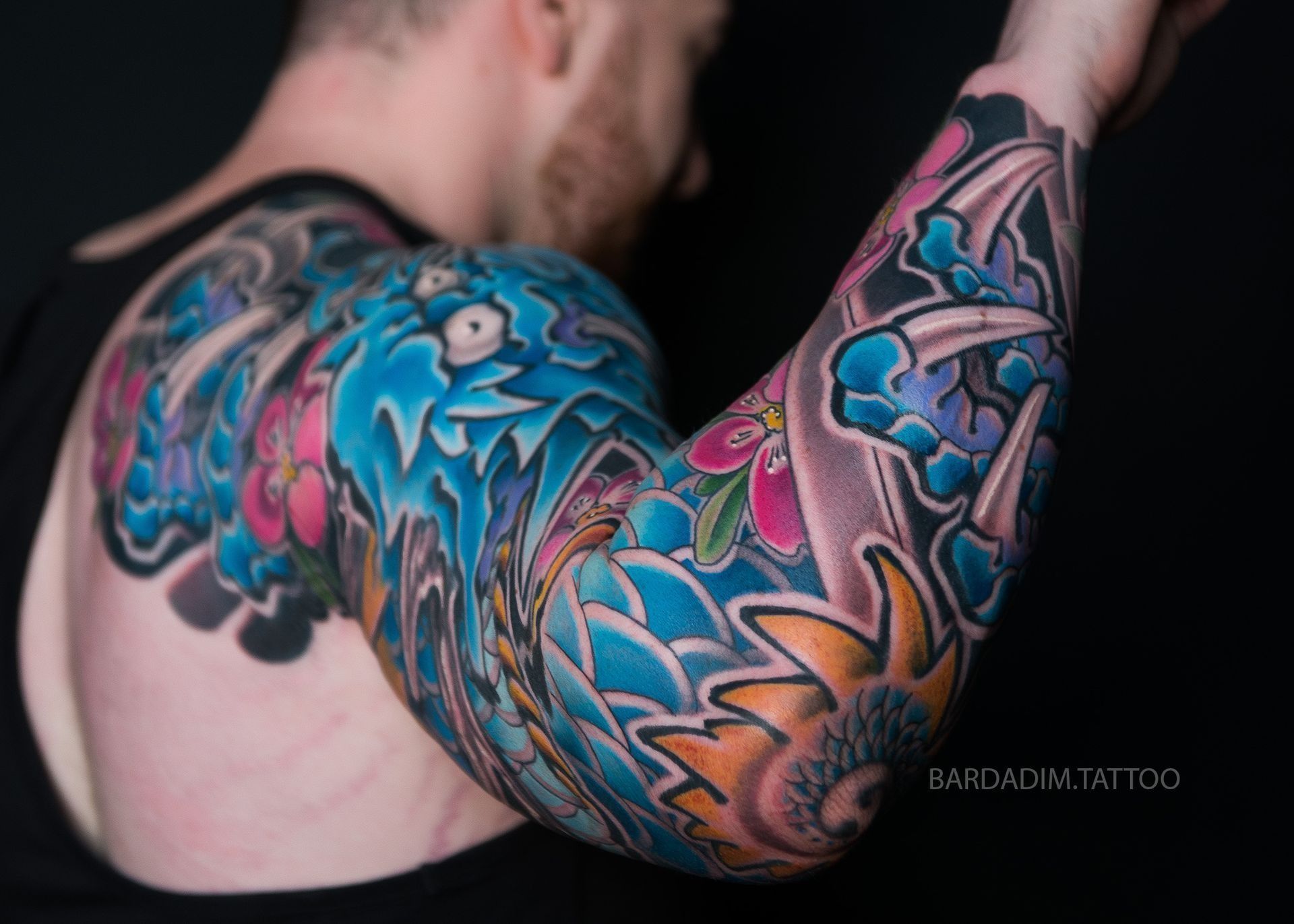
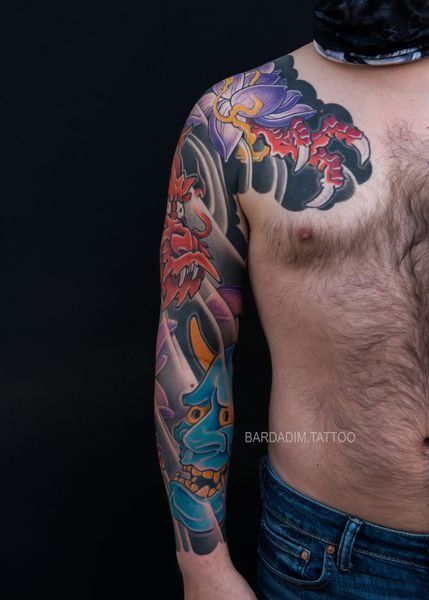
The term ‘Hikae’ means “to restrain oneself,” reflecting this classic tattoo layout. Hikae covers the shoulders and arms, allowing tattoos to be easily concealed with a v-neck shirt. Three common types exist: ‘light,’ covering about one-third of the chest; ‘shallow,’ which stays below the chest muscle; and ‘deep,’ extending over the chest and sometimes around the nipples.
How to Plan Correctly
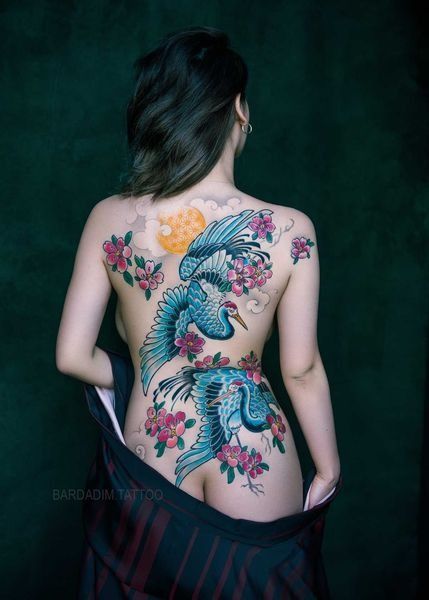
Always begin with the backpiece as the main focal point. Define the story, season, and central motifs there, then extend the composition with coherent gakubori and consistent mikiri so sleeves, chest panels (hikae), and leg panels follow the same rhythm.
For the most harmonious result, a bodysuit should be planned in full from the start, even if implementation happens gradually over multiple sessions. This ensures perfect flow, symmetry, and anatomical harmony throughout the suit.
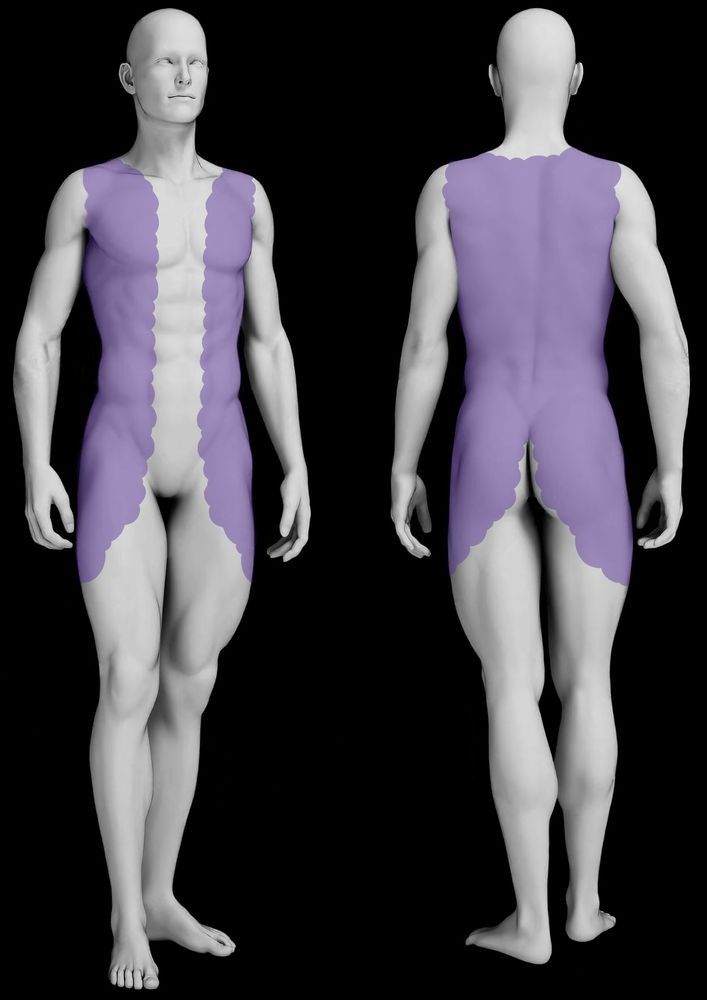
Anatomical Limits in Gaku-Bori Tradition
Shoulder & Arm Tattoo Boundaries
In traditional Japanese tattooing, sleeve layouts must follow the body’s natural muscle structure. We honor this principle and do not offer designs that disregard these anatomical limits.
F.A.Q.
Bodysuit Tattoos
What is a bodysuit tattoo in Irezumi?
A bodysuit (soushinbori) is a full-body composition that begins with a backpiece and extends to arms, legs, and chest, forming one continuous and balanced design.
What is the difference between Munewari and Soushinbori?
Munewari leaves a vertical blank strip on the chest for concealment, while soushinbori covers the body more completely. A closed front is often called donburi soshinbori.
How long does it take to complete a bodysuit?
Because of its scale and detail, a bodysuit requires many sessions spread over months or years. Careful planning from the start ensures smooth progress and compositional harmony.
Why start with the backpiece?
The backpiece is the focal point of the entire suit. Beginning here anchors the story, symbolism, and background flow before extending to sleeves, chest, and legs.
Can I begin with just one sleeve or leg?
Yes, but the best results come when these parts are designed as elements of the complete bodysuit. Planning the whole suit in advance guarantees balance and flow.
Irezumi Layouts
Beyond the Bodysuit
Look beyond the full-body design to explore focused compositions for arms, legs, and other areas.