Traditional Irezumi on Non-Standard Body Areas
Tattoos on the other body places.
In traditional Japanese tattooing, every design is guided by anatomy and cultural rules.
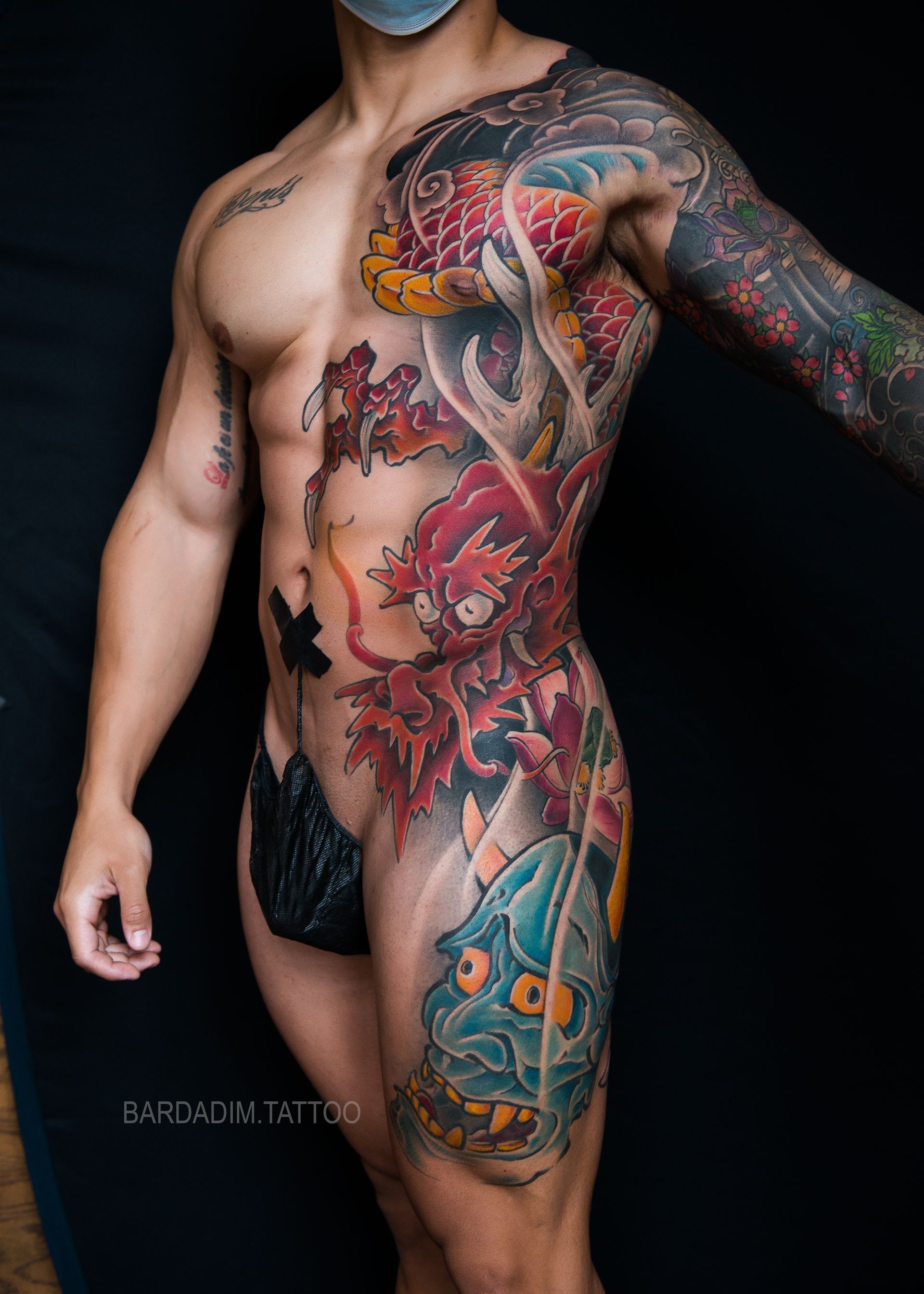
Gaku-bori framed tattoos are reserved for the back and arms, while non-standard areas like ribs, chest, and abdomen follow the
Nuki-bori approach, unframed, free-flowing compositions without mikiri background. At Bardadim Tattoo in NYC, we create authentic Irezumi that respects these traditions, ensuring each piece harmonizes with the body and can connect seamlessly to larger works in the future.
Understanding Traditional Irezumi Placement
Traditional Japanese tattoo composition has been shaped by centuries of practice. The human body is not just a surface, it is the frame.
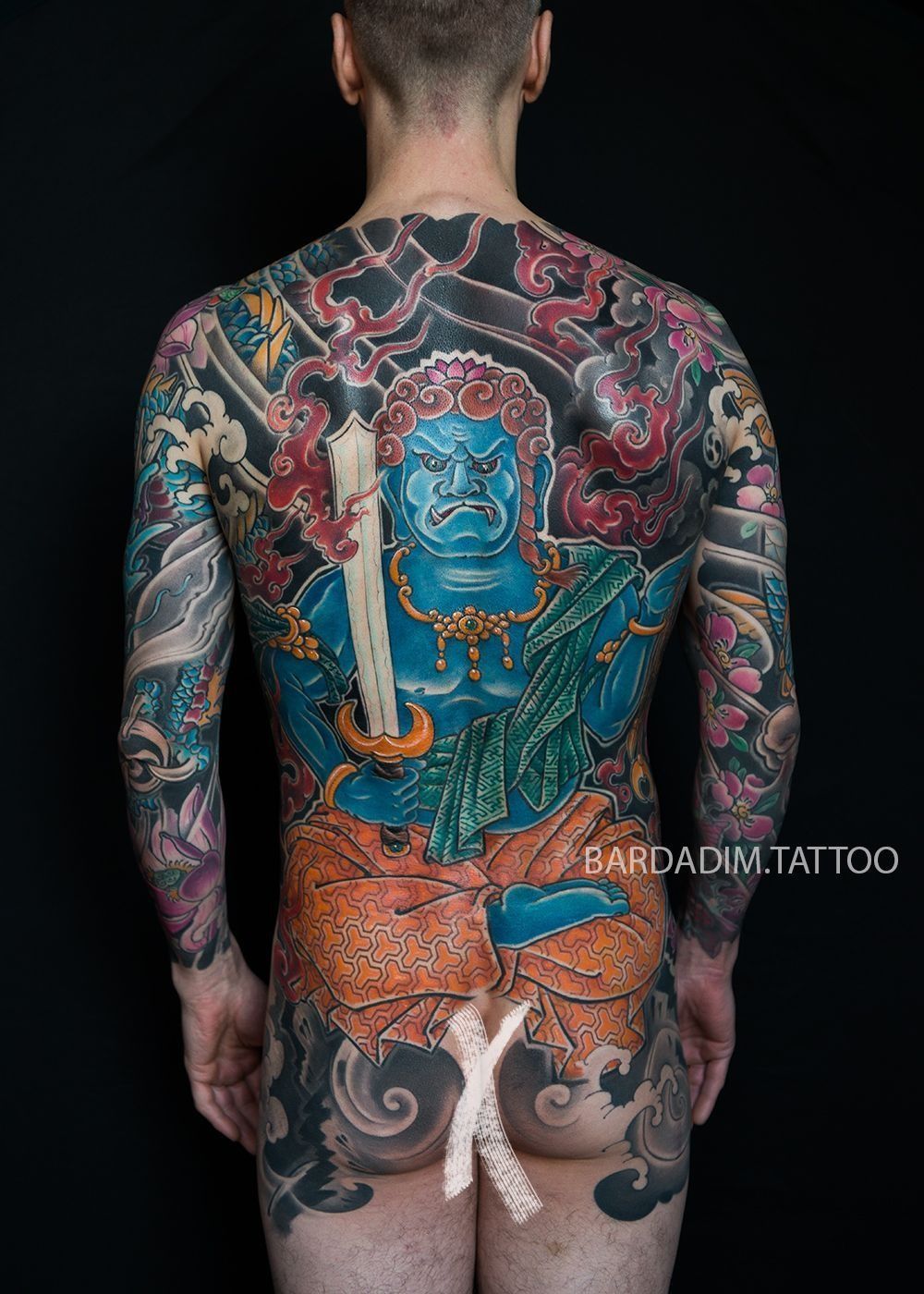
- Back and arms are the core canvases, allowing the full Gaku-bori format with mikiri framing.
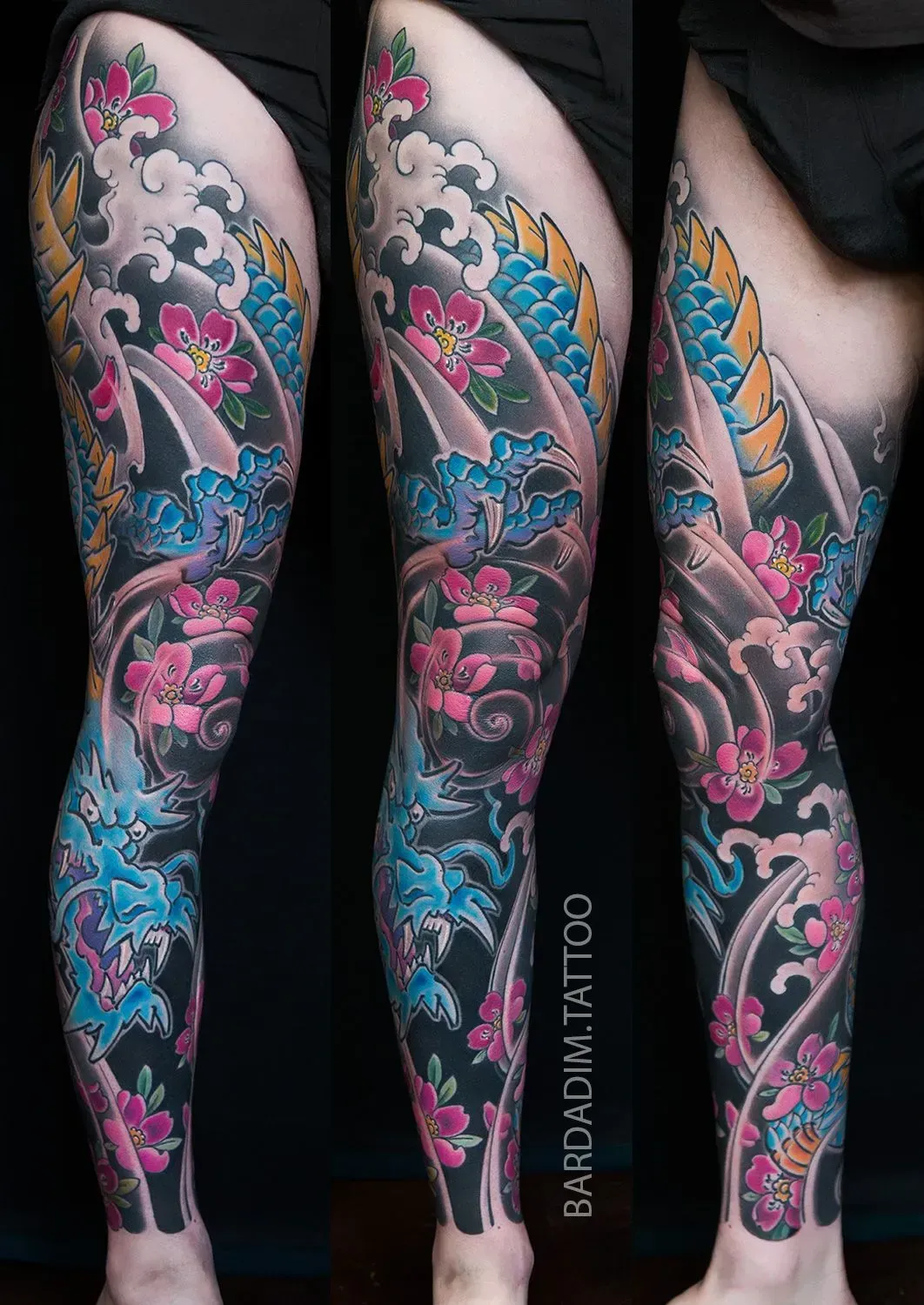
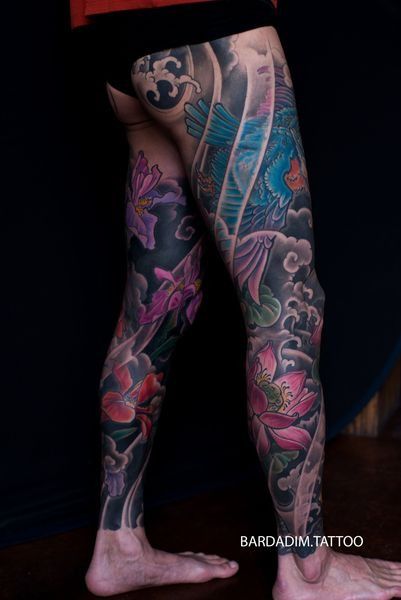
- Legs are traditionally considered extensions of the backpiece, designed to match and balance the main composition.
- Ribs, chest, and abdomen lack the natural boundaries for Gaku-bori, requiring a different approach.
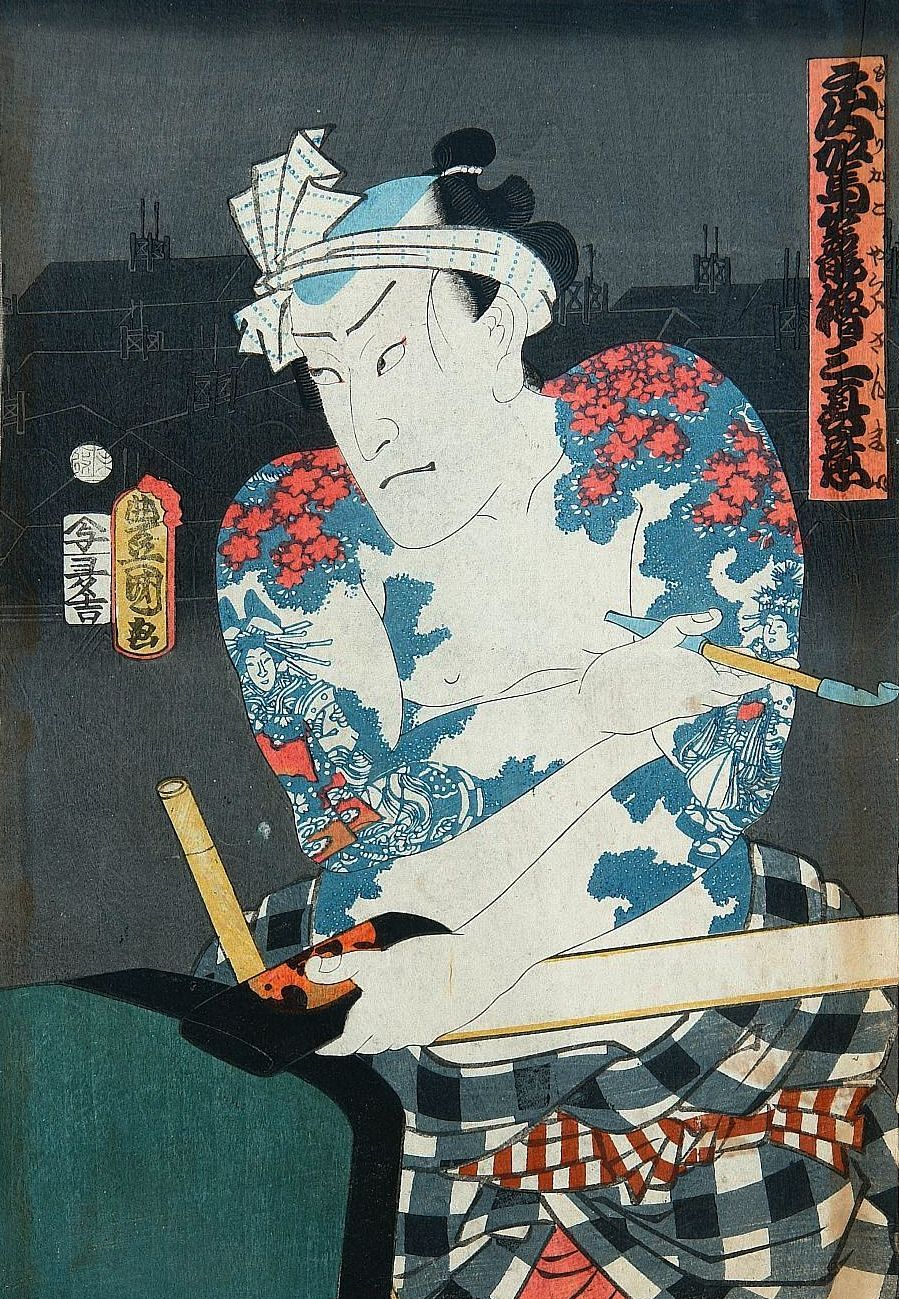
Tattooed actor by Utagawa Kunisada.
A palanquin carrier who has large tattoos of courtesans on his upper arms.
Why Gaku-Bori Works Only in Certain Areas
Gaku-bori designs include a background that ends in a sharp mikiri edge. This edge needs a clear anatomical “border” such as the spine, shoulder, or hip line - to look complete and balanced.
- On the back, these borders are natural and symmetrical.
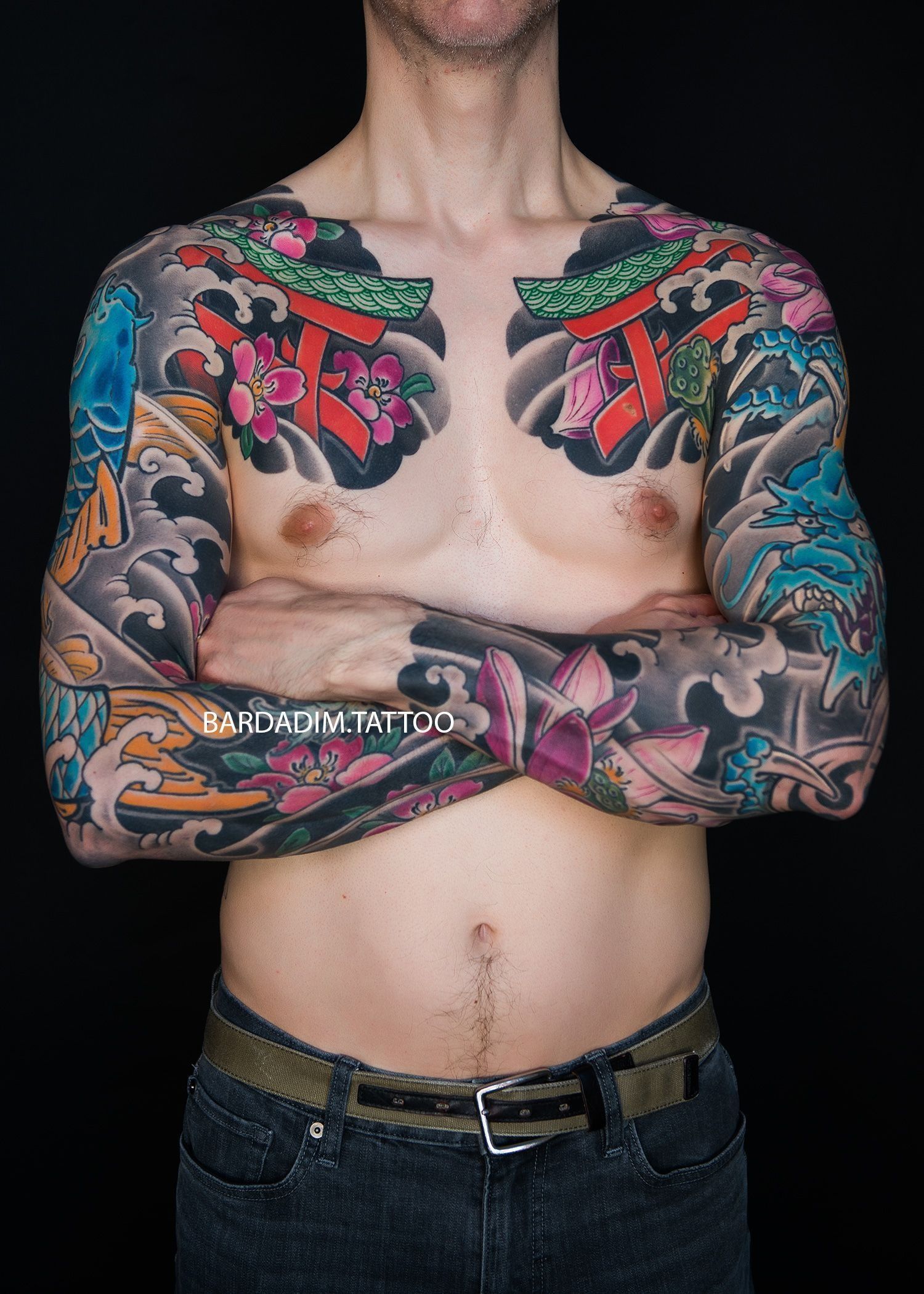
- On the arms, the frame follows the shoulder, elbow, and wrist transitions.
- On legs, it works only when connected to the backpiece.
- On ribs or chest, forcing a frame often looks awkward and breaks traditional flow.
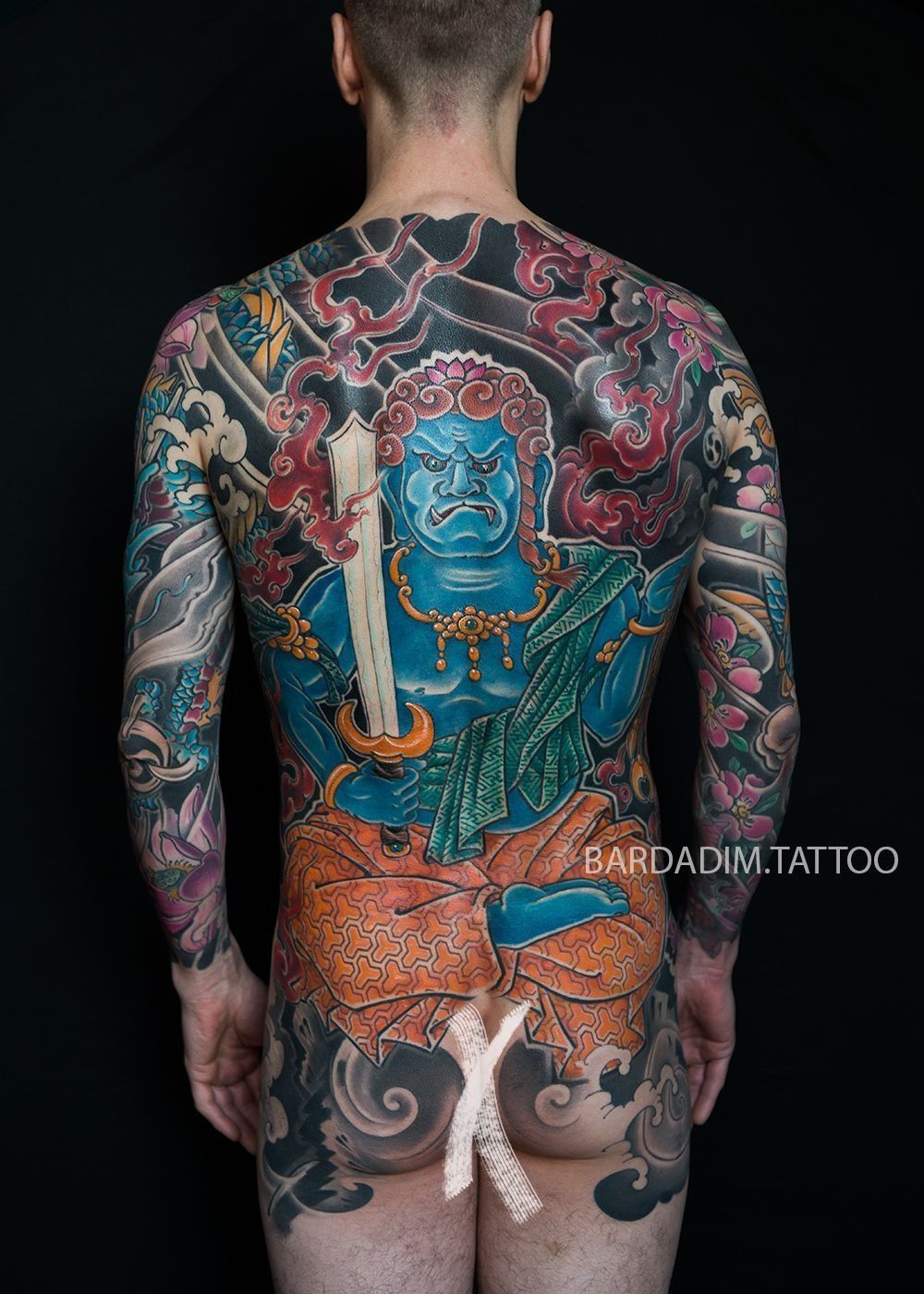
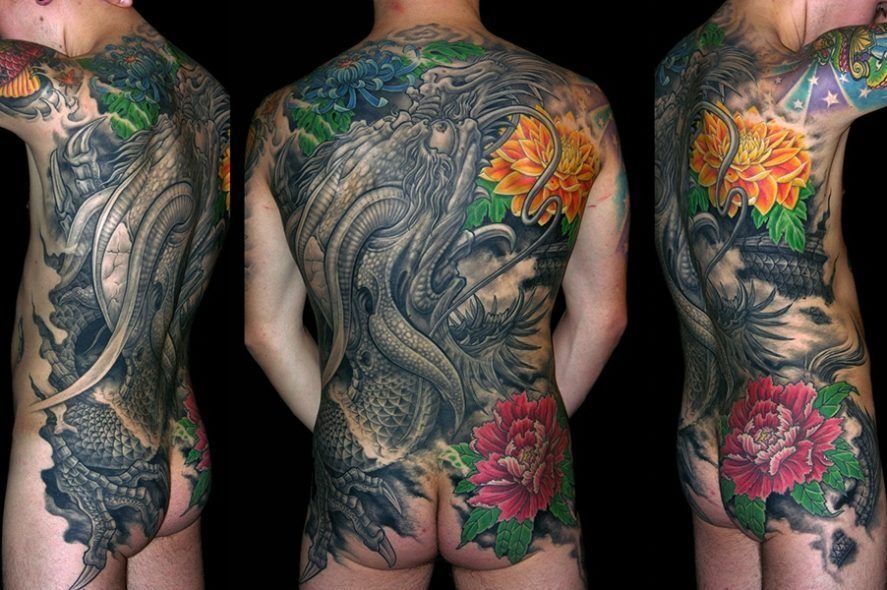
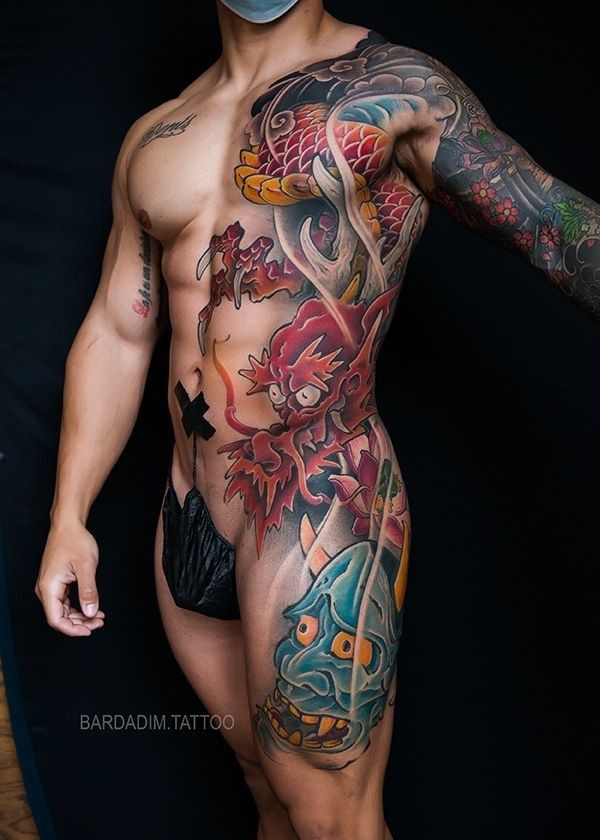
Nuki-bori:
The Art of Unframed Japanese Tattoos
Nuki-bori is the traditional solution for areas where framing is impossible or undesirable.
- Free-flowing composition. The design follows the body’s natural curves.
- No mikiri edge. The tattoo ends naturally within the skin’s flow.
- Stand-alone elegance. Works perfectly for mythical creatures, floral motifs, and symbolic figures.
- Expandable. Can be seamlessly connected to future Gaku-bori work.
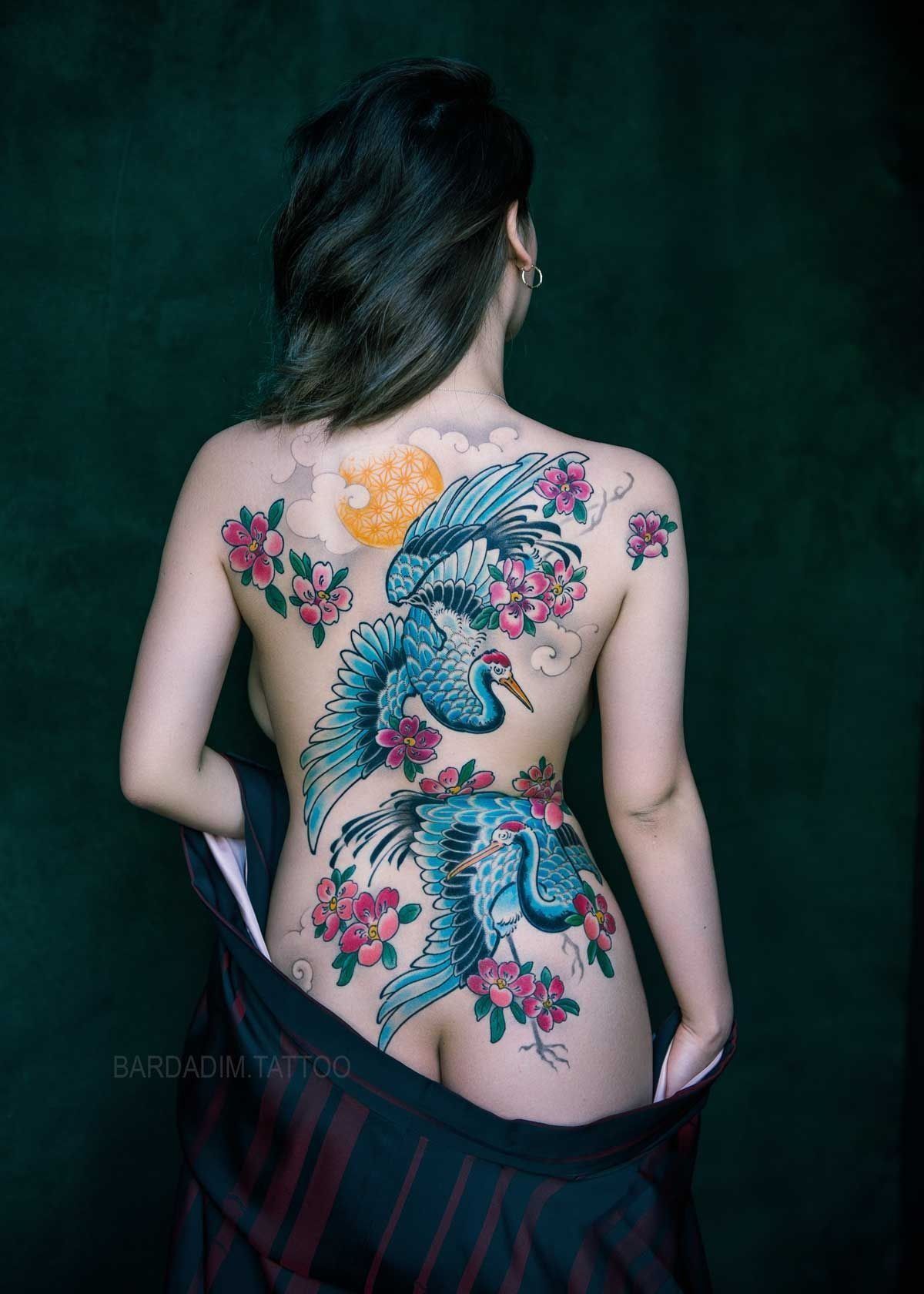
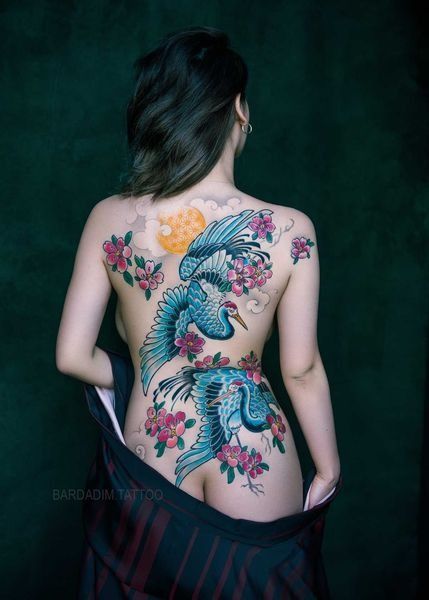
Cranes and Sakura
Nuki-bori by George Bardadim
Other Body Places
Where Standalone Motifs Fit
Standalone motifs in Irezumi are designs created without background work or framing. They move as independent forms and can be placed on virtually any body area. Their clean outlines follow natural anatomy, allowing the character of the motif to stand with clarity and a balanced sense of flow.
Bardadim Tattoo’s Approach
At Bardadim Tattoo, we work strictly within the principles of traditional Japanese tattooing. Whether framed or unframed, each tattoo is designed to respect the body’s structure and cultural heritage. The result is a piece that feels timeless, authentic, and in harmony with the wearer.
HIKAE
SHOULDERS AND ARMS
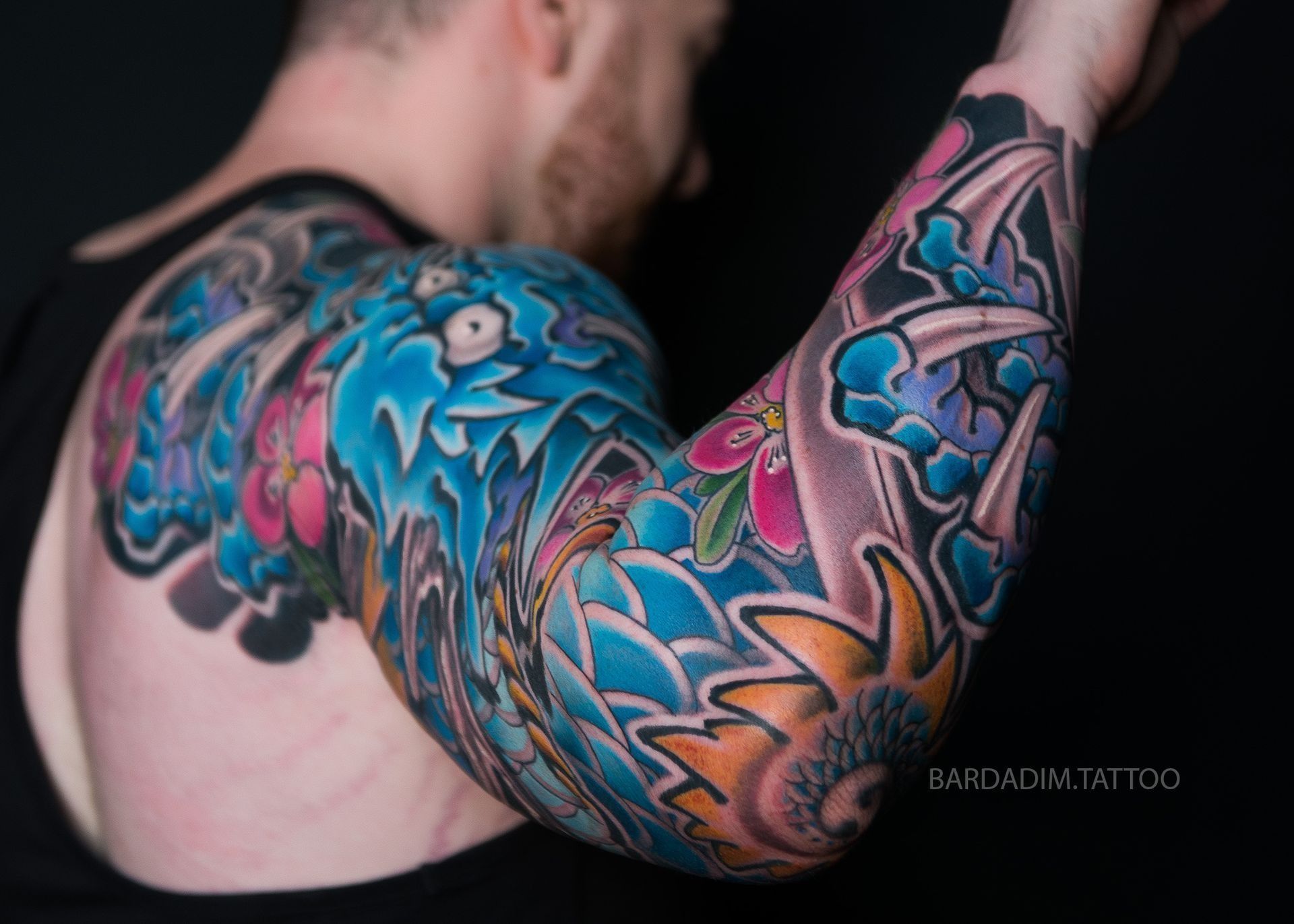
The term ‘Hikae’ means “to restrain oneself,” reflecting this classic tattoo layout. Hikae covers the shoulders and arms, allowing tattoos to be easily concealed with a v-neck shirt. Three common types exist: ‘light,’ covering about one-third of the chest; ‘shallow,’ which stays below the chest muscle; and ‘deep,’ extending over the chest and sometimes around the nipples.
F.A.Q.
Arm Sleeve & Japanese Irezumi
Can I get a small Irezumi-style tattoo on my ribs?
Yes, but it will be done as Nuki-bori without a frame or full background.
Why can’t I have a framed backpiece-style design on my chest or ribs?
Gaku-bori requires certain body areas to achieve proper framing and balance. The chest and ribs do not provide this natural space.
If I start with Nuki-bori, can I expand it into a full piece later?
Absolutely. We design Nuki-bori with future expansion in mind, so it merges seamlessly into larger works. Although it is possible to add on later, the best results come when the final version is planned from the beginning — only then can we guarantee full compositional balance.
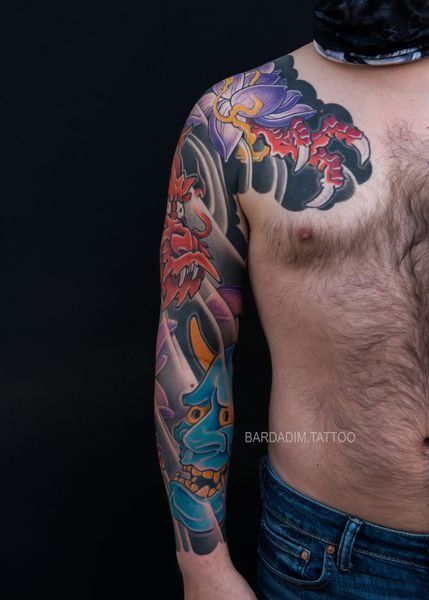
Irezumi Layouts
Beyond the special placements
Go beyond uncommon tattoo areas to explore the core traditional patterns of Irezumi.