Arm Sleeve Tattoo
Japanese traditional tattoo layouts to be placed on arm
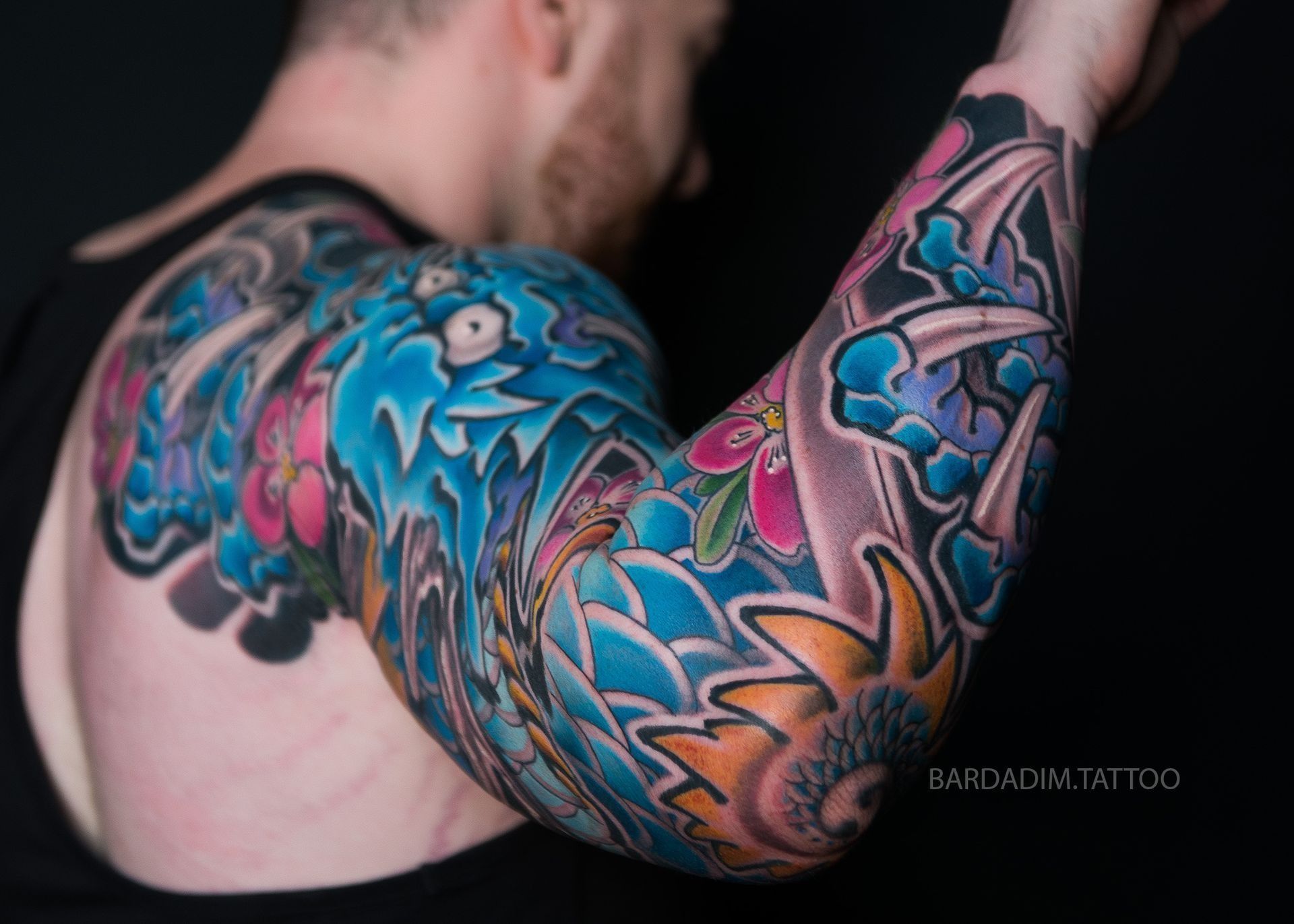
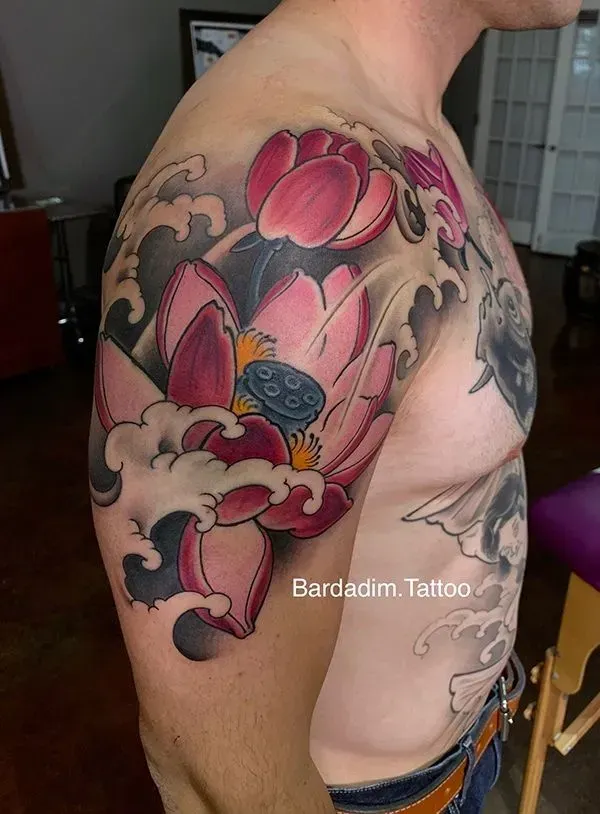
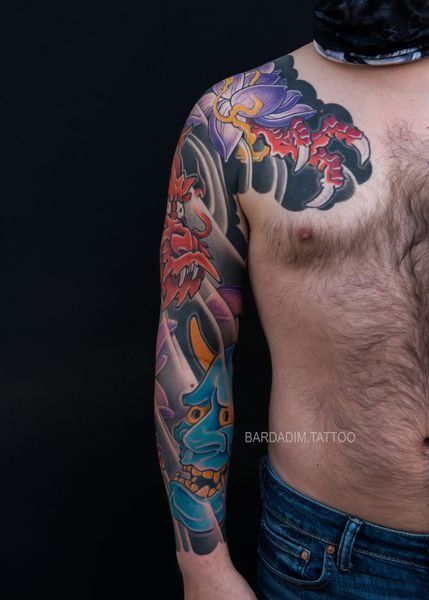
A term 'tattoo sleeve’ refers exclusively to an arm tattoo arranged in the Gaku-Bori style and must include some form of Mikiri. Traditionally, tattoo sleeves also feature a chest panel called ‘Hikae,’ which varies in size and design.
Arm Sleeve
Irezumi Sleeve Formats: Traditional Structures of Japanese Tattooing
Explore the foundational approaches to Japanese tattoo sleeves, each designed to follow the body’s form, express symbolic depth, and honor the flow of traditional composition.
HIKAE
SHOULDERS AND ARMS
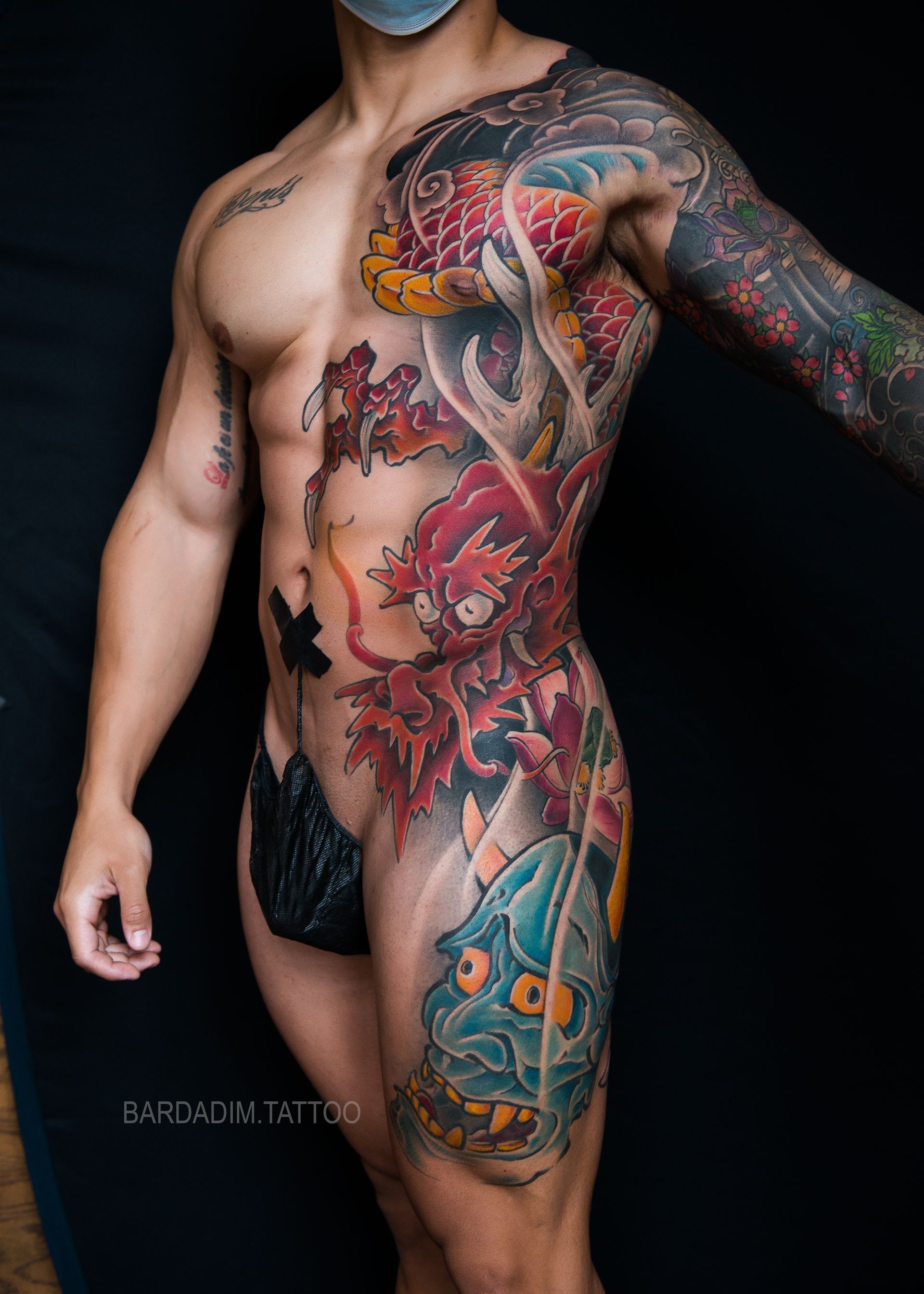
The term ‘Hikae’ means “to restrain oneself,” reflecting this classic tattoo layout. Hikae covers the shoulders and arms, allowing tattoos to be easily concealed with a v-neck shirt. Three common types exist: ‘light,’ covering about one-third of the chest; ‘shallow,’ which stays below the chest muscle; and ‘deep,’ extending over the chest and sometimes around the nipples.
Anatomical Limits in Gaku-Bori Tradition
Shoulder & Arm Tattoo Boundaries
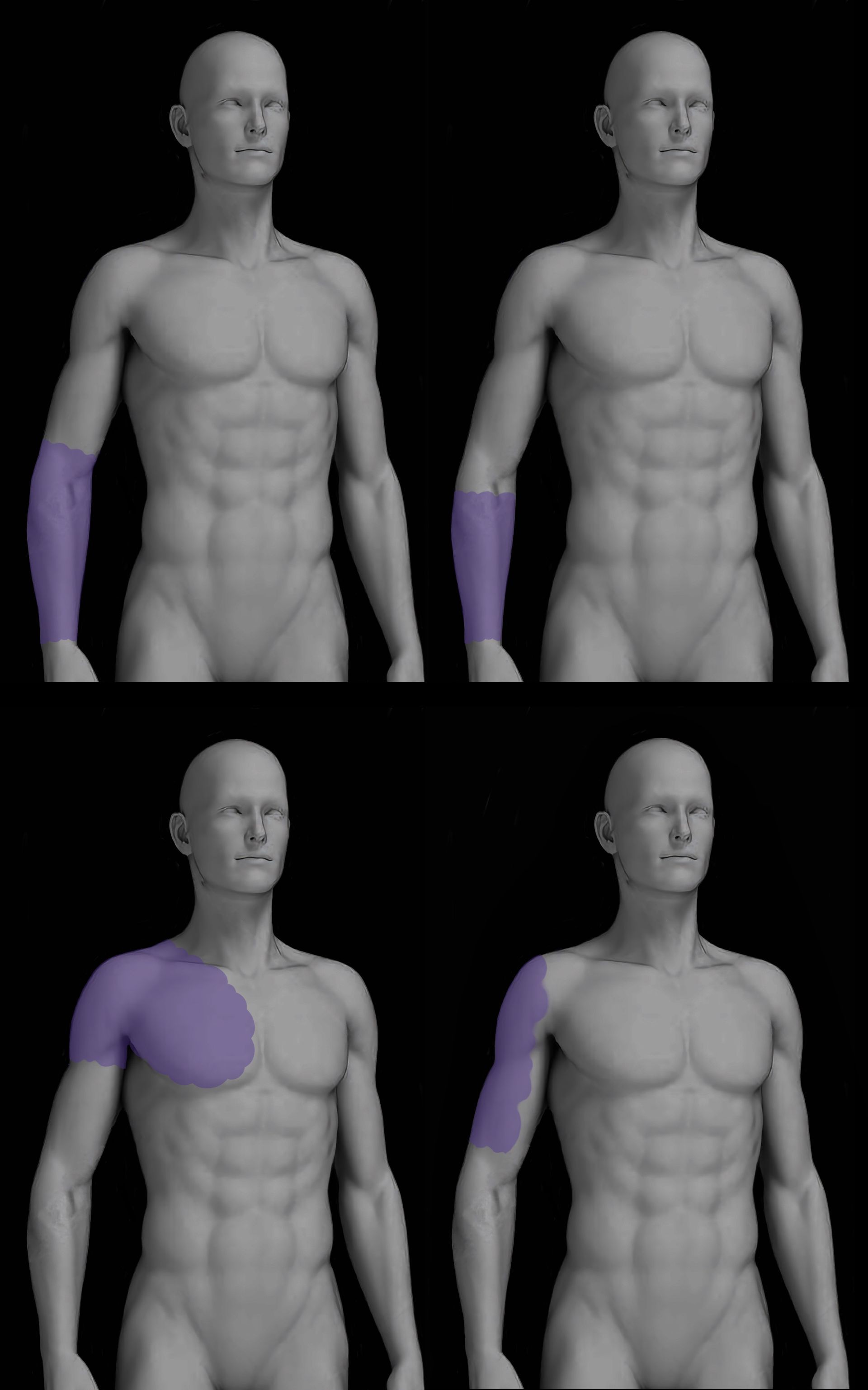
In traditional Japanese tattooing, sleeve layouts must follow the body’s natural muscle structure. We honor this principle and do not offer designs that disregard these anatomical limits.
One point tattoo
In traditional Japanese Irezumi, a framed piece (gaku‑bori) depends on a clean mikiri, a distinct border that follows the body’s natural contours. Lower-arm or forearm-only designs don’t offer the proper anatomical shape for this border, so we don’t perform them in gaku‑bori. Instead, we offer these as nuki‑bori, stand-alone motifs without borders or with a soft fade-out edge called akebono mikiri.
When executed as nuki‑bori, these are known in Japanese as ippon - “one-point tattoos” - ideal for a simple, single-focus design.
Irezumi Layouts
Beyond the Arms
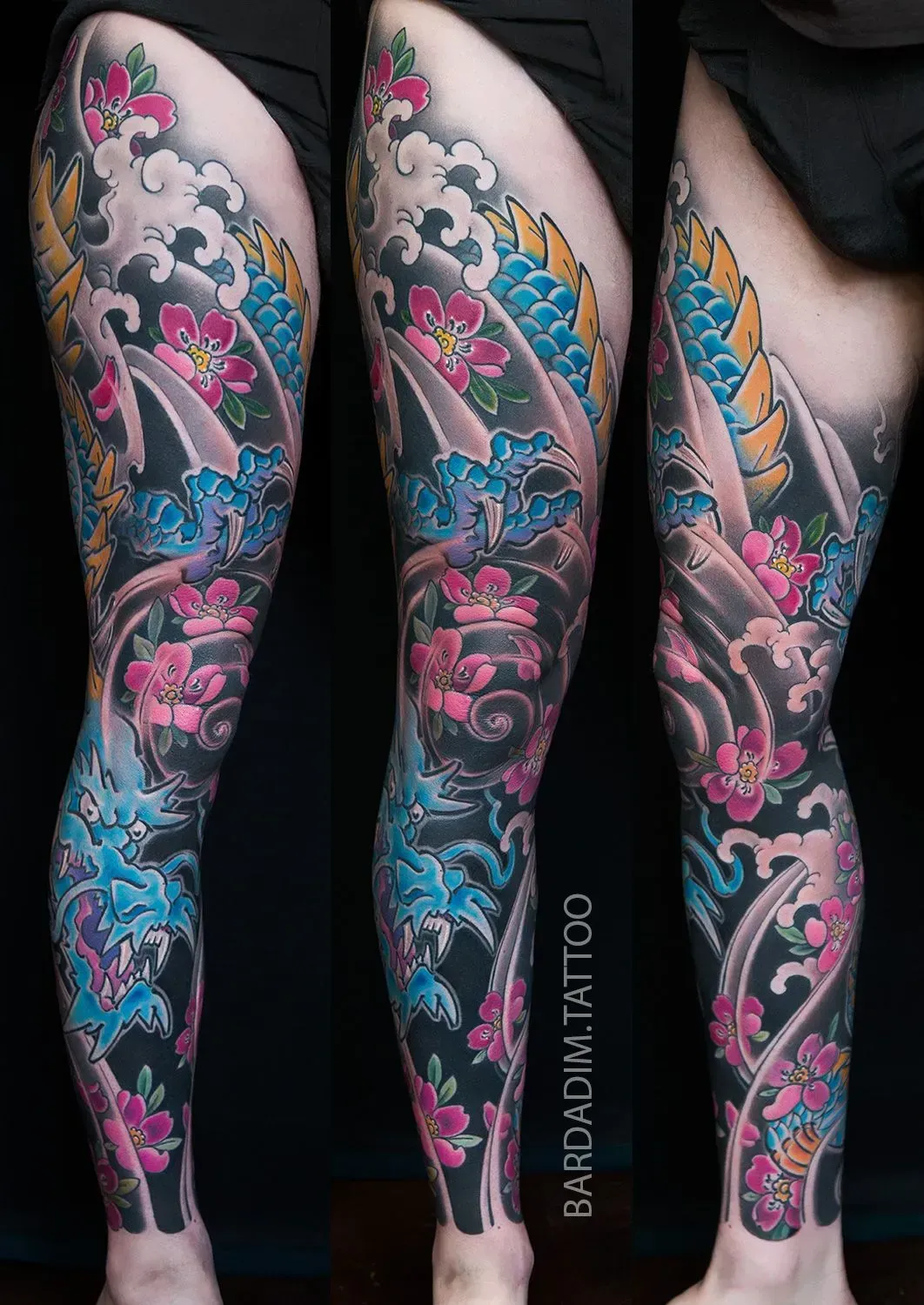
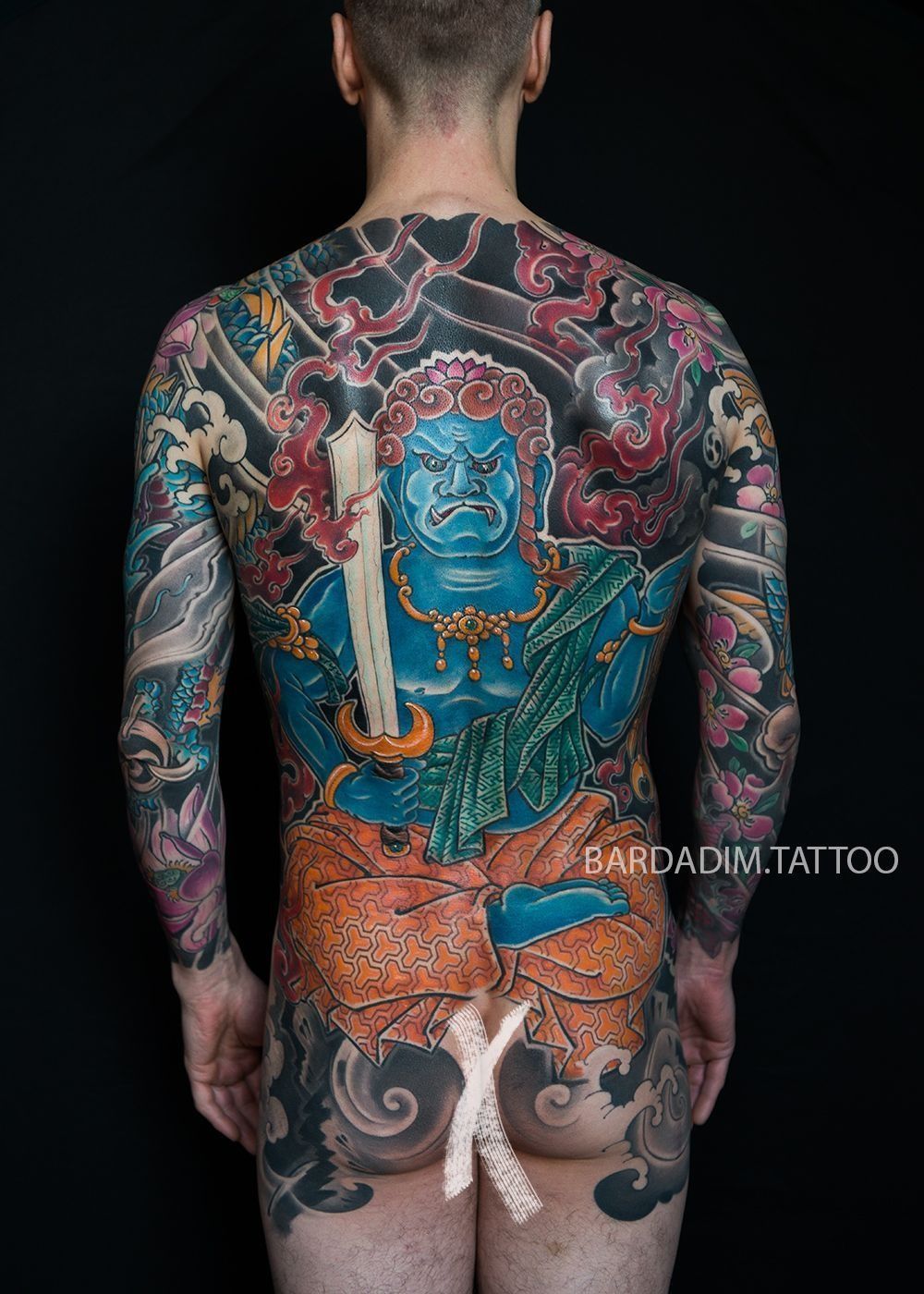
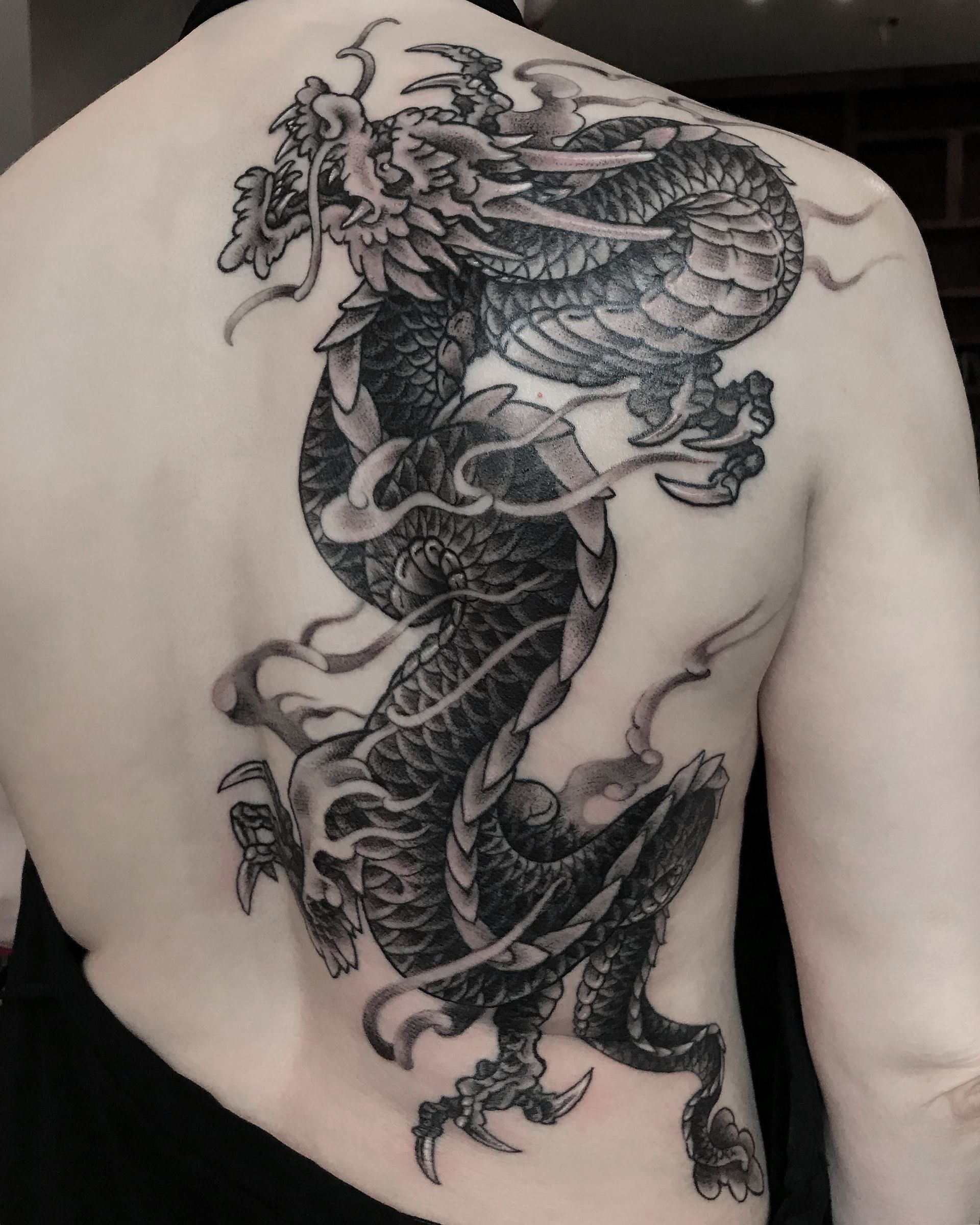
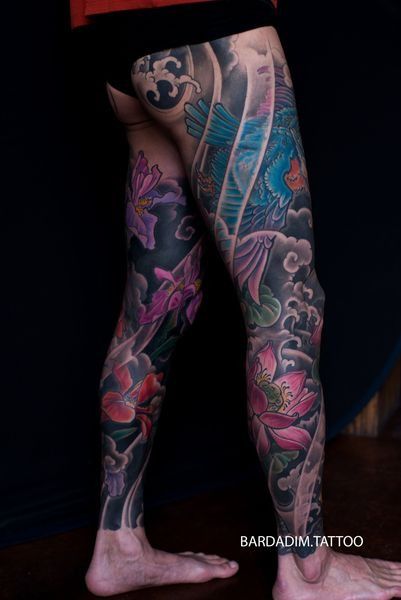
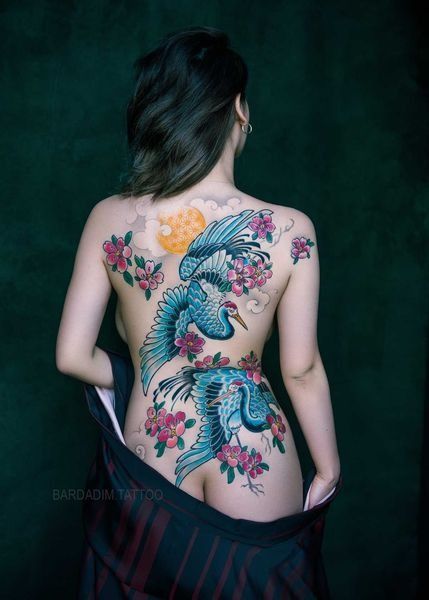
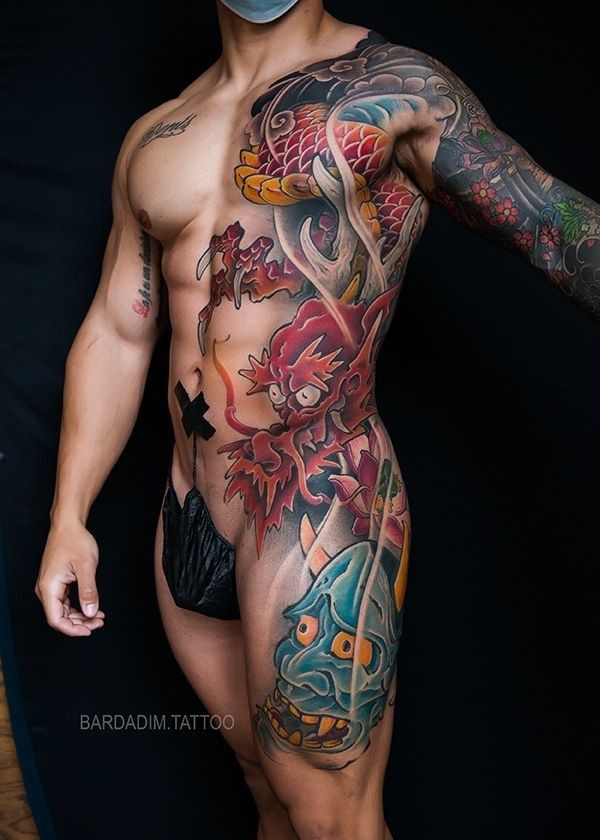
Irezumi flows across the whole body. Explore layouts for legs, back, body suits, and more to see where your story may unfold.
F.A.Q.
Arm Sleeve & Japanese Irezumi
What defines a traditional Irezumi arm sleeve?
A true Irezumi tattoo sleeve must be crafted in the Gaku‑Bori style, which includes a Mikiri boundary around the piece. Most traditional sleeves integrate a chest panel (called Hikae) to ensure the design flows harmoniously from the chest onto the arm.
What types of sleeves are available?
* Full sleeve (Nagasode): Begins at the chest panel (Hikae) and extends down to the wrist, either ending just before the wrist bone (Kubu) or trailing slightly past it (Tobu).
* ¾‑sleeve (Shichi‑bu / Shichibusode): Extends from chest to just below the elbow.
* Half sleeve (Gobu): Ends above the elbow and can include a lighter, shallower, or deep chest panel.
All types follow traditional layouts for continuity and flow
Can I get a small tattoo in Irezumi style on the arm?
Technically, a ‘one point tattoo’ is possible, but at Bardadim Tattoo we specialize in Gaku‑Bori, meaning large-scale, framed pieces that fill entire body parts (e.g. full arms). We do not offer small, isolated motifs on the arm in Irezumi style.
How long does an arm sleeve typically take and what’s the cost like?
A full sleeve usually takes 30-35 hours, broken into 4‑hour sessions (about 7-9 sessions depending on design complexity, arm size and skin conditions). Pricing is based on our hourly rate, with 4‑hour sessions currently set at $1,500.
How do I begin? How to book a consultation?
1. Review our portfolio to ensure your tattoo idea resonates with our aesthetic.
2. Prepare reference images and a clear description of your concept.
3. Submit a consultation request via our contact form. We typically respond within 1-2 days.