Tattoo Process
How the tattoo project is developed
This page explains how large-scale irezumi tattoo projects are developed over time. It describes the working method, decision-making logic, and structural principles behind each project, from the initial concept to long-term integration with the body. The focus here is not on booking mechanics, but on the underlying structure of the work.
It is an explanation of how and why the work is approached as a process rather than a single outcome.
Tattoo as a long-term project
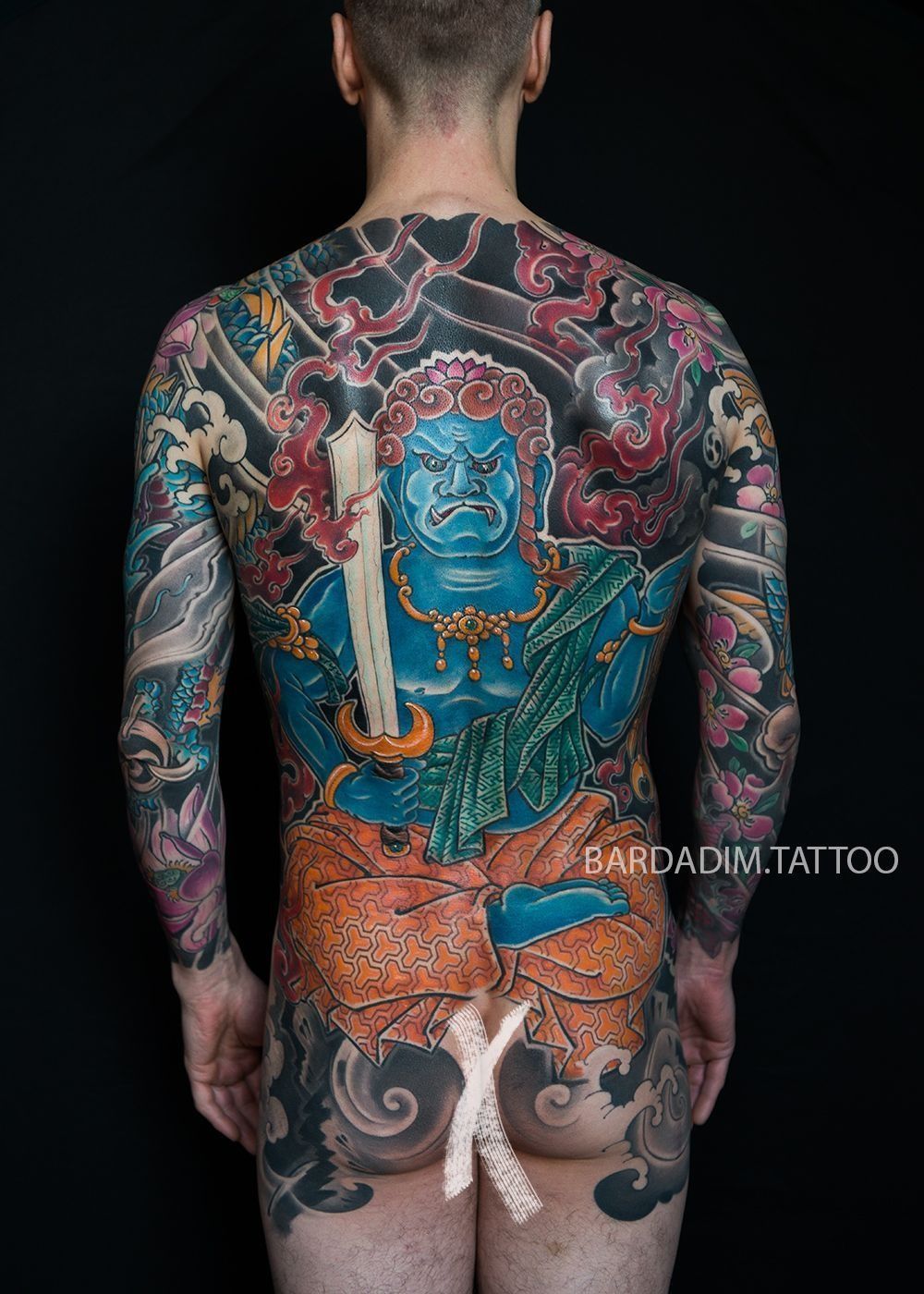
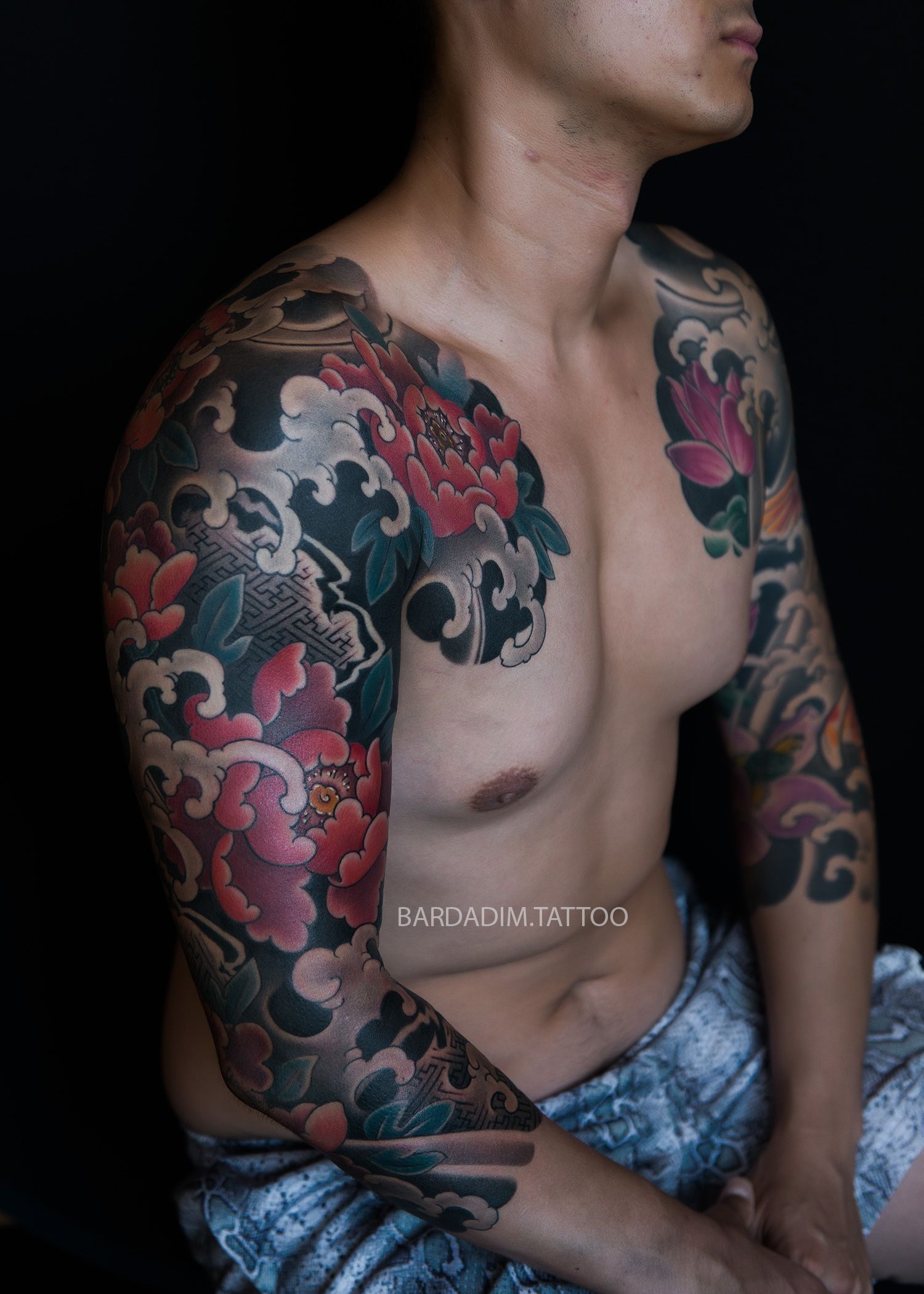
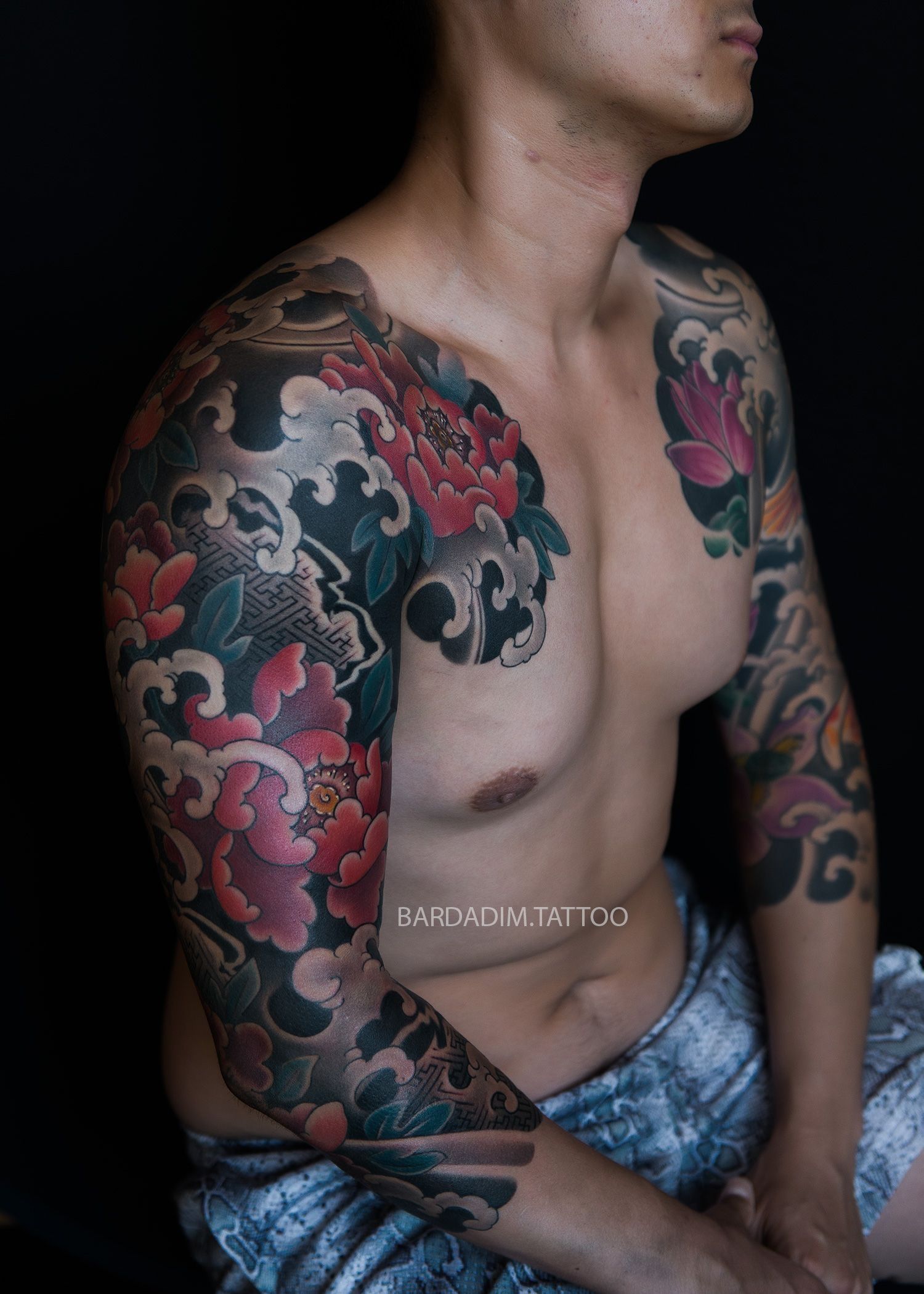
Large-scale irezumi is approached as a long-term project, not as a standalone tattoo. The design is developed with the understanding that the body changes over time, visually and structurally. Movement, aging, skin behavior, and overall composition must remain coherent years after the work is completed. Because of this, decisions are made with long-term readability in mind rather than short-term visual impact. Time is not an external constraint in this process.
It is an integral part of the design itself. This approach affects everything, including composition density, contrast, pacing of sessions, and the way forms interact with the anatomy. What may appear restrained or incomplete in early stages is often intentional, allowing the project to mature as a unified structure rather than a collection of finished images.
For the client, this means the project is not treated as a fixed illustration applied to the body.
It is developed gradually, with clarity and consistency prioritized over speed.
Tattoo as a long-term project
Large-scale irezumi is approached as a long-term project, not as a standalone tattoo. The design is developed with the understanding that the body changes over time, visually and structurally. Movement, aging, skin behavior, and overall composition must remain coherent years after the work is completed. Because of this, decisions are made with long-term readability in mind rather than short-term visual impact. Time is not an external constraint in this process.
It is an integral part of the design itself. This approach affects everything, including composition density, contrast, pacing of sessions, and the way forms interact with the anatomy. What may appear restrained or incomplete in early stages is often intentional, allowing the project to mature as a unified structure rather than a collection of finished images.
For the client, this means the project is not treated as a fixed illustration applied to the body.
It is developed gradually, with clarity and consistency prioritized over speed.
From idea to composition
Each project begins with an idea, but the idea itself is not treated as a finished design. Client references, themes, and intentions are analyzed as source material rather than instructions to be illustrated directly. The goal at this stage is to understand what can be translated into a coherent composition that functions within the structure of the body.
Design decisions are made through selection and synthesis. Some elements are emphasized, others are reduced or removed entirely. This is not a process of combining multiple images, but of forming a single visual system that remains clear and balanced when viewed as a whole.
Because of this, the final composition is not a literal representation of the initial idea. It is an interpretation shaped by anatomy, scale, flow and long-term readability. This approach allows the project to remain structurally consistent rather than visually overloaded, even when complex themes or multiple motifs are involved.
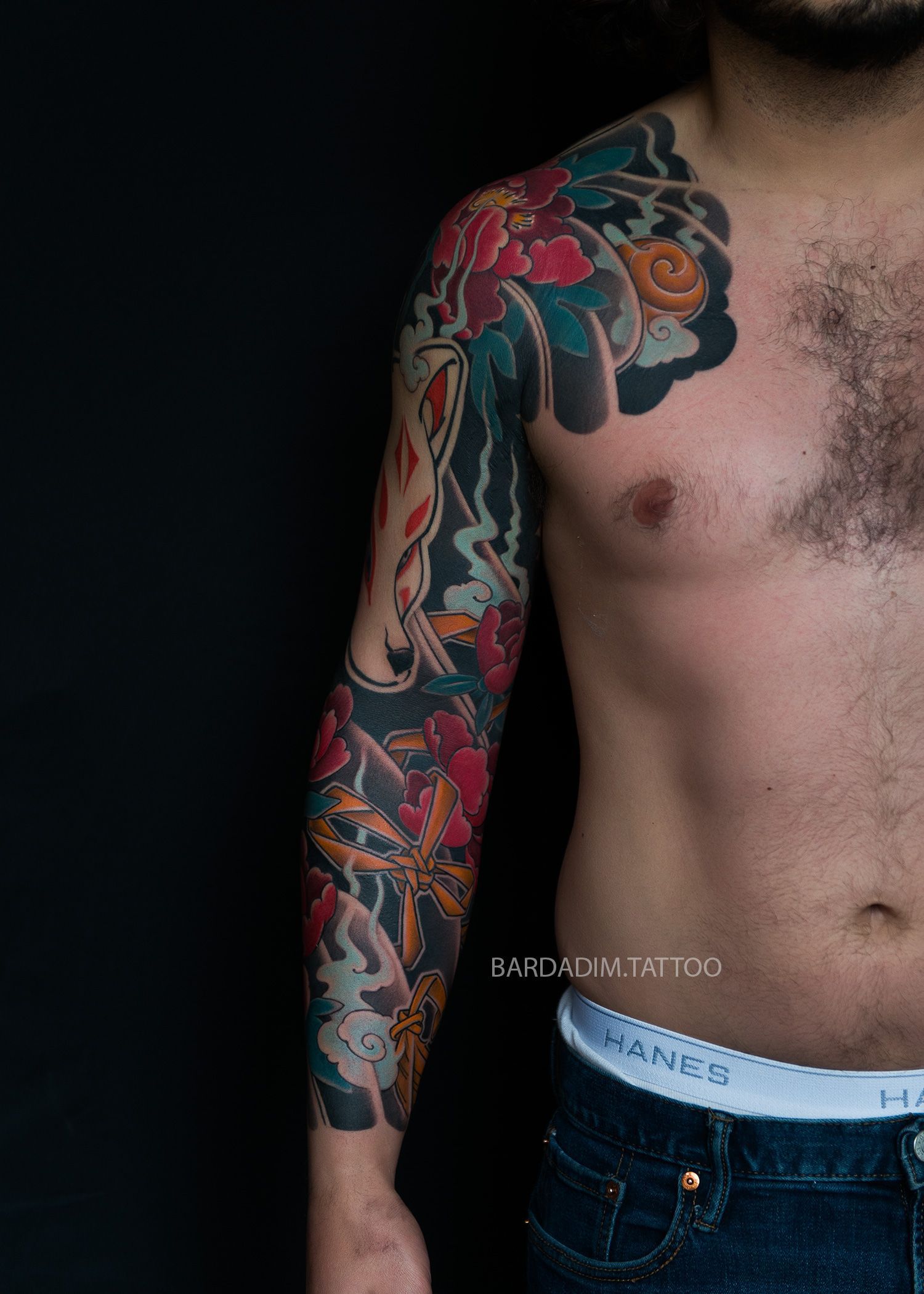
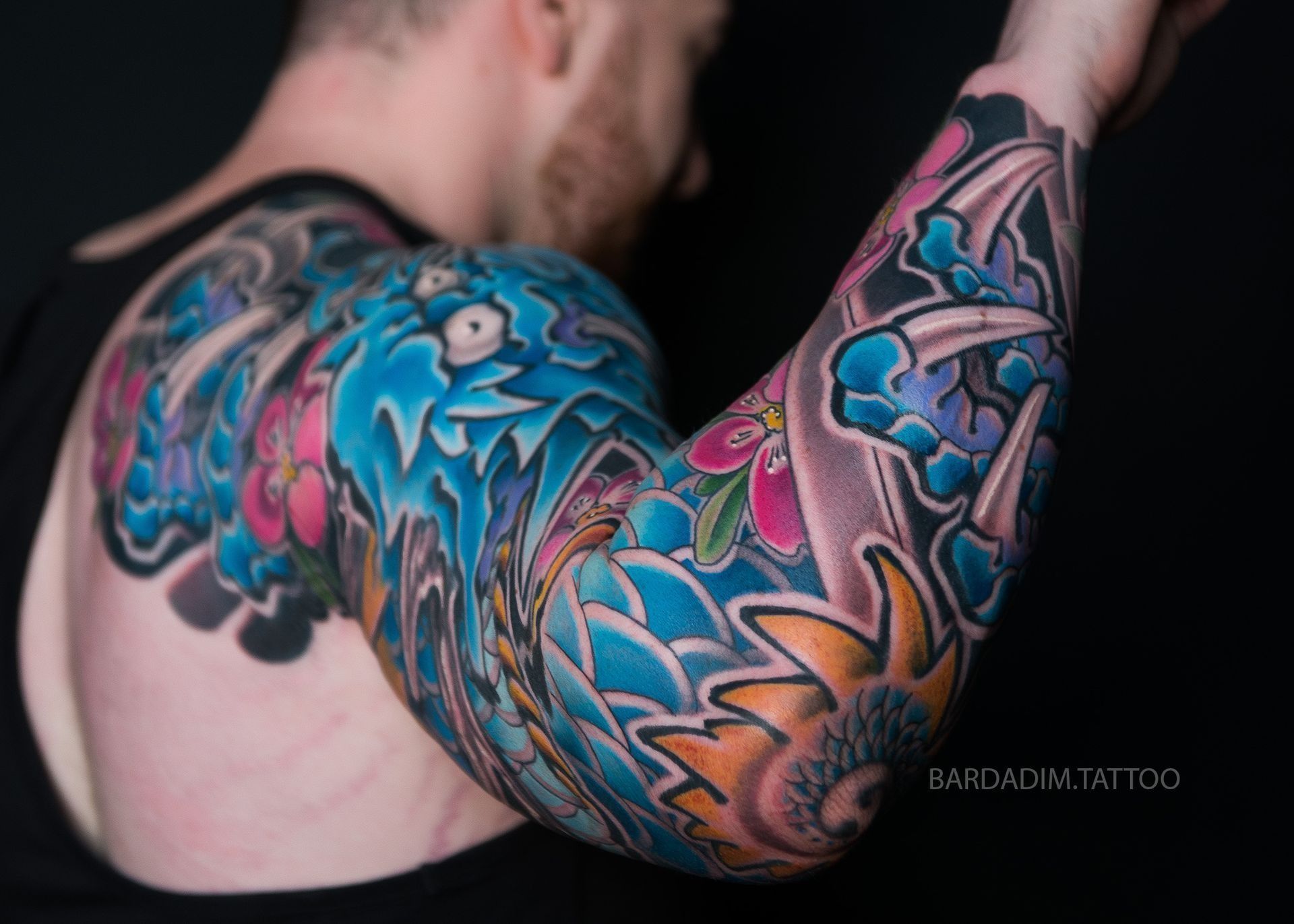
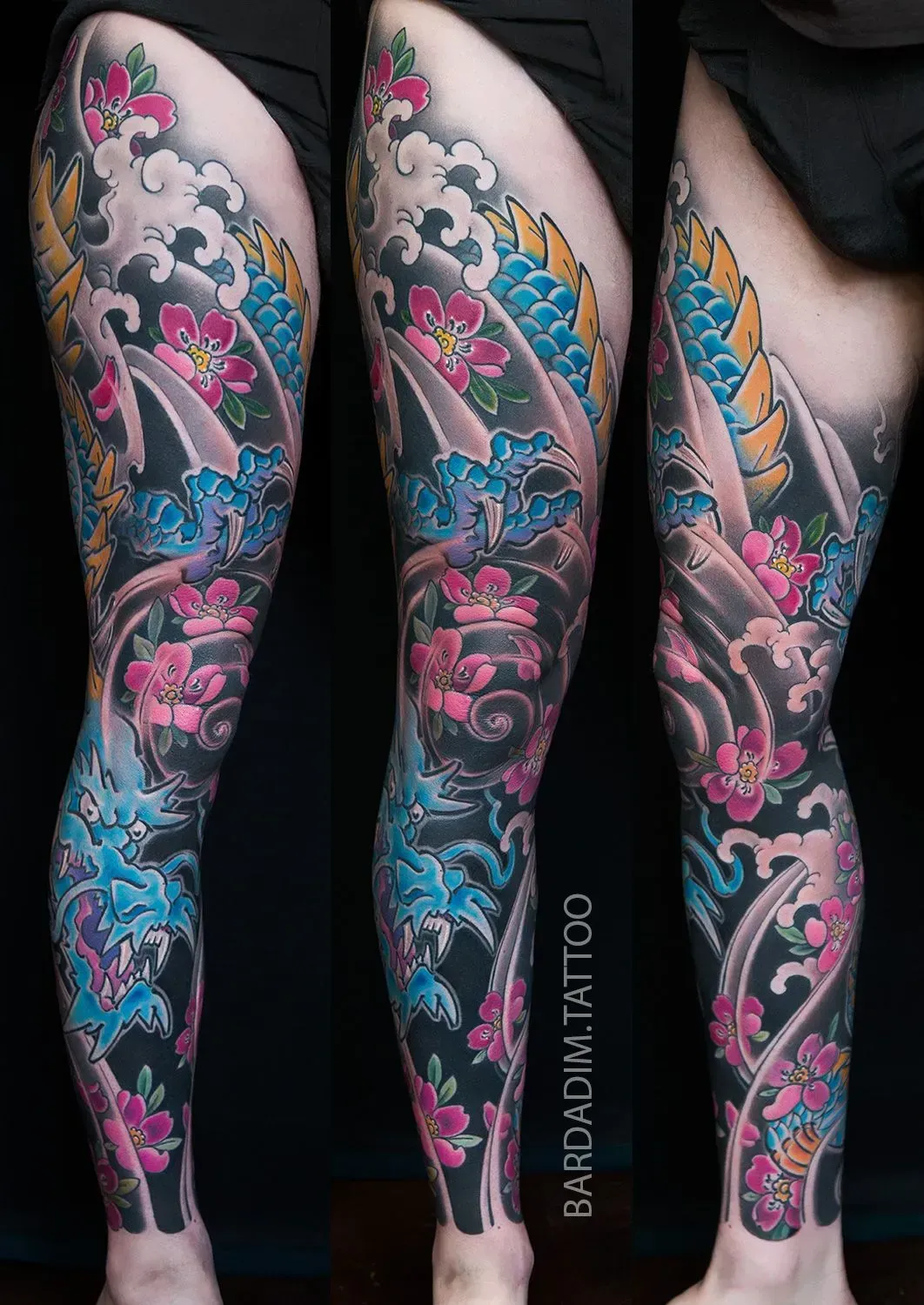
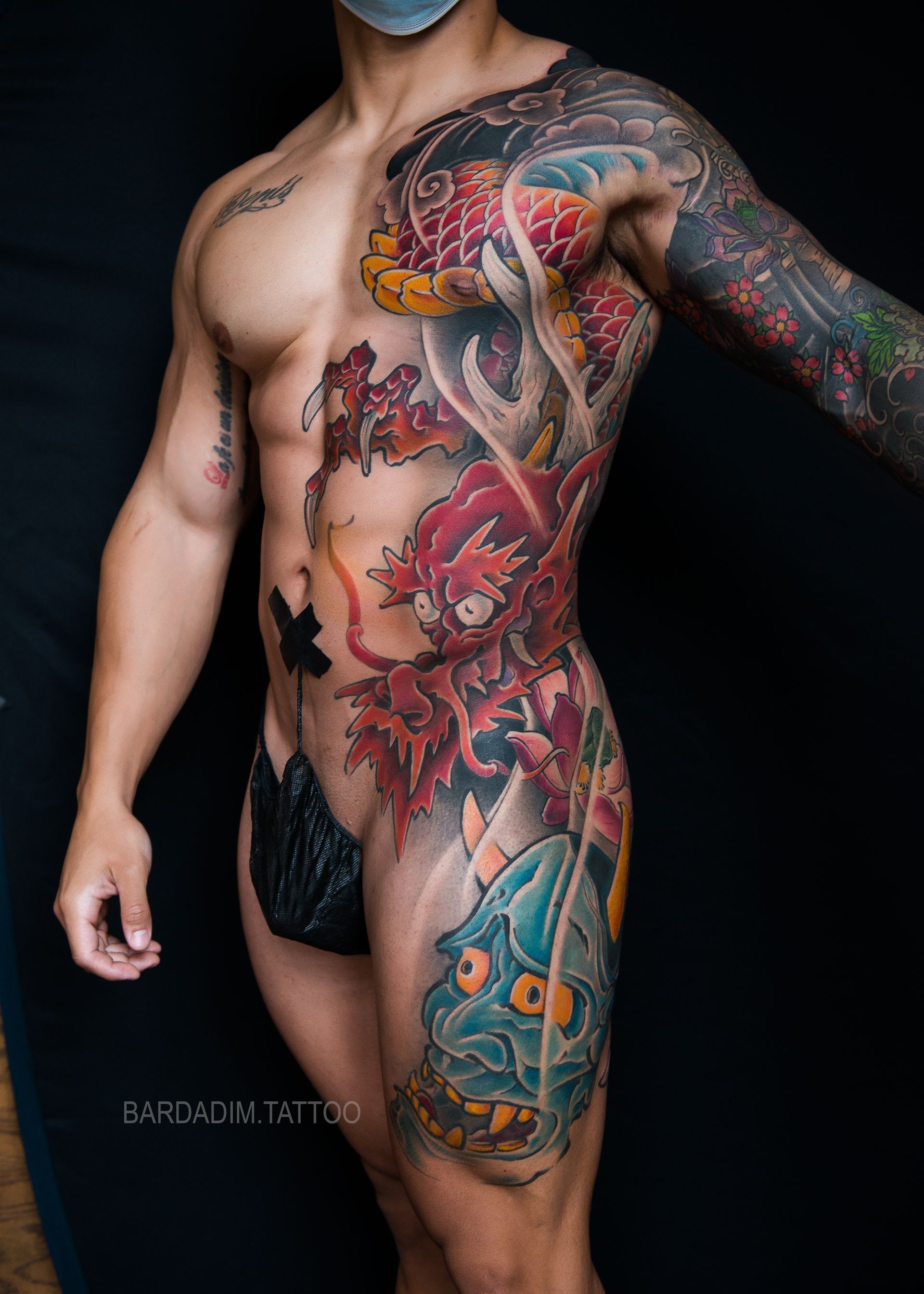
All designs are developed in direct relationship to the body. Muscle movement, joint articulation, and natural directional flow are considered at every stage of composition. Forms are placed and shaped to follow the body’s structure rather than sit on top of it.
Tattoos are developed as part of the body, not as isolated images.
This means that visual elements may stretch, compress, or shift in emphasis depending on posture and movement. These changes are intentional and accounted for during the design process. The goal is not static symmetry, but dynamic coherence.
By prioritizing anatomical integration, the work remains readable from multiple angles and continues to function as the body moves through space. This is especially critical in large-scale projects, where disconnected imagery would quickly break the overall structure.
Anatomical integration and flow
Anatomical integration and flow
All designs are developed in direct relationship to the body. Muscle movement, joint articulation, and natural directional flow are considered at every stage of composition. Forms are placed and shaped to follow the body’s structure rather than sit on top of it.
Tattoos are developed as part of the body, not as isolated images.
This means that visual elements may stretch, compress, or shift in emphasis depending on posture and movement. These changes are intentional and accounted for during the design process. The goal is not static symmetry, but dynamic coherence.
By prioritizing anatomical integration, the work remains readable from multiple angles and continues to function as the body moves through space. This is especially critical in large-scale projects, where disconnected imagery would quickly break the overall structure.
Session-based development
Large-scale projects are developed through multiple sessions rather than completed in a single stage.
This structure allows decisions to be made progressively, with each phase informed by how the work settles into the body. Line weight, contrast, spacing, and compositional balance are evaluated as the project evolves, not only at the design stage.
Session-based development is not a scheduling preference. It is a structural necessity. By working in stages, the project maintains flexibility while preserving its foundational logic. Adjustments are made based on real interaction between the design and the body, rather than on assumptions made before the first session.
This approach reduces the risk of visual overload and ensures that the final result remains cohesive rather than compressed.
Boundaries and creative responsibility
Clear boundaries are an essential part of the working process. Not every idea, reference, or request can be integrated without compromising the structural integrity of the project. Decisions are guided by long-term readability, anatomical logic, and overall balance rather than by trend, novelty, or short-term visual impact.
Creative responsibility means knowing when to refuse certain solutions, even if they appear appealing in isolation. This includes limiting the number of focal elements, controlling density, and maintaining consistency across different areas of the body.
These boundaries are not restrictions imposed on the client. They are part of the system that allows complex projects to remain clear, durable, and coherent over time.
Adjustments and flexibility
Adjustments are a natural part of the process, but they occur within a defined framework.
Minor refinements can be made as the project develops, especially in response to how the design settles into the body during early stages. These adjustments help improve balance, clarity, and flow without altering the underlying structure.
Fundamental changes to the core composition, theme, or direction are not part of this stage. Once the structural foundation is established, it must remain stable for the project to develop consistently over time.
Flexibility exists to support the system, not to replace it.
How this affects booking decisions
Because of the way projects are developed, not every request results in a booking.
Compatibility between the project idea, the working method, and the client’s expectations is essential. The process begins before any dates are discussed, through clear communication and mutual understanding of how the work is approached.
This ensures that when a project is accepted, it can be developed without compromising its structure, pacing, or long-term integrity.
This process exists to maintain clarity, consistency, and long-term coherence in large-scale irezumi work.
By approaching tattooing as a structured, time-based practice, each project is allowed to develop as a unified whole rather than a collection of separate images. The goal is not speed or volume, but work that remains readable, balanced, and integrated with the body over time.
Related pages
The process described above connects to other parts of the site where specific aspects of the work are explained in more detail.
Related pages
The process described above connects to other parts of the site where specific aspects of the work are explained in more detail.