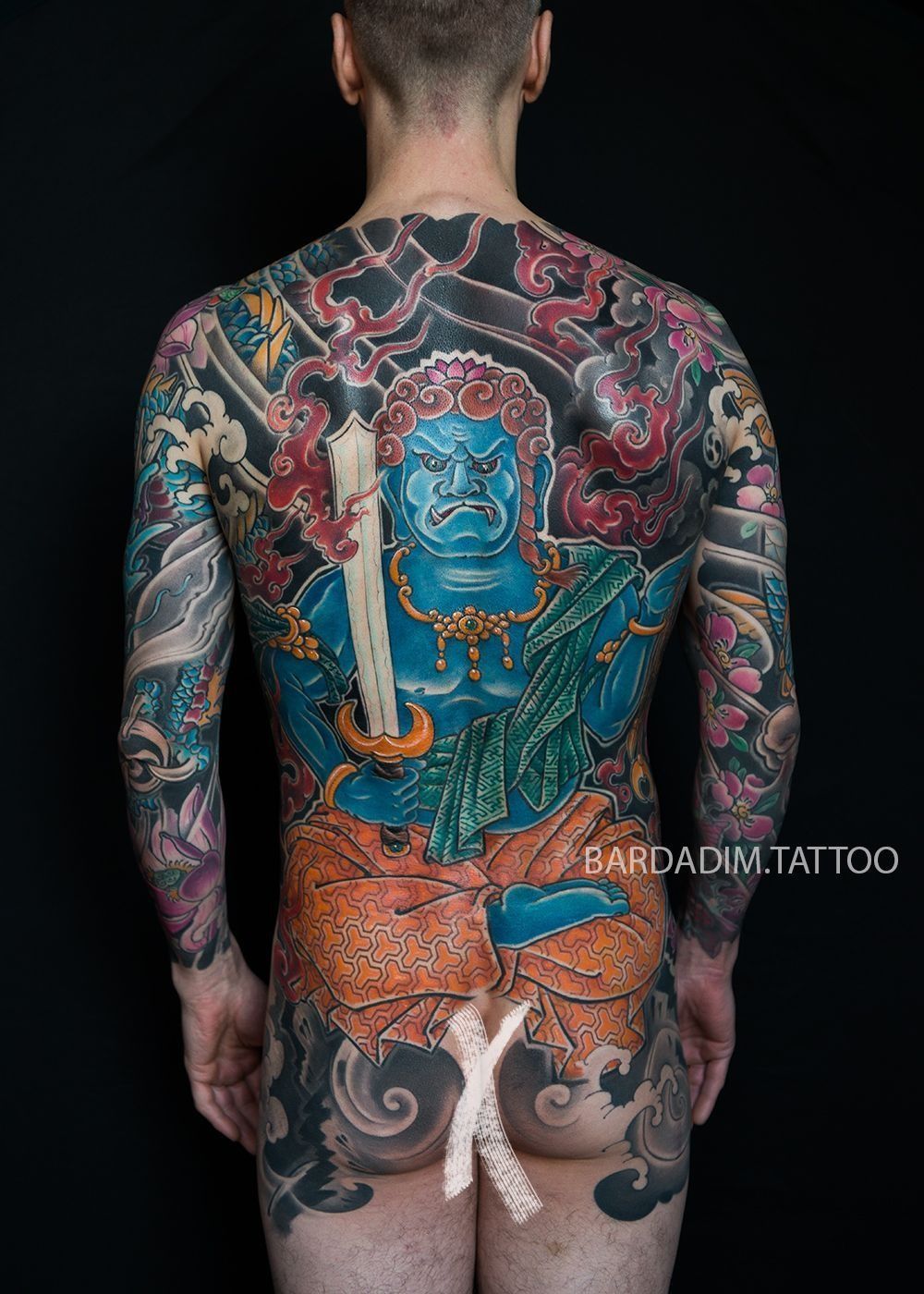
A timeless subject for a Japanese back tattoo
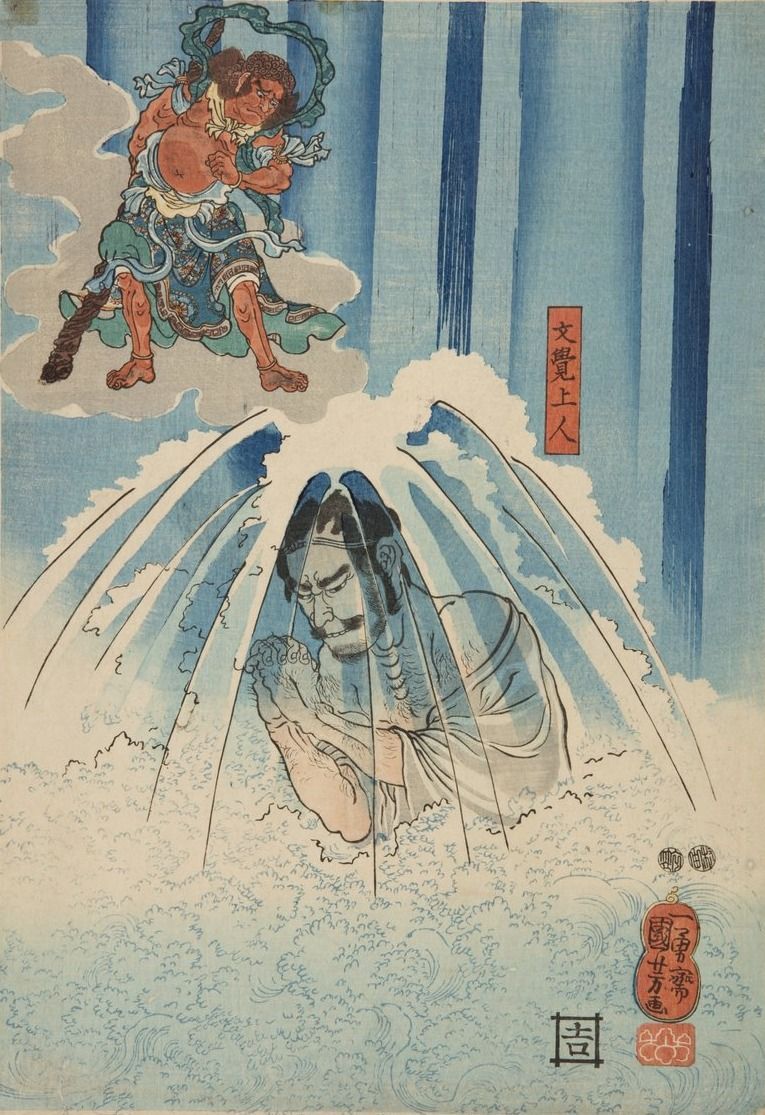
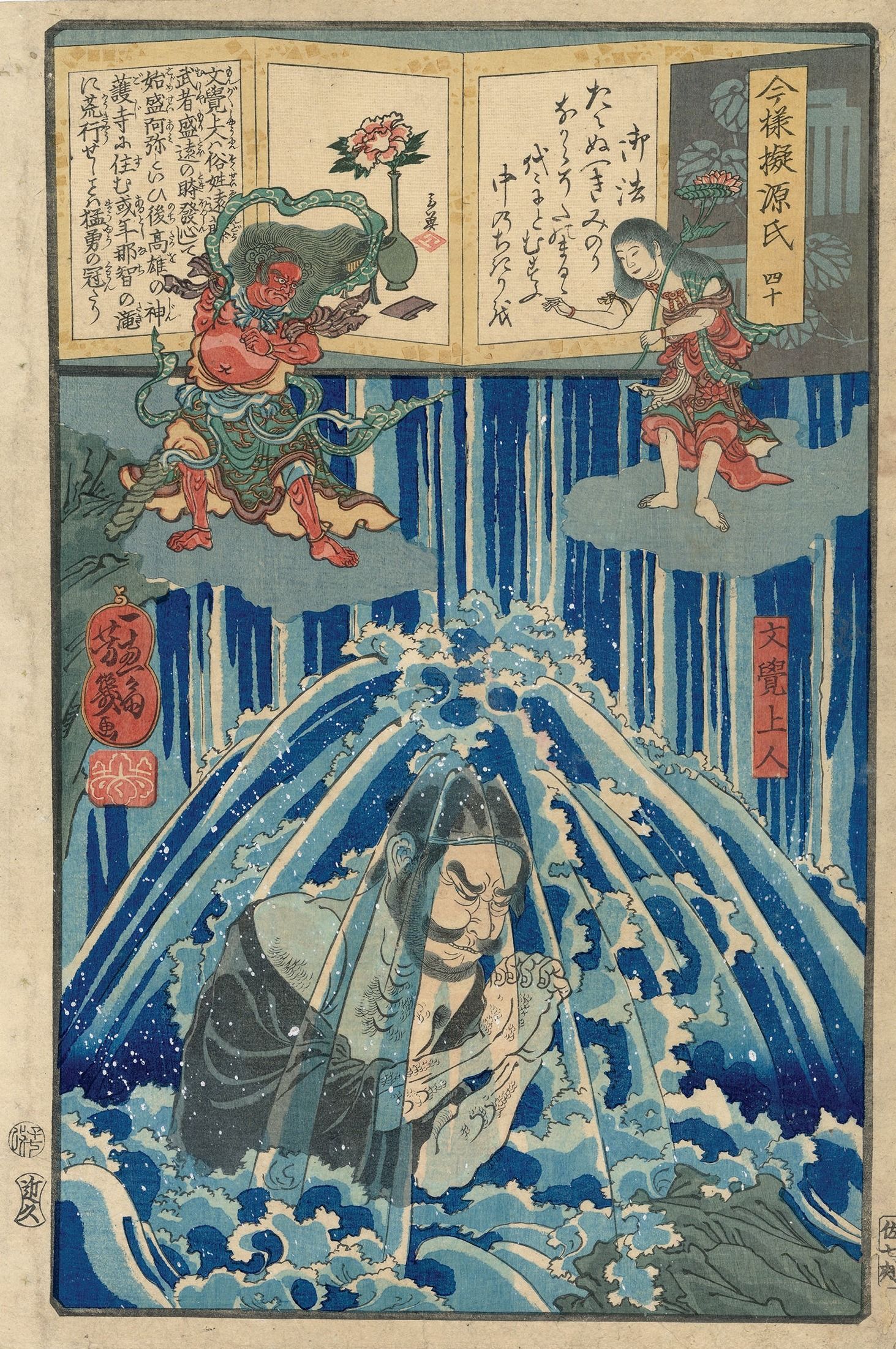
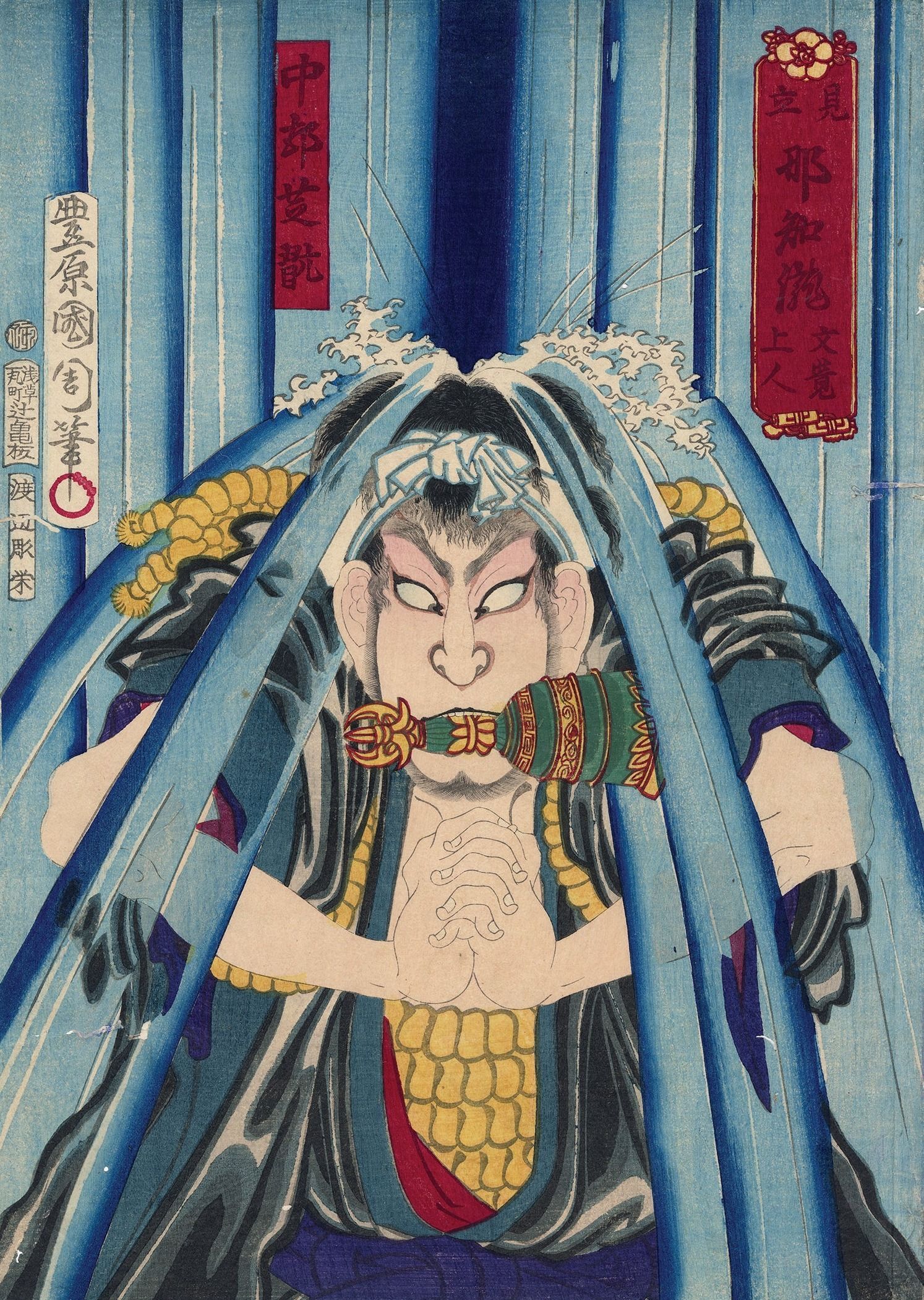
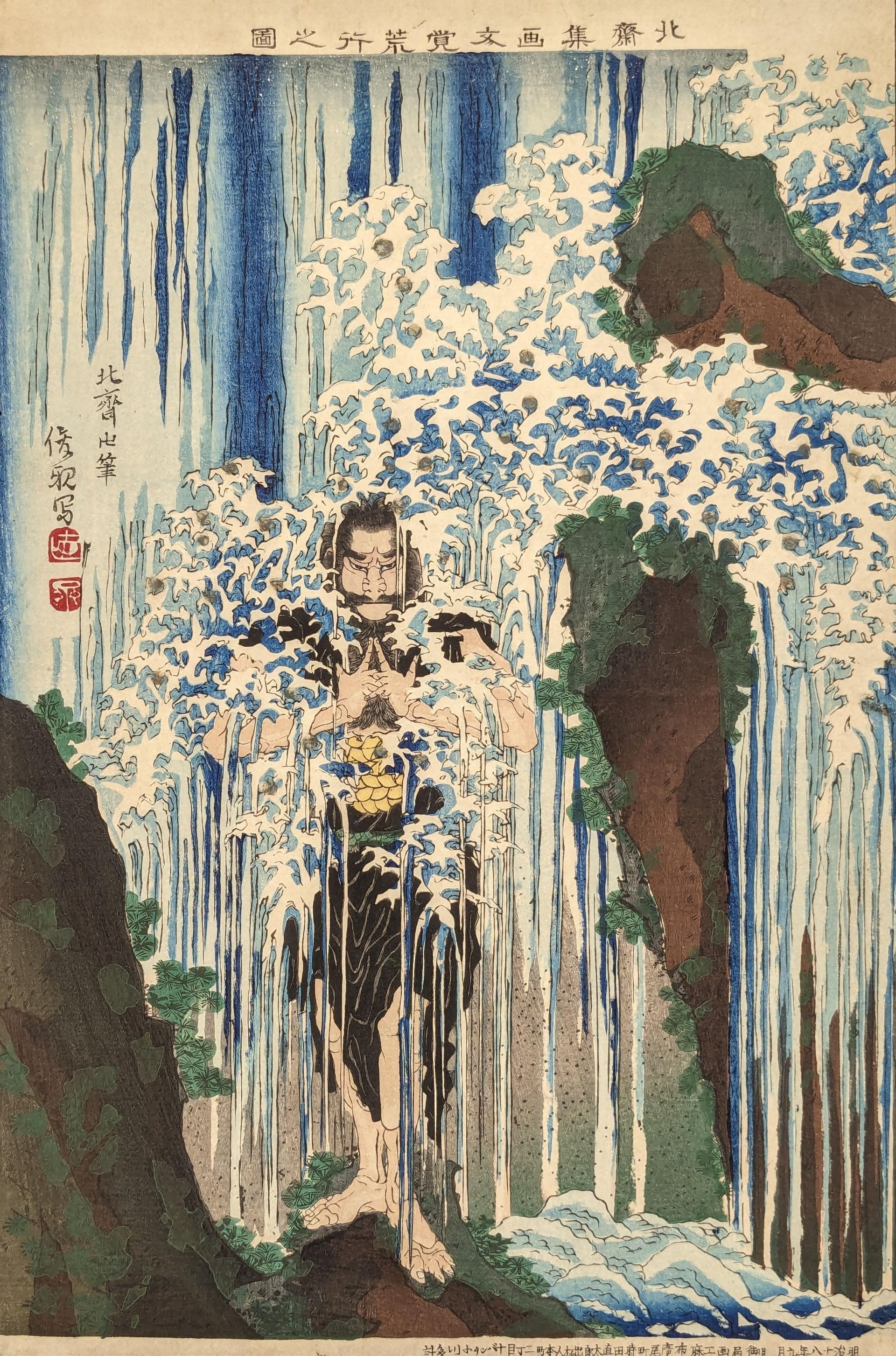
The image of Mongaku Shōnin beneath the Nachi Waterfall is one of the most powerful narratives in Japanese art. It is not decorative, and it is not symbolic in a superficial sense. It is a story about responsibility, endurance, and transformation carried to their absolute limit.
Originally known as the samurai Endō Morito, Mongaku committed a grave act driven by obsession. The woman at the center of this tragedy, Kesa, chose to sacrifice herself in order to stop the cycle of violence. Left alone with the consequences, Morito abandoned his former life and took monastic vows.
He did not look for relief.
He chose confrontation.
The waterfall as a place of reckoning
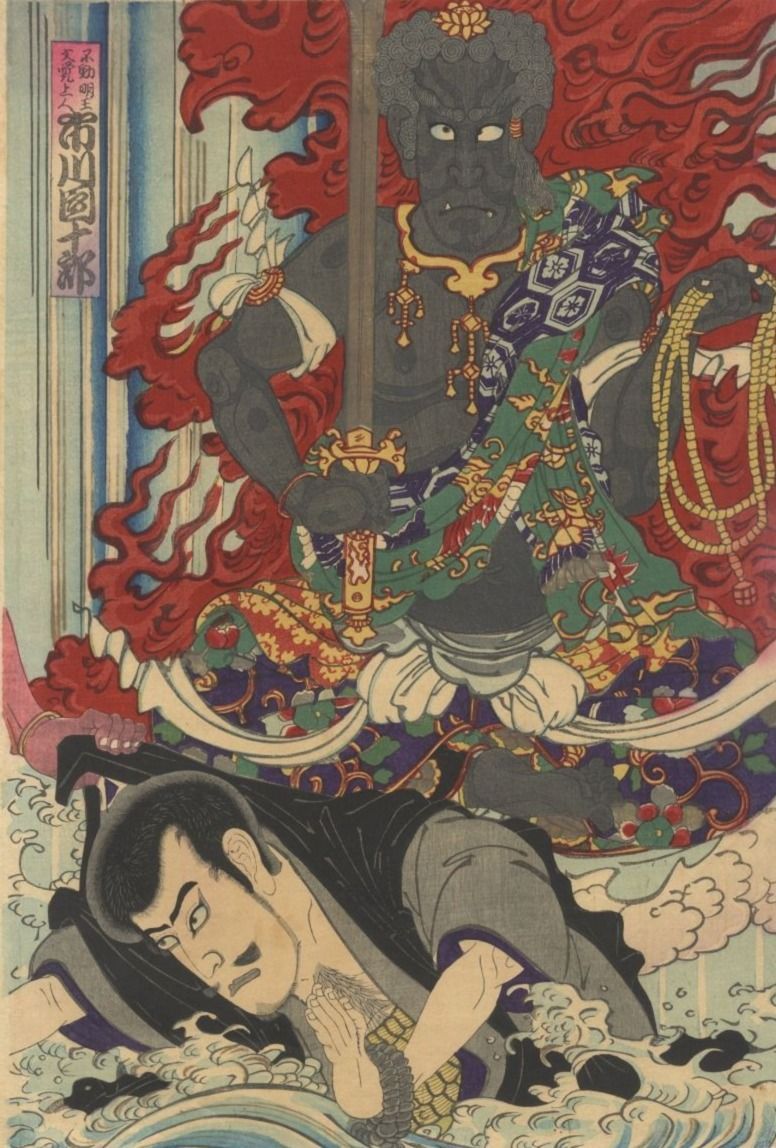
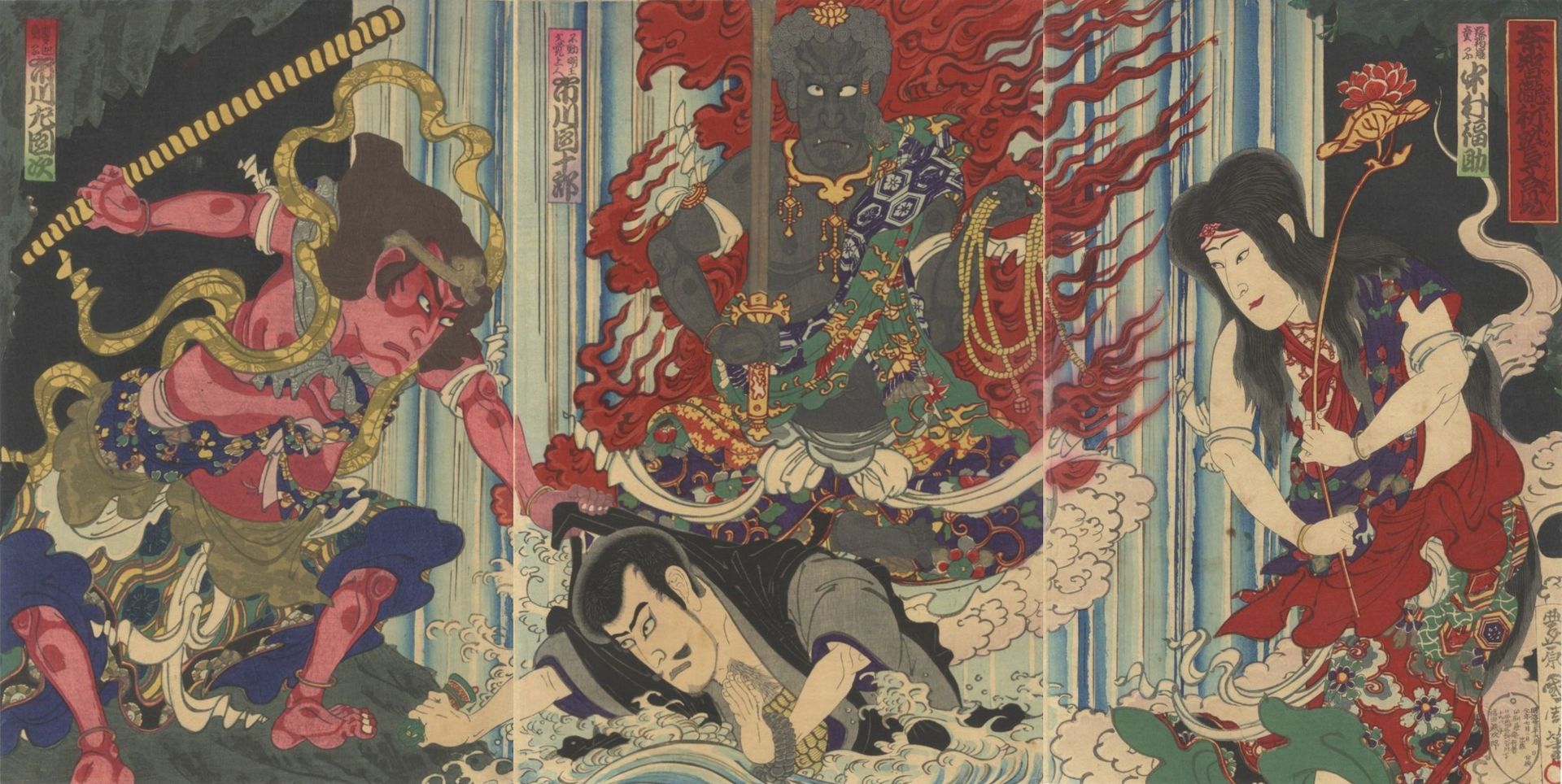
At Nachi no Taki, one of Japan’s most sacred waterfalls, Mongaku subjected himself to extreme ascetic practice. Sitting beneath a freezing wall of water for weeks, he recited mantras to
Fudō Myōō, the immovable protector of Buddhist law.
The waterfall here is not purification in a gentle sense. It is pressure. Weight. Constant impact. It removes comfort, excuses, and identity. What remains is resolve.
In visual terms, this is why the subject translates so naturally into a
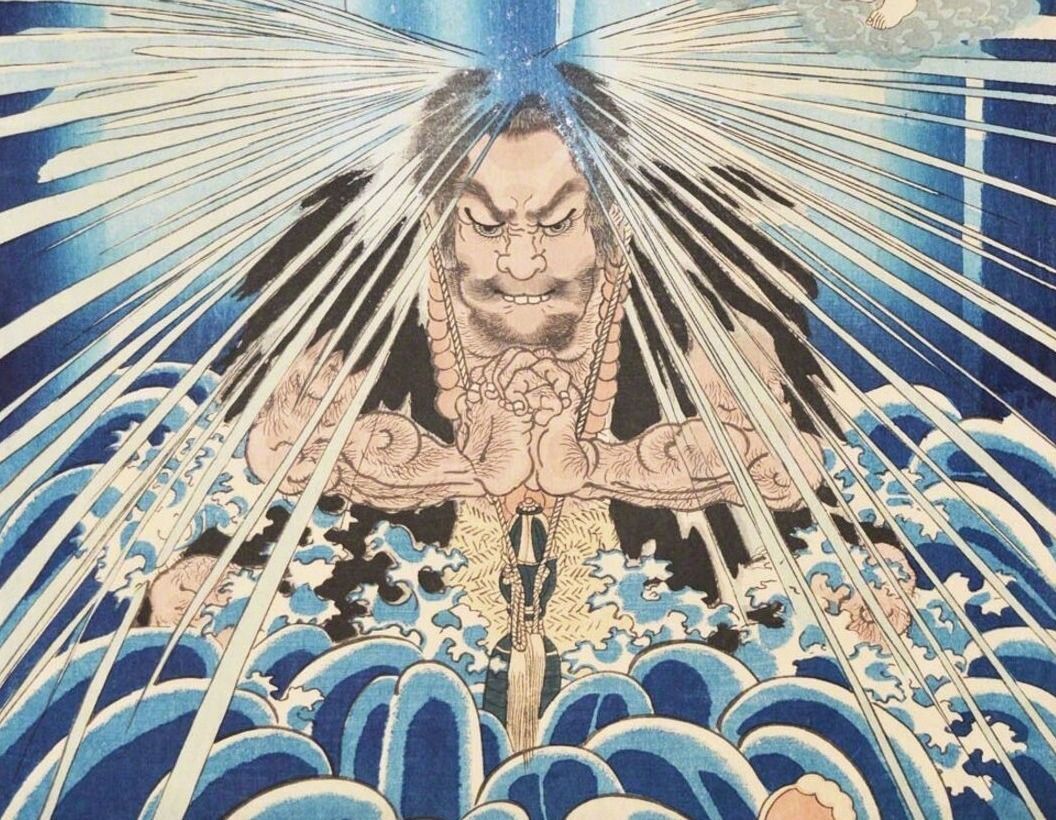
Japanese back tattoo. The force of water travels downward, while the body remains still, aligned with the spine. The entire composition is built around vertical tension.
Fudō Myōō and disciplined restraint
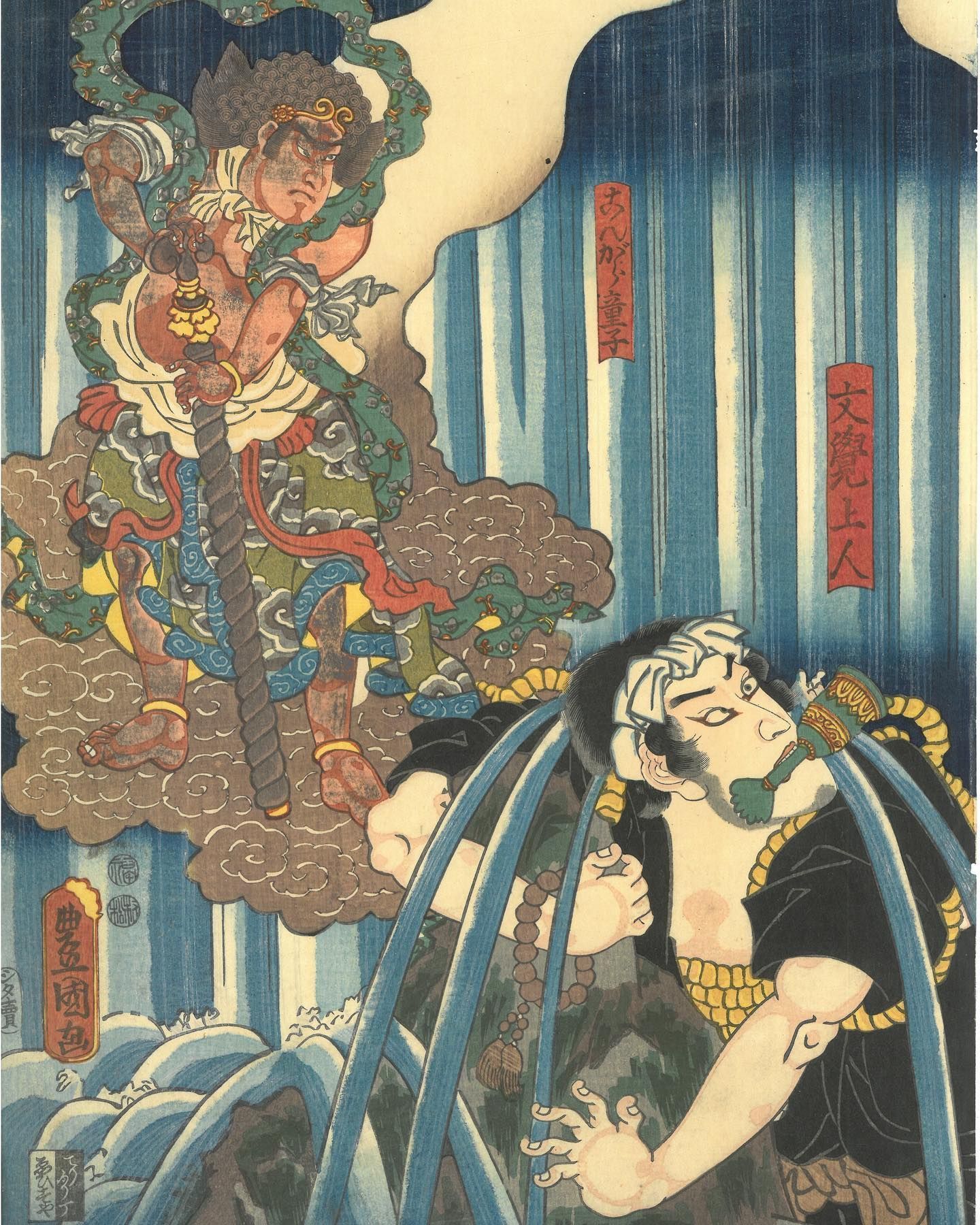
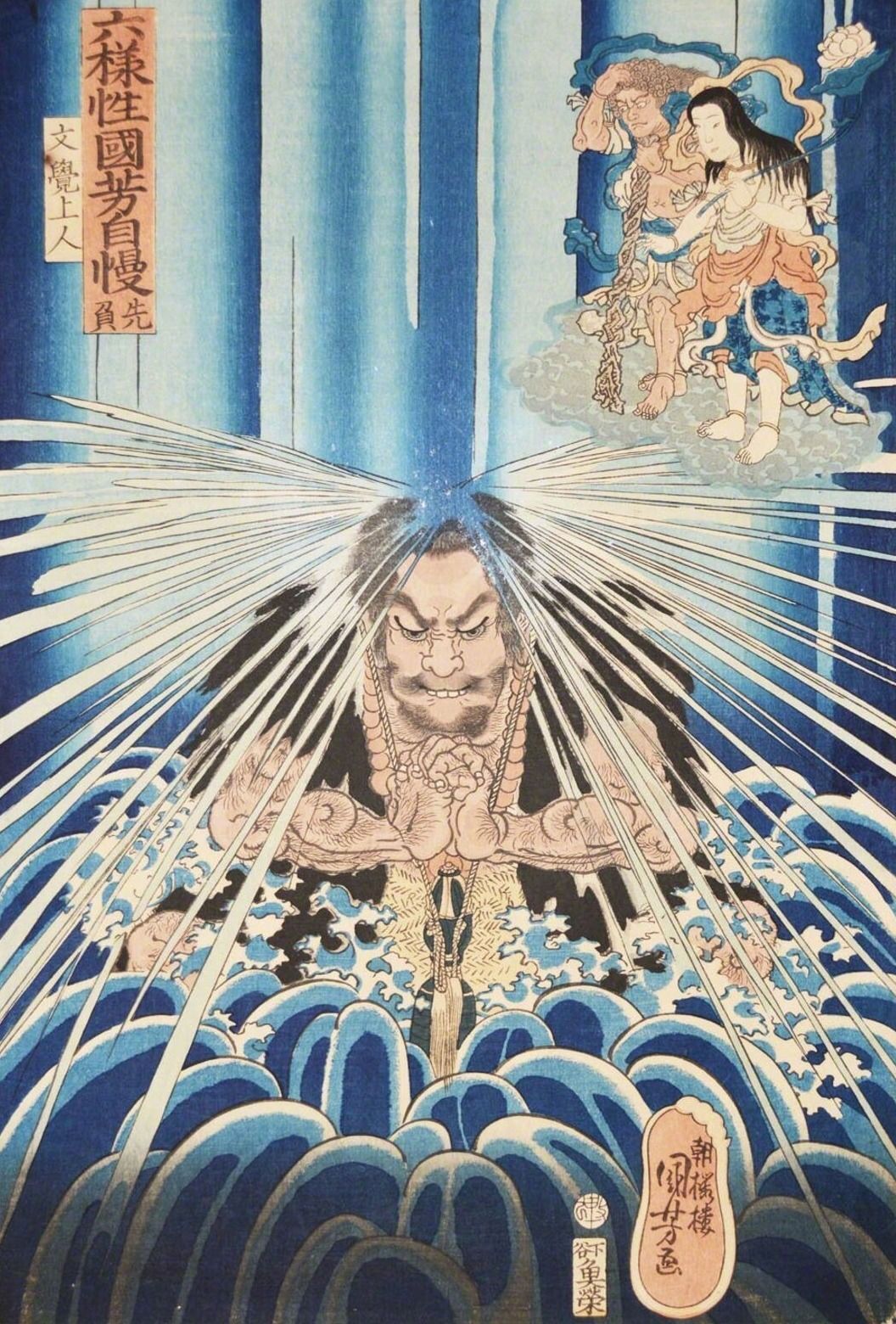
In the legend, when Mongaku reaches the edge of collapse,
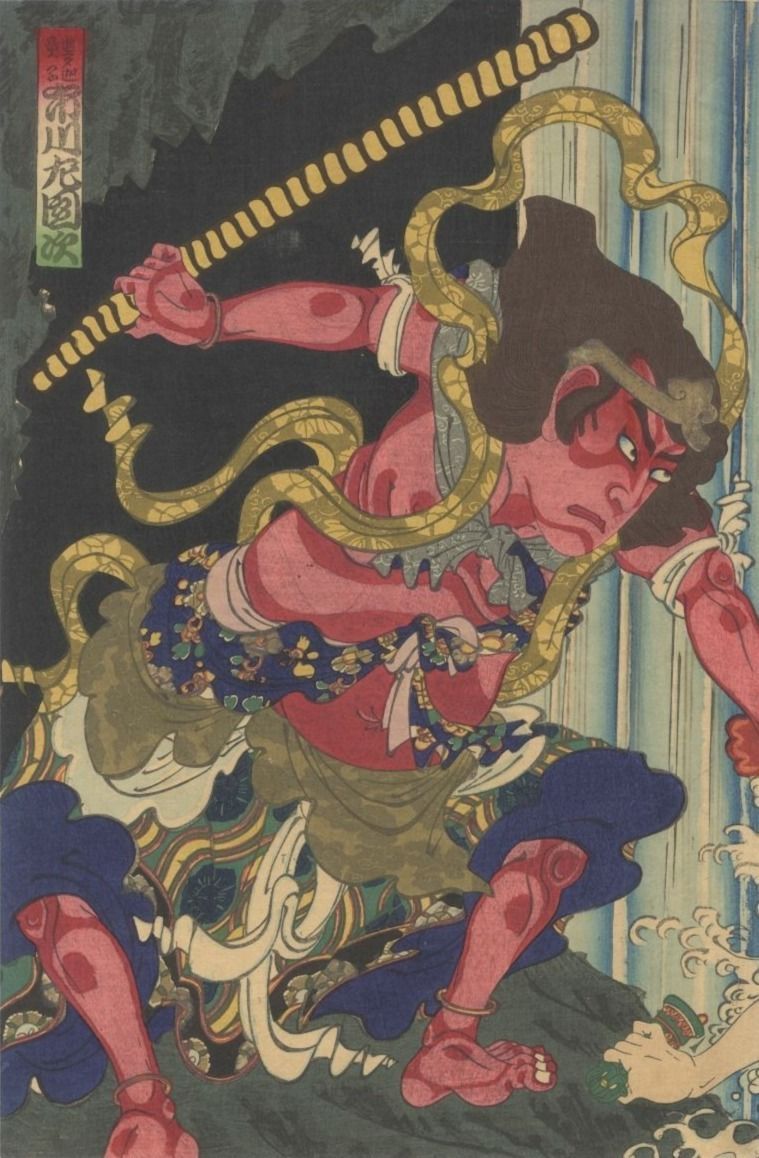
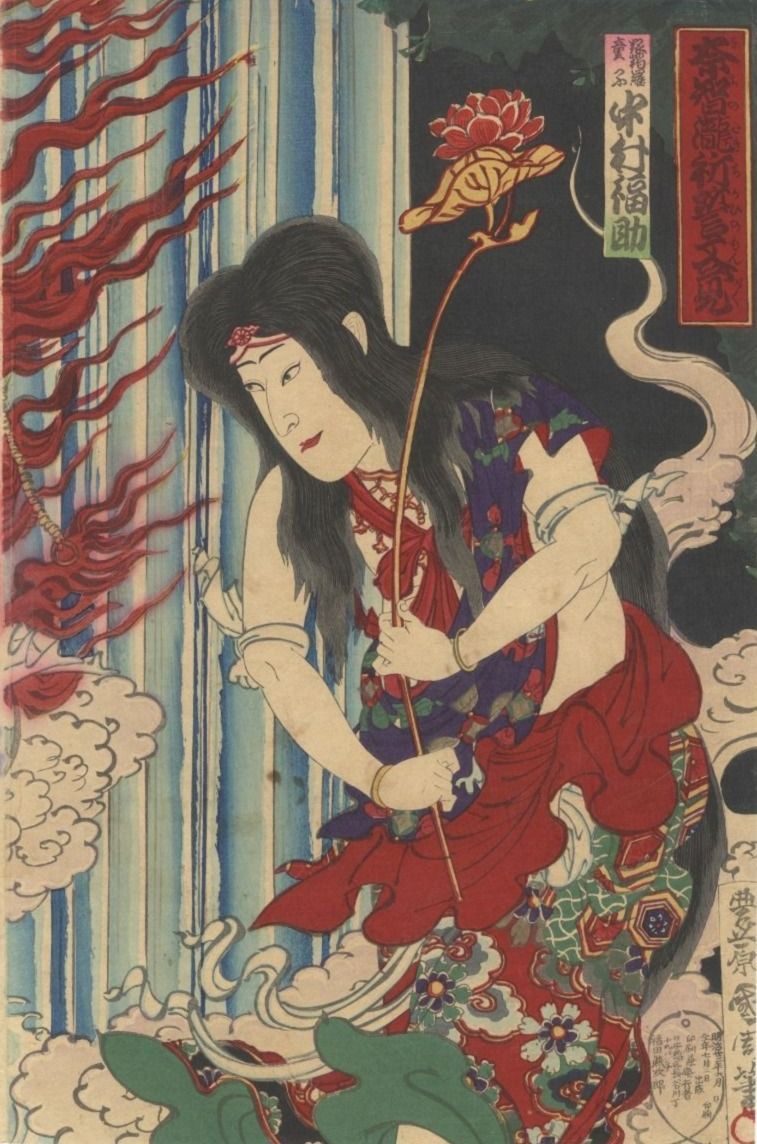
Fudō Myōō appears, accompanied by his attendants
Kongara-dōji and Seitaka-dōji. This is not rescue. It is support without mercy.
Fudō’s wrath is not directed outward. It burns ignorance, hesitation, and inner disorder. His presence introduces structure into chaos. For this reason, he is one of the most meaningful figures in traditional Irezumi, especially for large-scale compositions like a full backpiece.
Why this subject works as a full backpiece
A Mongaku Shōnin back tattoo is not about victory or redemption. It is about endurance.
The back allows the story to unfold exactly as it should. The waterfall dominates the entire field. Mongaku sits at the center, anchored through the spine. Above him, the presence of Fudō Myōō establishes authority and restraint. Below, water and impact dissolve the body into movement.
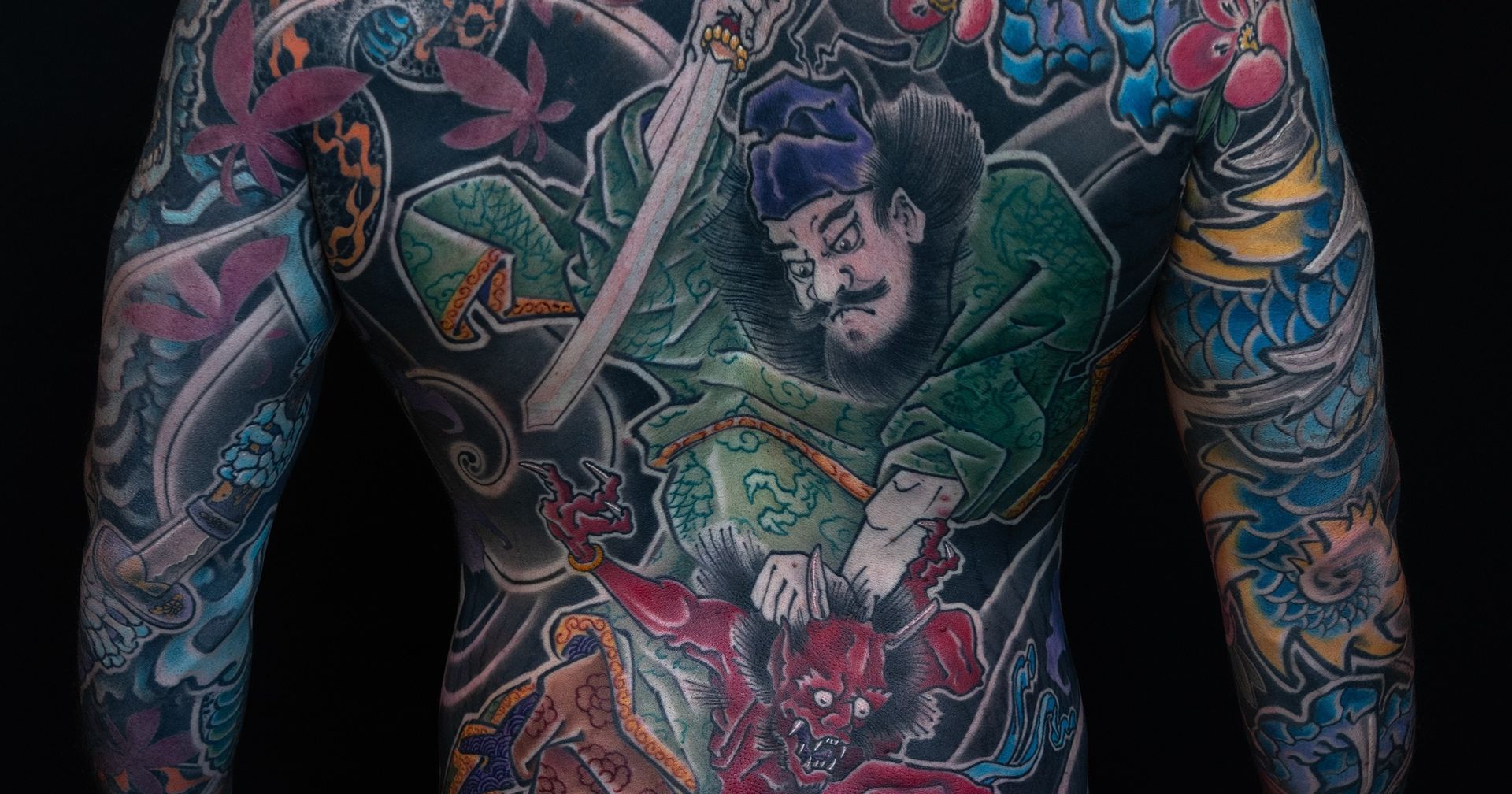
This structure makes the design ideal for a
traditional Japanese backpiece tattoo. It carries motion, stillness, tension, and meaning in a single image.
This subject resonates with those who understand that strength is not always shown through action. Sometimes it is shown through stillness. Through remaining present under pressure. Through accepting weight rather than escaping it.
That is why this image has survived for centuries in ukiyo-e, kabuki, and now Japanese tattooing. It speaks quietly, but with absolute clarity.
And that is exactly what a back tattoo is meant to do.