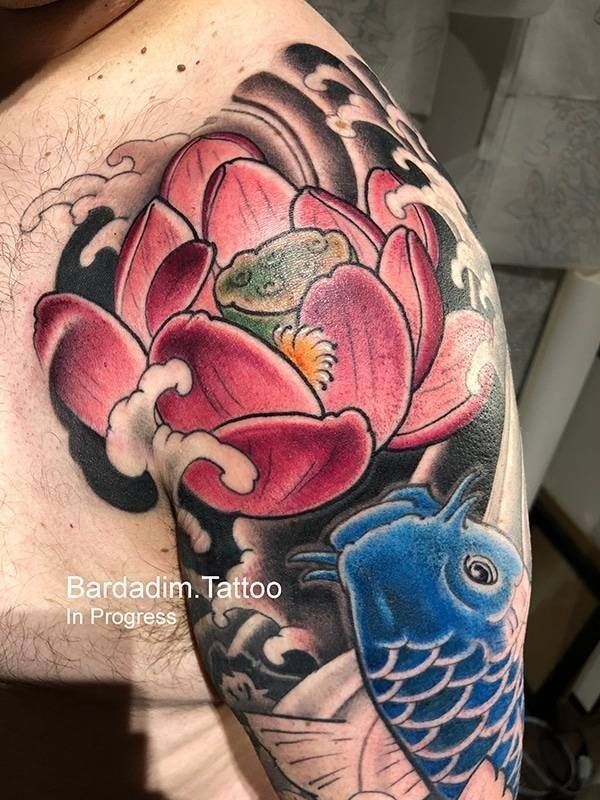
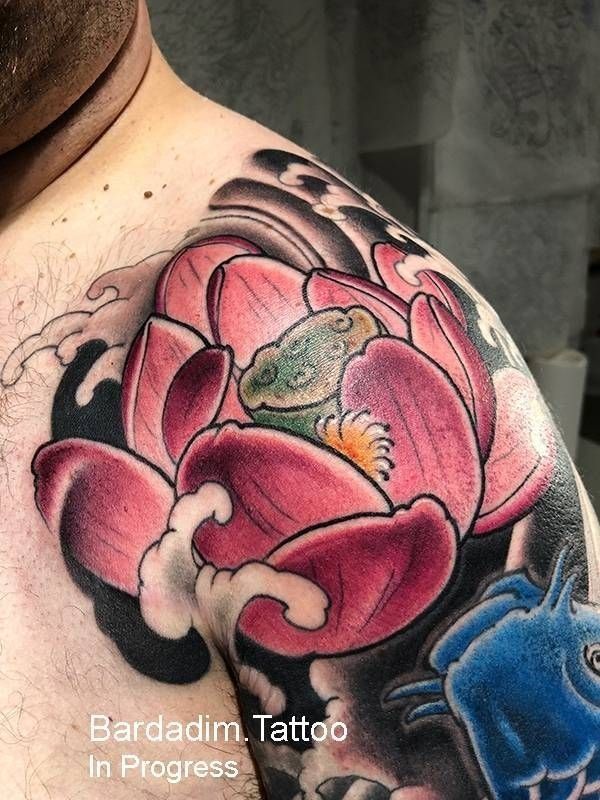
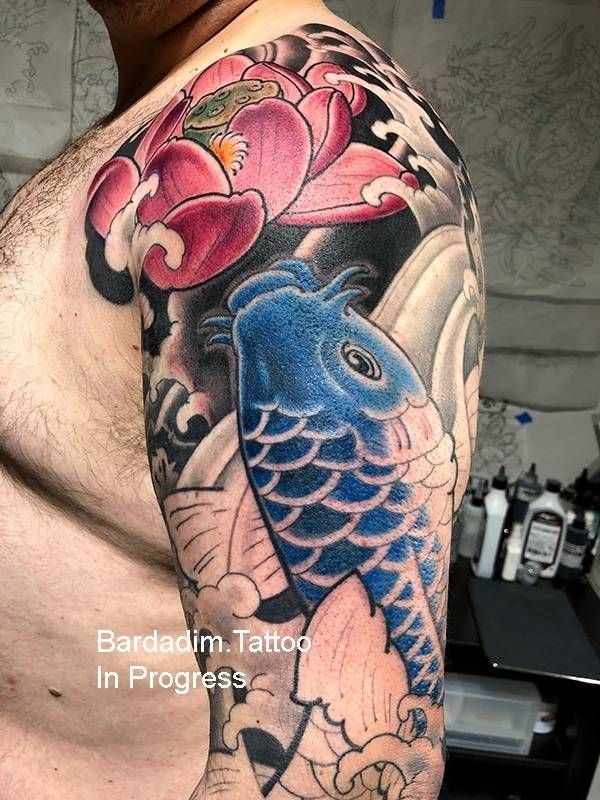
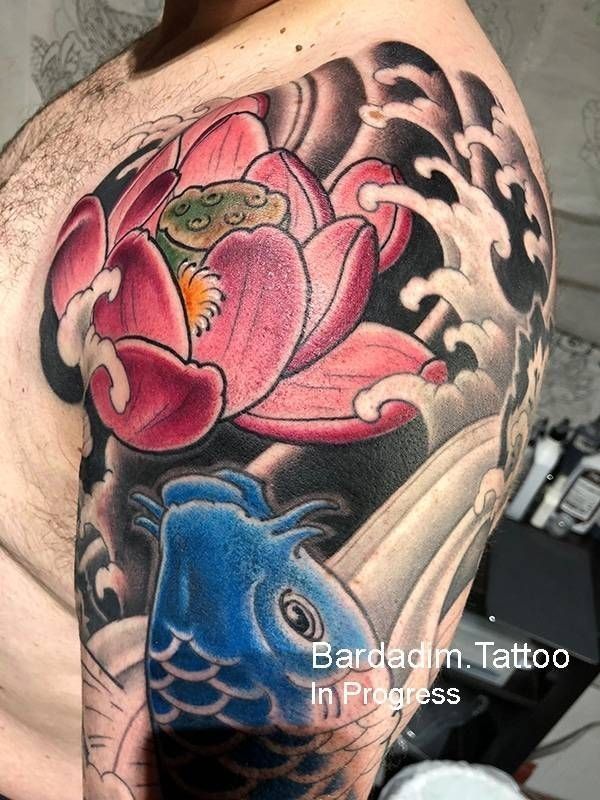
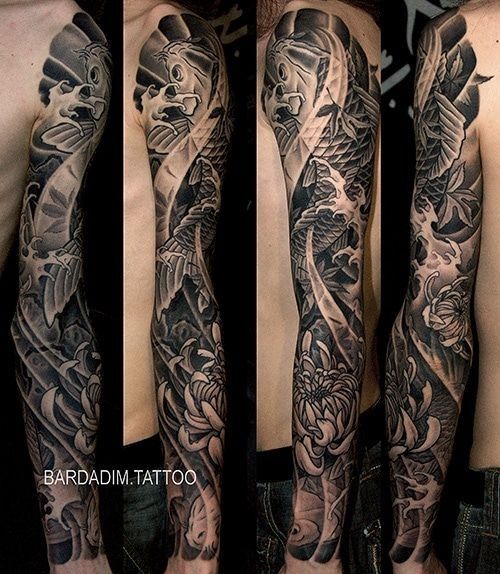
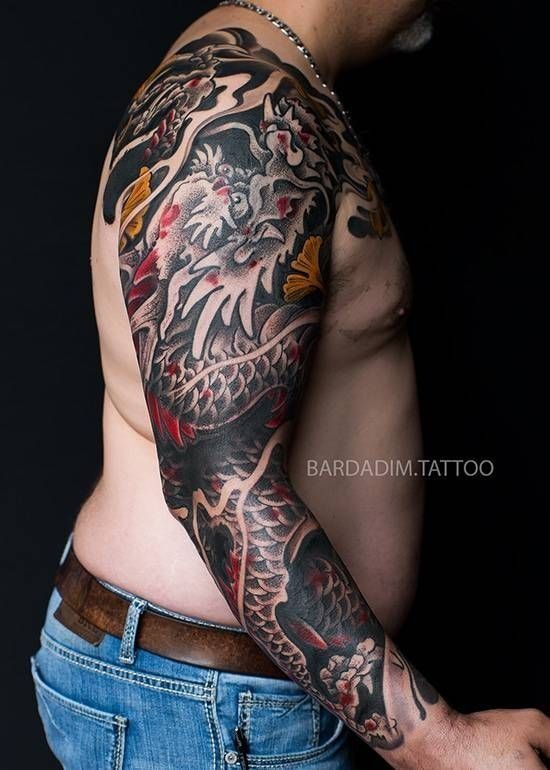
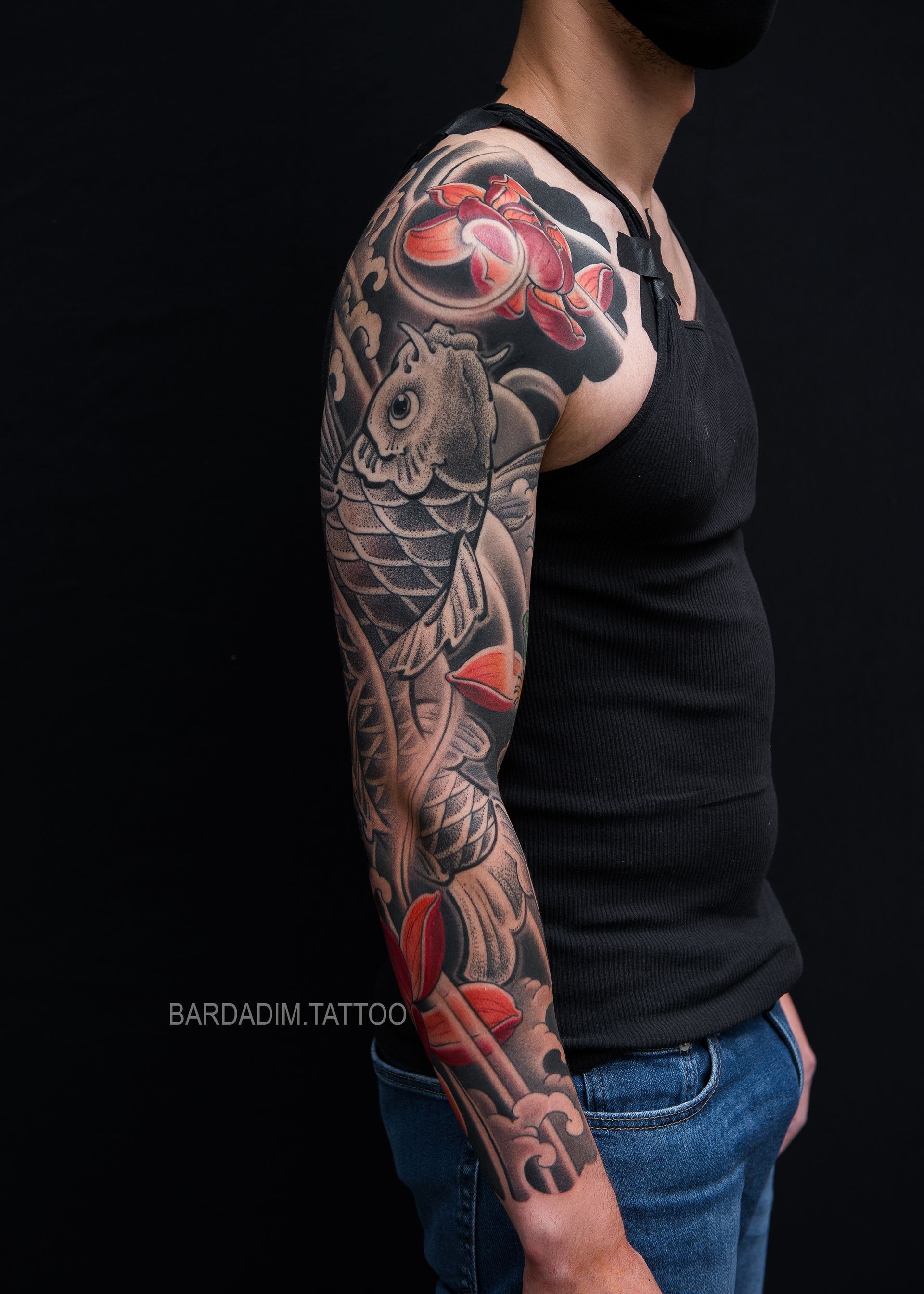
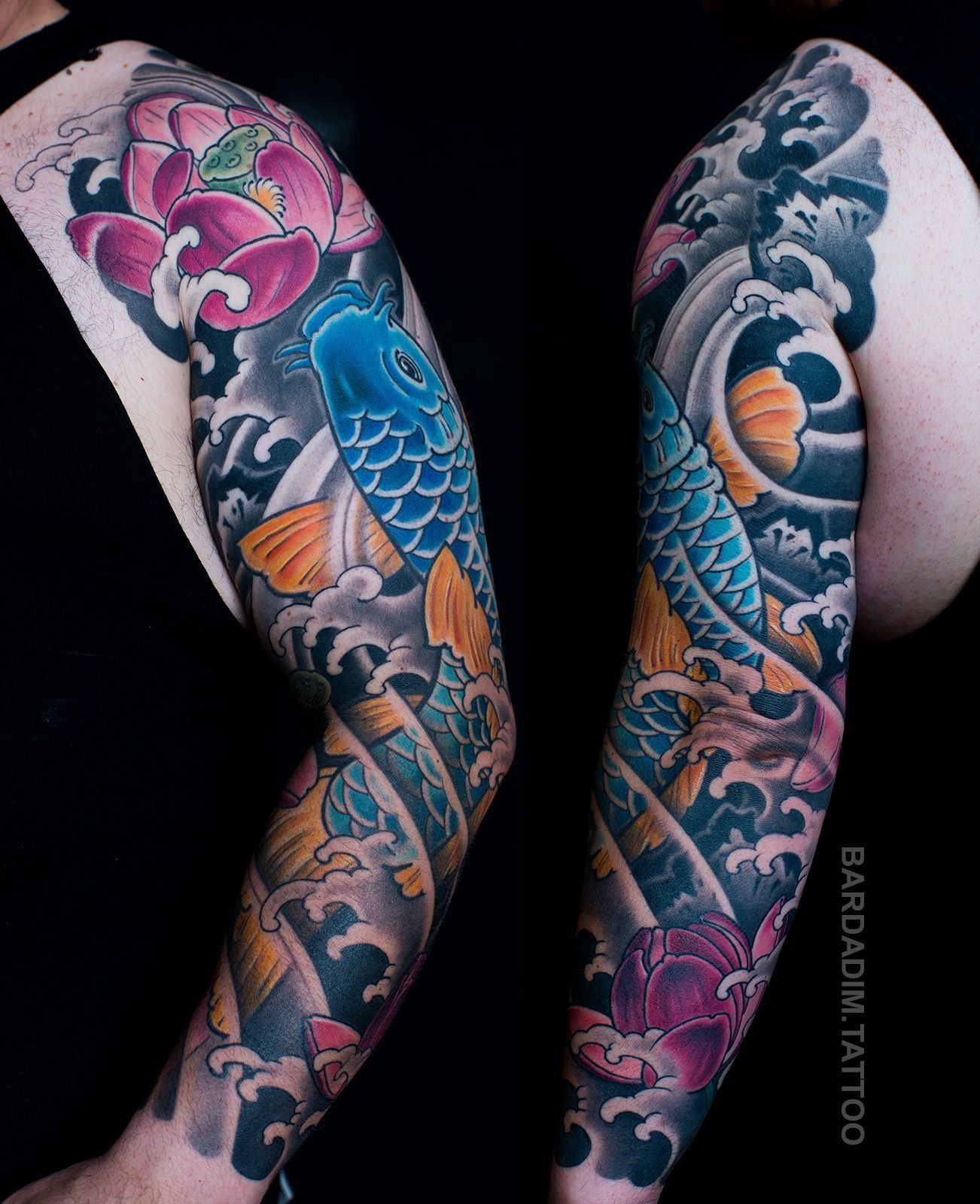
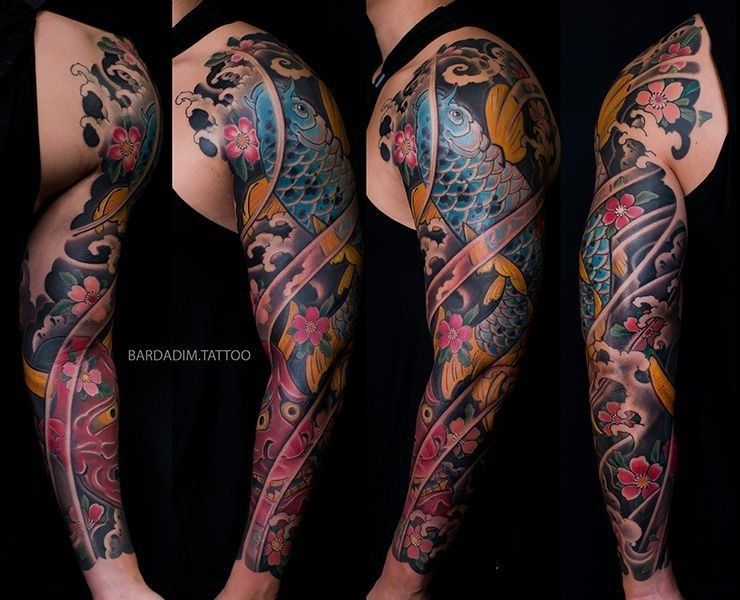
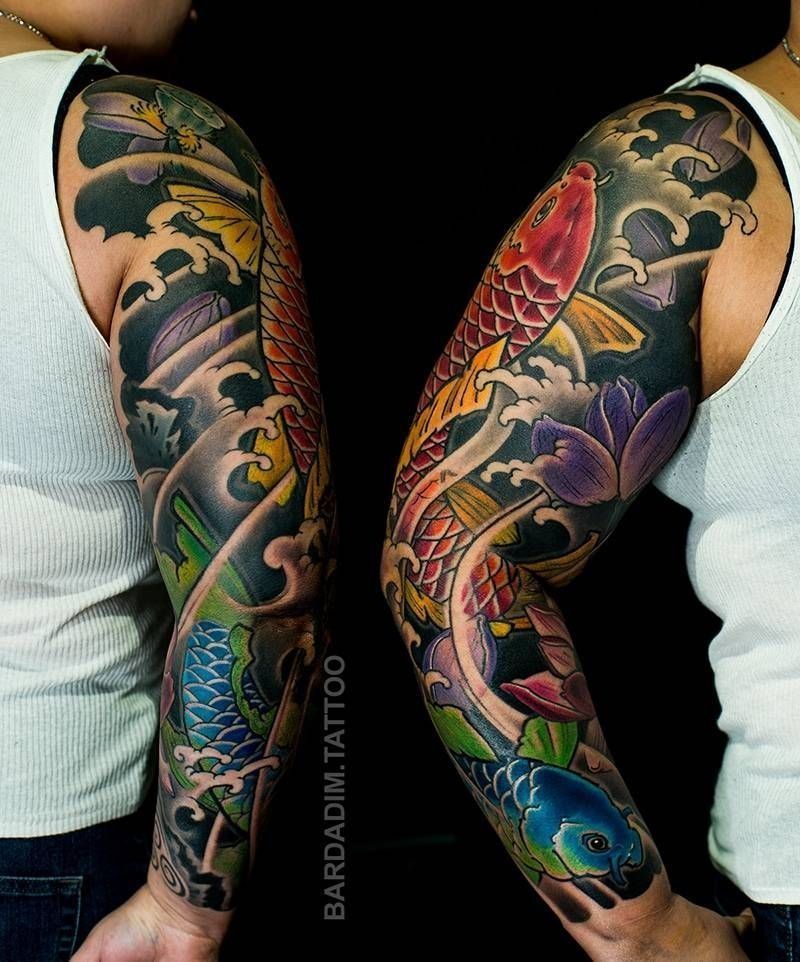
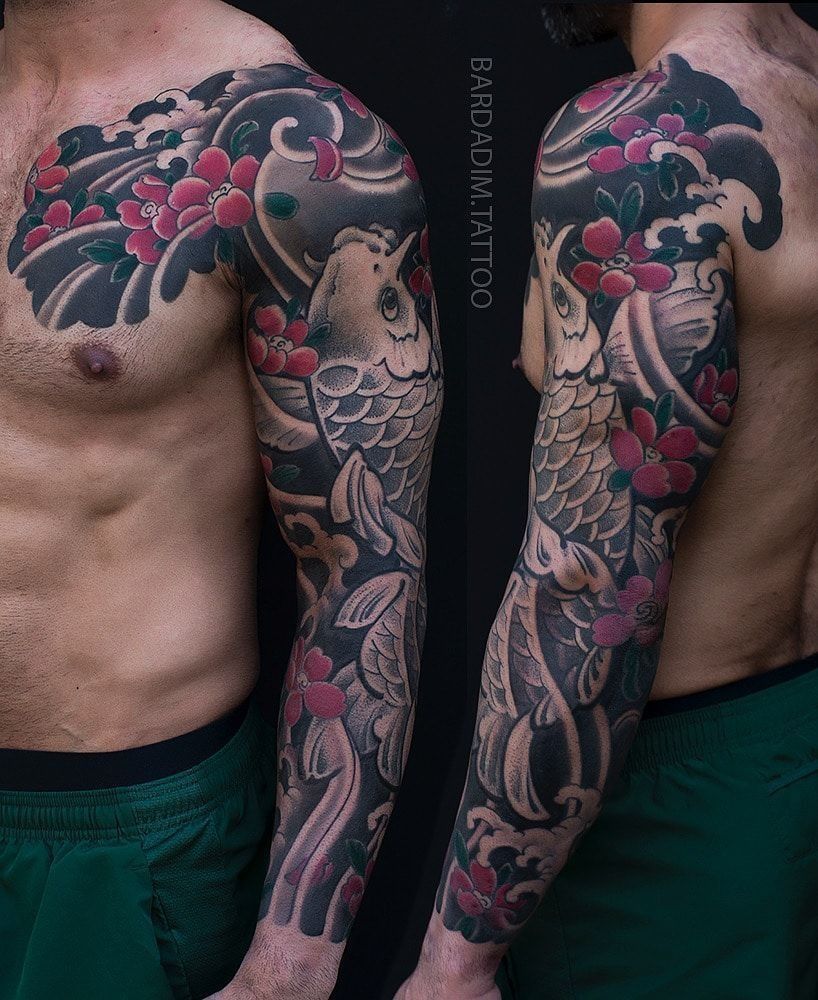
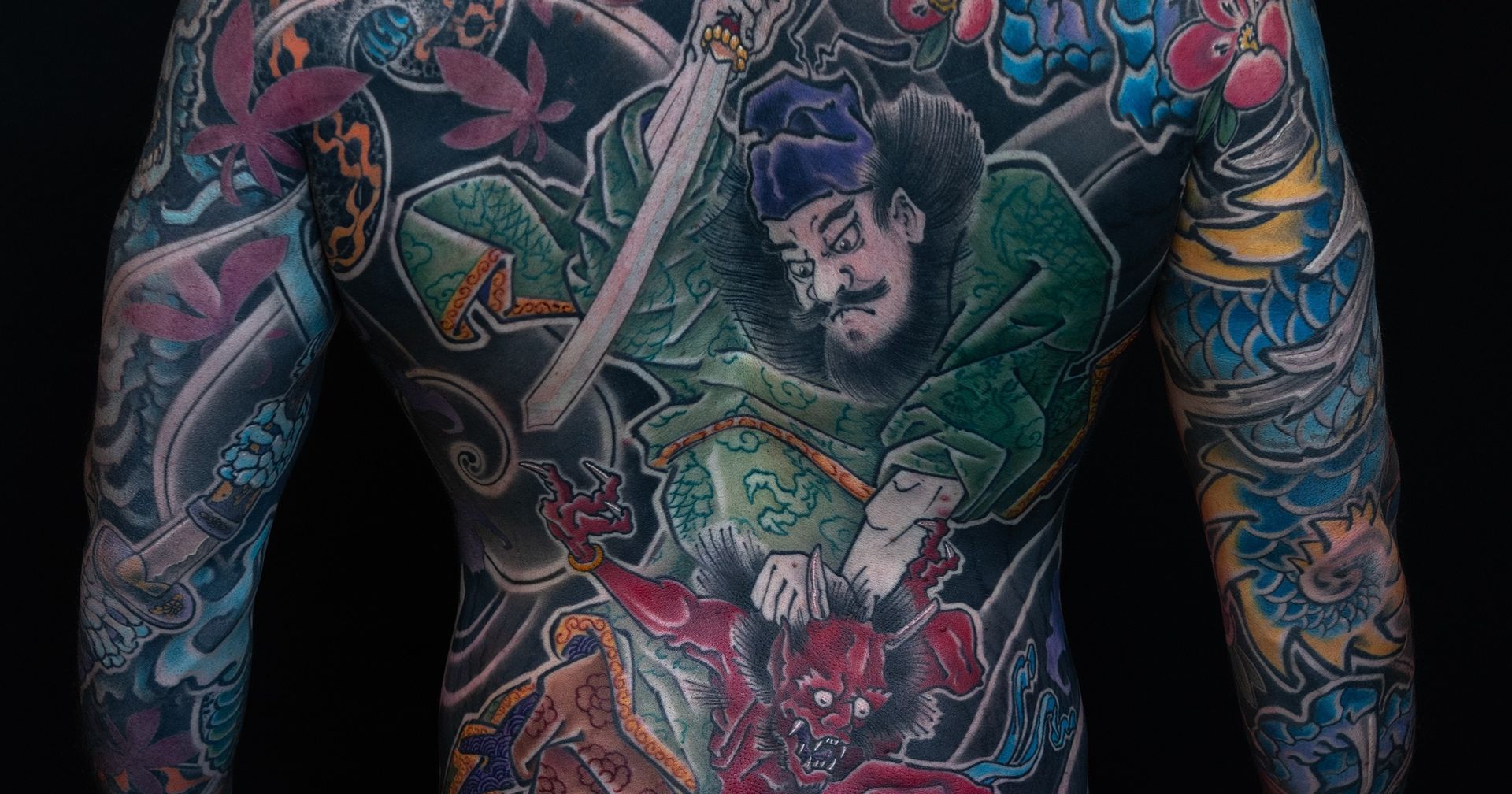
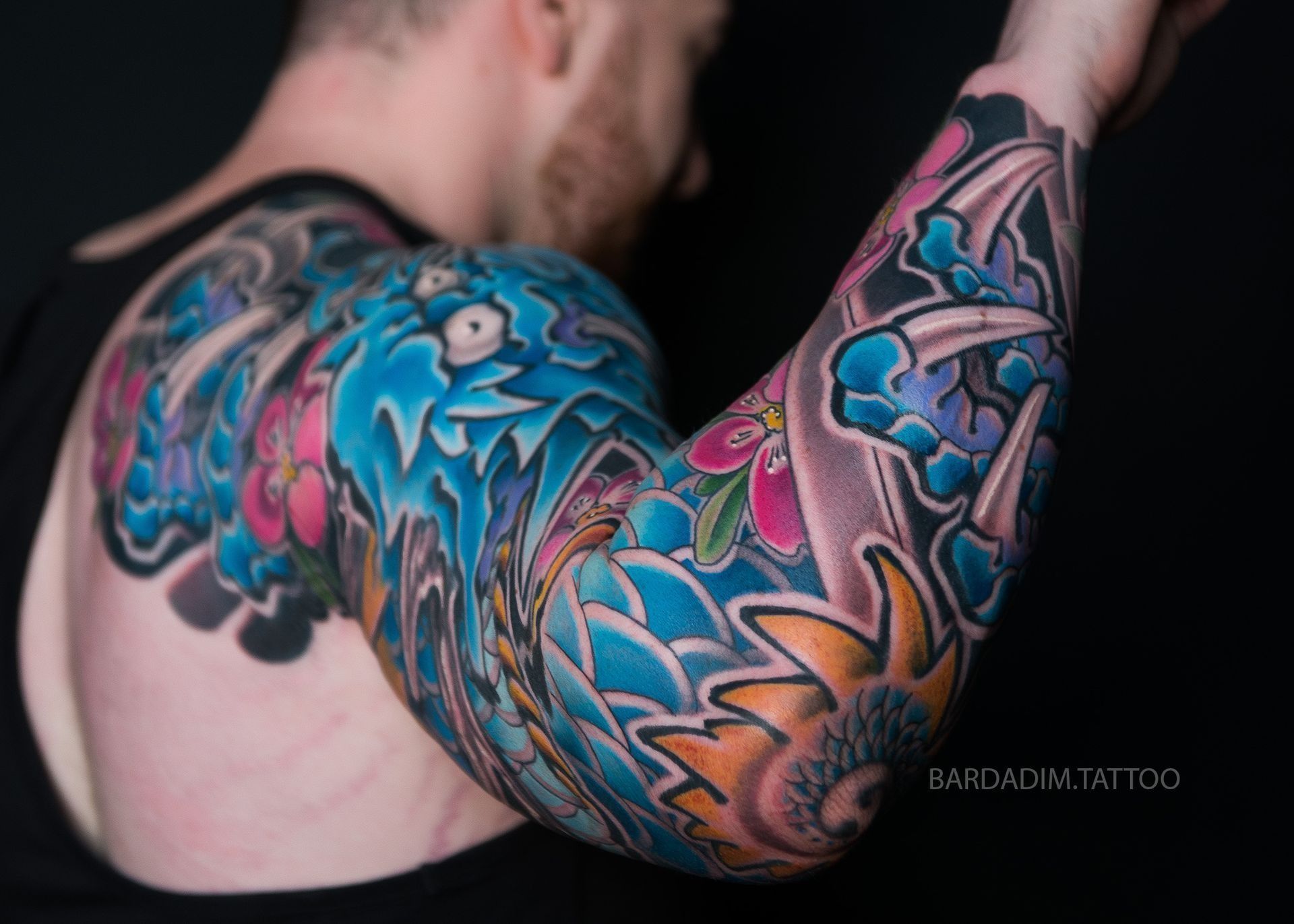
One of My Oldest Japanese Full Sleeve Tattoos showcasing Black and Grey Koi Fishes, Maple Leafs and Chrysanthemum flowers.
A sleeve tattoo (or tattoo sleeve ) is a large tattoo, or a collection of smaller tattoos, that has a unified theme, that covers most or all of a person’s arm, usually from shoulder to wrist.
There is a difference between an arm covered in tattoos and a sleeve tattoo. A sleeve tattoo has a unified theme, whereas an arm covered in tattoos may have many tattoos of different styles that does not have an overall unity.
The term “sleeve” is a reference to the tattoo’s size similarity in coverage to a long shirt sleeve on an article of clothing. In this manner, the term is also used as a verb; for example, “getting sleeved” means to have one’s entire arm tattooed. The term is also sometimes used in reference to a large leg tattoo that covers a person’s leg in a similar manner.
Half-sleeves or quarter-sleeves are tattoos that cover only part of an arm, usually above the elbow, but can also be found below the elbow.(Wikipedia)
Japanese Full Sleeve Tattoos or any other
Japanese Tattoos are not just a combination of pretty designs. Every detail shown has a very deep meaning, in this case it’s koi, chrysanthemum and maple leafs. Here you can find some information about the meaning in Japanese tattoo:
KOI (CARP)
Probably surprising to many westerners is the very large amount of ancient myths that surround these beautiful fish in the orient, and their elevated status there. The koi is more than just a colourful and collectible fish, it is also one of the most popular and beautiful story, myth, tale and tattoo themes, a beauty which belies its symbolic meaning. Although Chinese in origin, the koi is now widely celebrated in Japan, particularly for its masculine qualities. It is said to climb waterfalls bravely, and, if caught it will lie upon the cutting board awaiting the knife without a quiver, not unlike the warrior facing the sword.
Eventually, the stoic fish came to be associated with so many masculine and positive qualities that it was appropriated for the annual “Boys day festival” in Japan where even today colourful, streaming koi flags are traditionally displayed for each son in the family. In tattoo imagery, especially in combination with flowing water, it symbolizes much the same courage, control, and the ability to achieve goals with an understanding of life’s trials”.
MOMIJI (MAPLE LEAF)
One of the most popular backgrounds is the Japanese maple, a symbol of time passing, a symbol of the wind. the design often conveys the leaves as floating, carried on the wind or in the water. In Japan, it’s also the symbol of lovers. In some Japanese tattoo designs, canopies of maple leaves float over shoulders and drift over the torso.
A single leaf or a multitude of leaves are also potent symbols of regeneration and resurrection as they cycle through the seasons. Changing seasons are marked by the transformation of the leaves from trees. Spring, Summer, Fall and Winter are potent reminders of the circle of life, leaves are vivid reminders to us all of the life-and-death cycle of all living things. A tree losing the last of its leaves in the cold winds of autumn, to be stripped bare for the onset of winter has a poignancy that has long stirred the souls of poets, philosophers and men alike. The parallels of our own human lifetime are all too obvious. We could do worse than to meditate upon a rotting leaf on a damp forest path, often just a ghost of its former self. ‘This too will pass,” said the Buddha.
KIKU (CHRYSANTHEMUM)
This blossom is often portrayed as a symbol of perfection. The Japanese regard the chrysanthemum as their ‘solar flower’- the Japanese Imperial Family adopting it as their emblem and the Seal of the Emperor himself. The Emperor’s position is referred to as The Chrysanthemum Throne. The flower is depicted with petals radiating like flames from the sun, the centre of which symbolizes the Emperor’s status in the scheme of things. Longevity and joy are the attributes of both flower and worthy ruler. In Japan, the Imperial Order of the Chrysanthemum is the highest Order of Chivalry. Japan also has a National Chrysanthemum Day, which is called the Festival of Happiness.
Autumn is the season of this flower and in China the chrysanthemum is a symbol of Taoist simplicity and perfection. A time of tranquillity, completeness, and abundance following the harvest. Since it blooms right into winter, it may also symbolize the ability to mediate between life and death, between Heaven and Earth.
Although traditional Japanese tattoos give an initial impression of chaotic complexity and a seemingly infinite number of design elements from which to choose, such is not the case, In fact, traditional Japanese tattoos tend to be drawn from a smaller set of symbols – primarily the cherry blossom, the peony, and the chrysanthemum.
From its identification with autumn, when it blooms, to its association with other fall qualities such as rest after the harvest season, and eventually to periods of quiet contemplation, the chrysanthemum has moved naturally into symbolizing a time of withdrawal and retreat. Even the word itself, in Chinese “chu” or “ju”, sounds like the word for “wait” or “linger.” Other sound-alike made the chrysanthemum ideal for messages of congratulations or good will and wishes for long life.
However, its symbolic link to longevity and happiness in Japanese culture may be draw more from its actual appearance. Circular and symmetric with numberless rays that flow from its centre, the chrysanthemum fits into the class of symbols that we recognize as solar. As a sun symbol, it immediately links to representations of life and longevity. While the cherry blossom of spring references the brevity and bright beauty of our transient lives, the chrysanthemum plays the opposite role in tattoo artwork. It is the flower of fall and of fullness, symbolizing not only a long life but a complete and happy one as well. (
SOURCE )
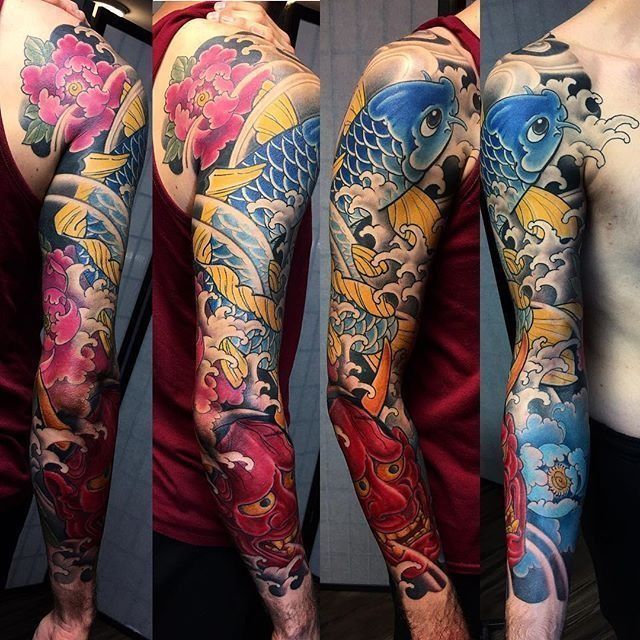
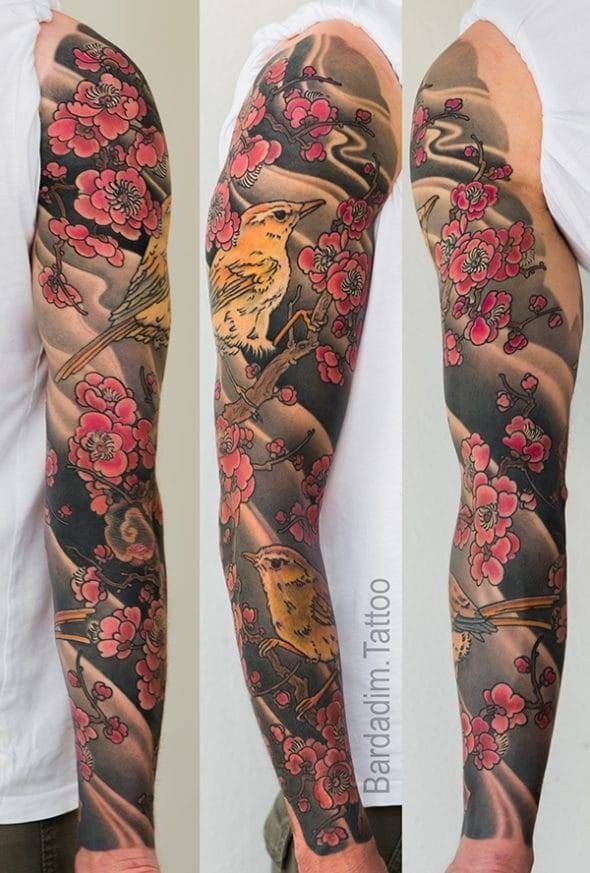
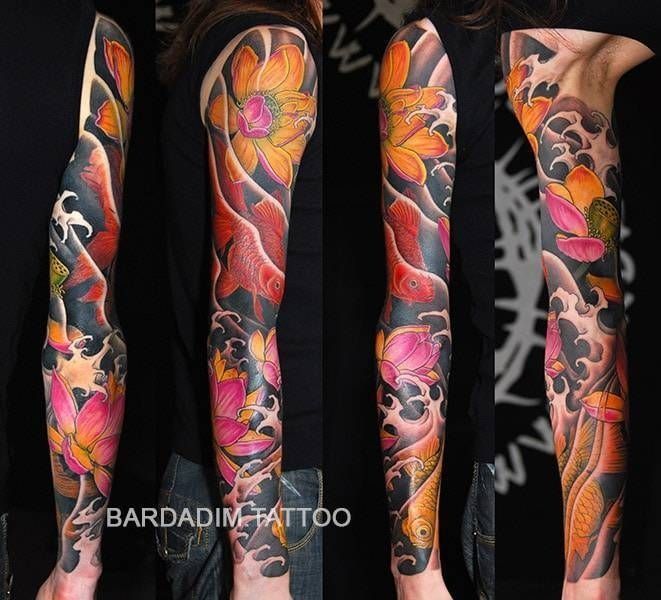
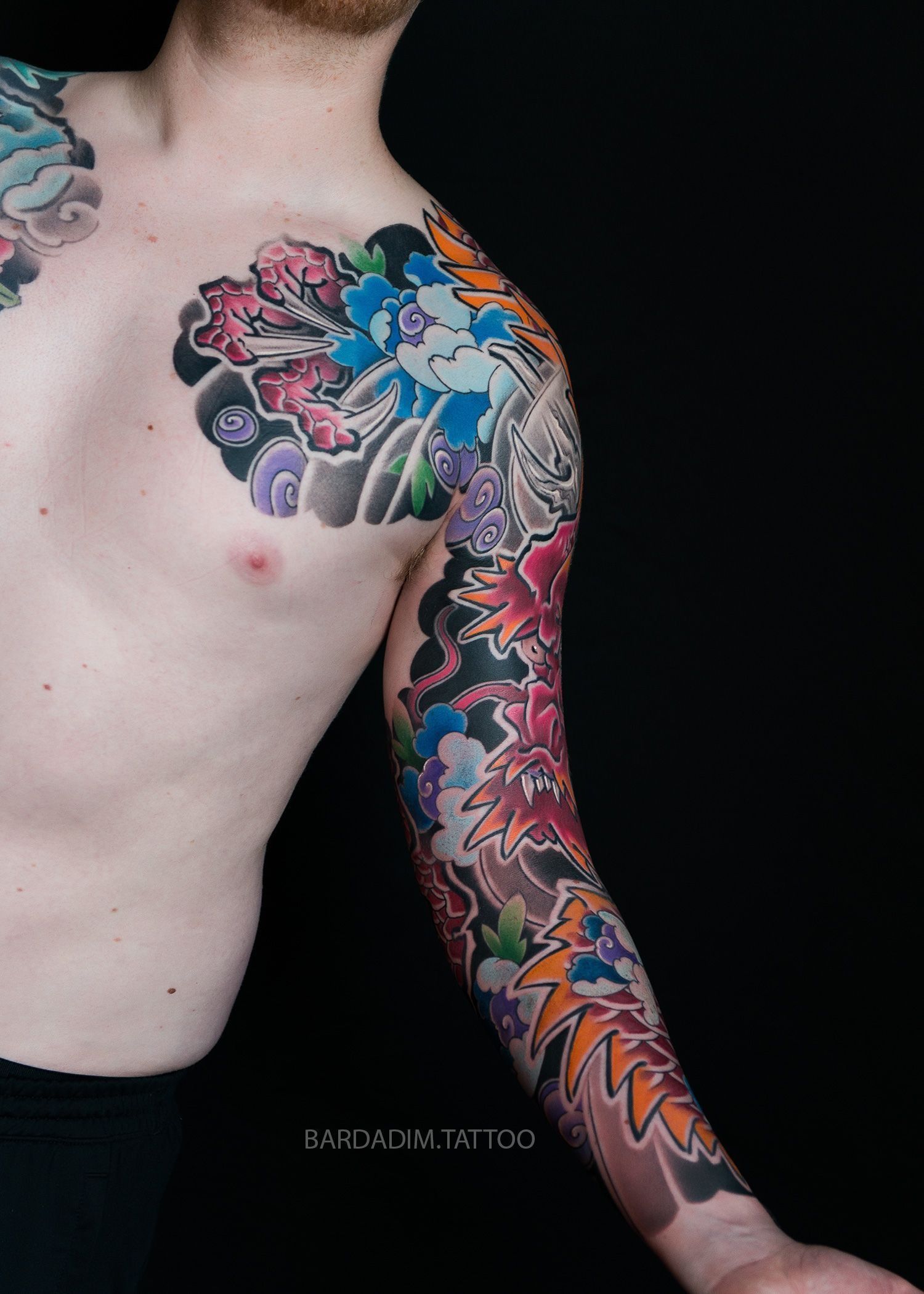
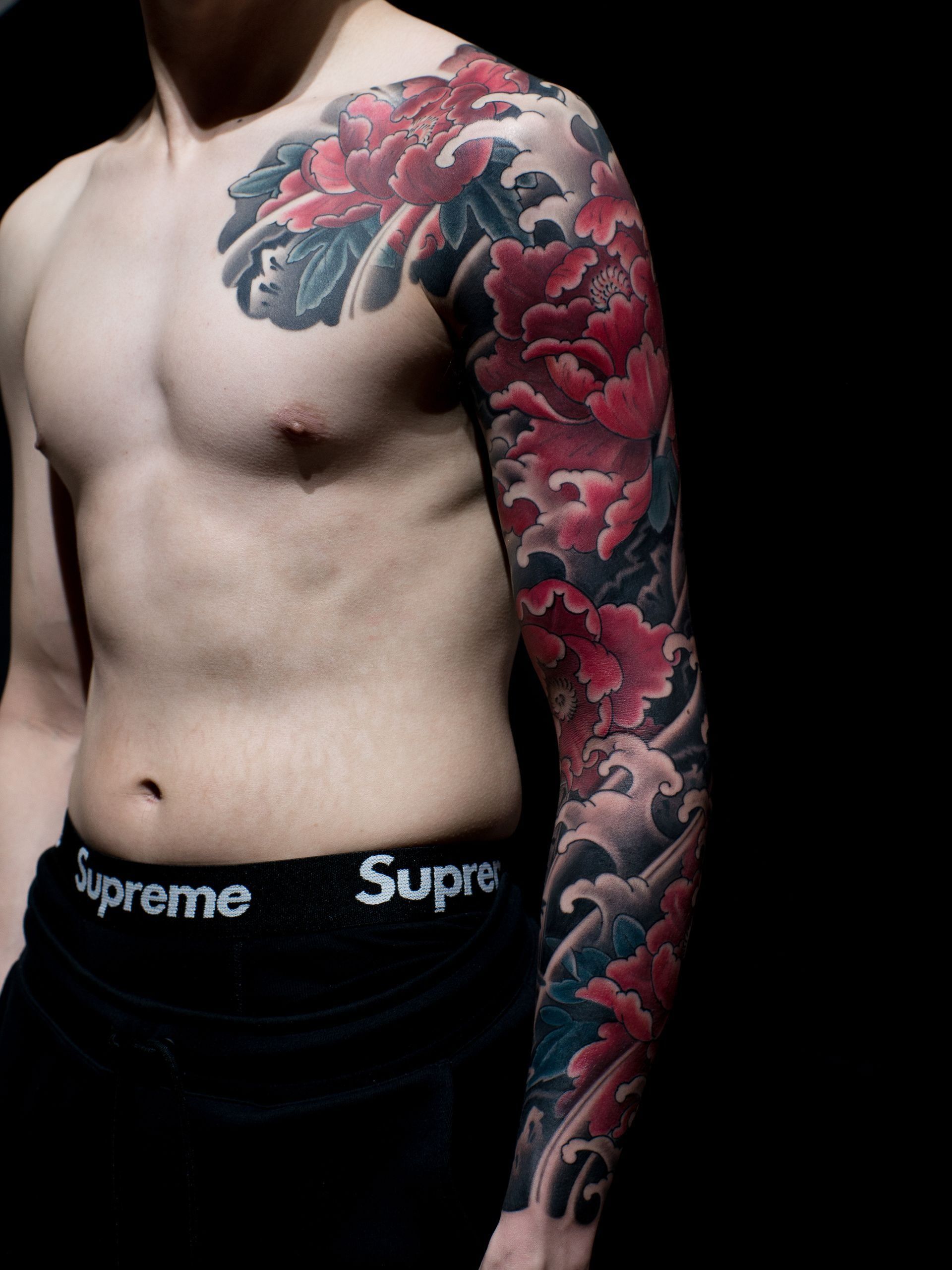
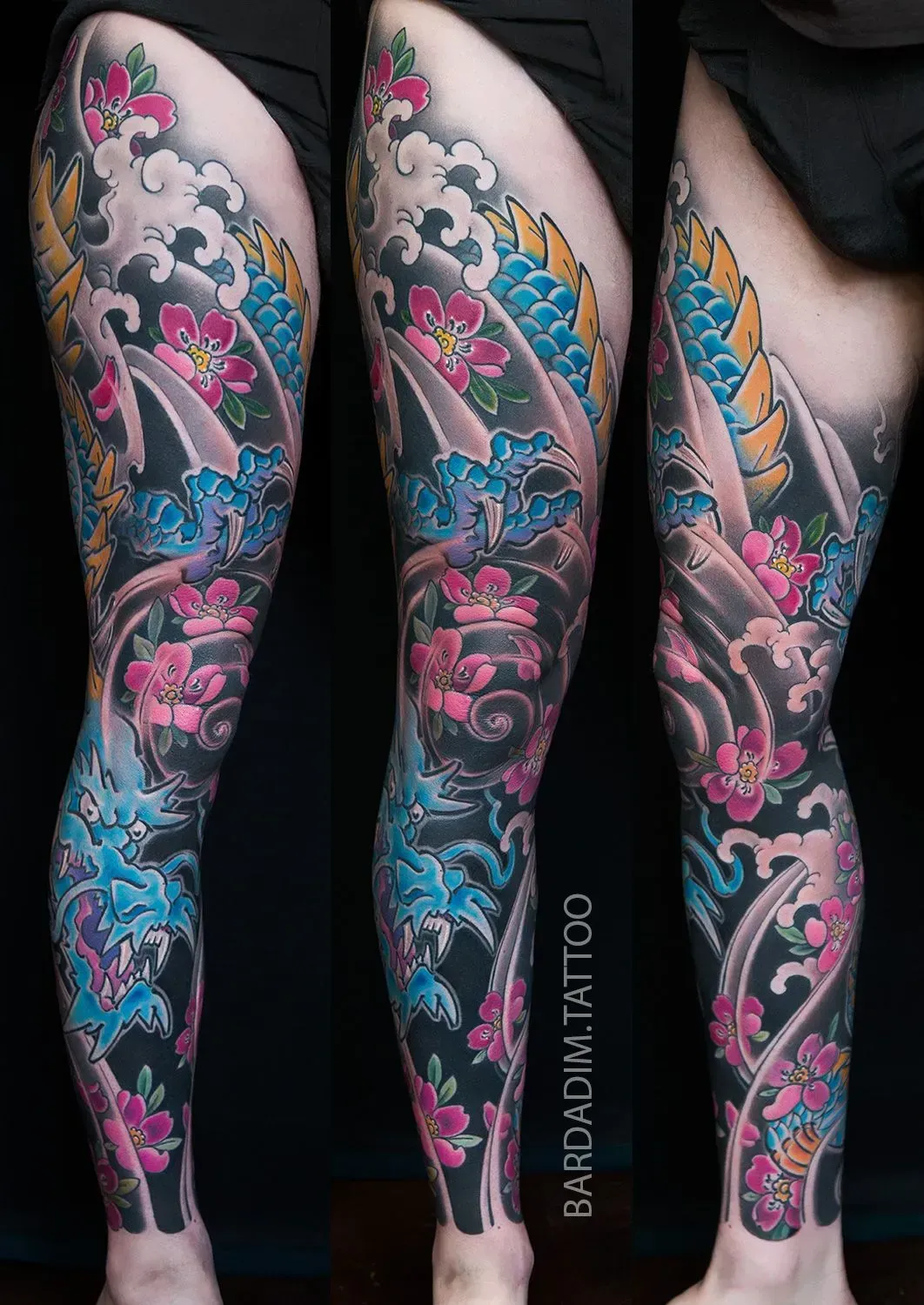
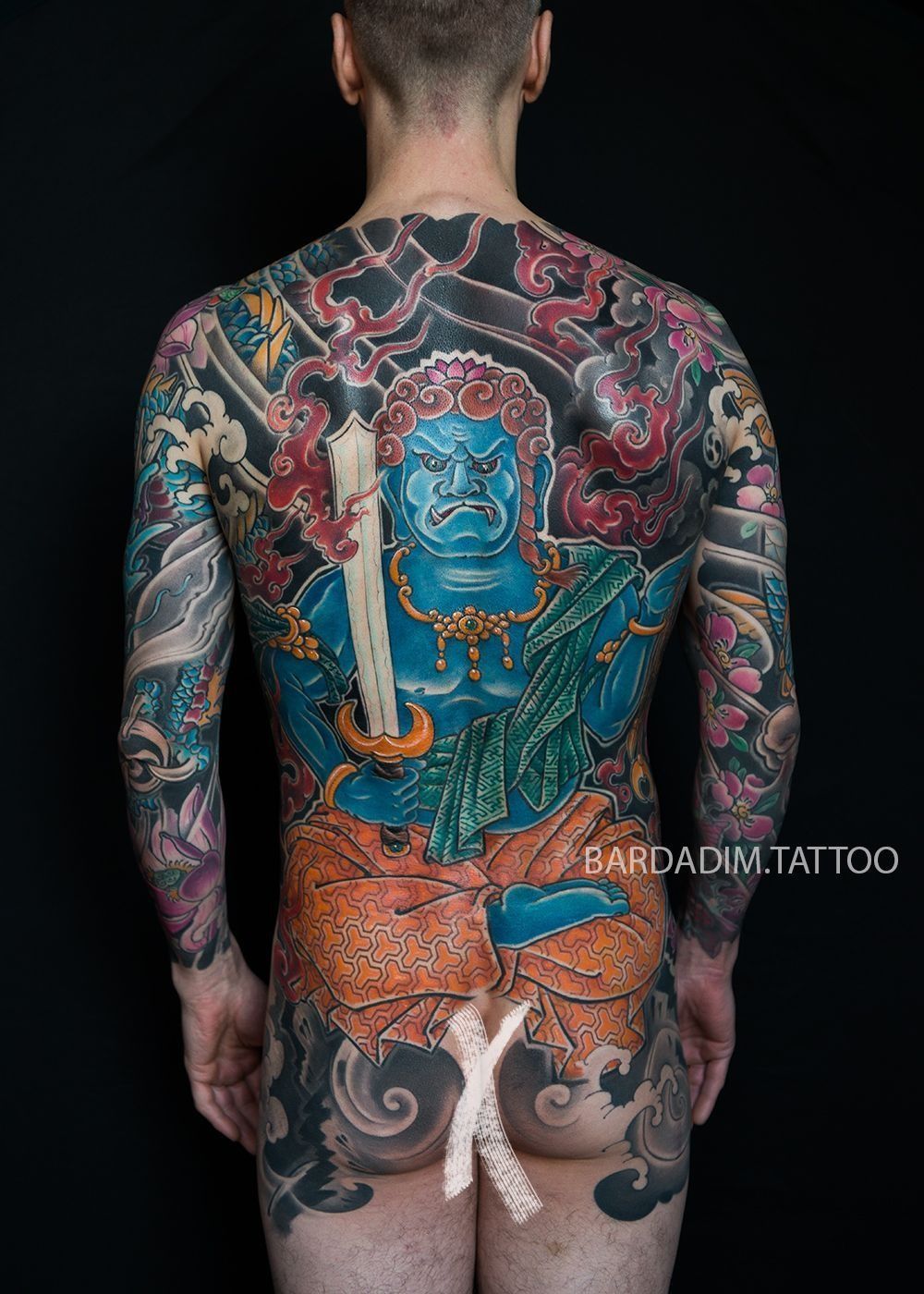
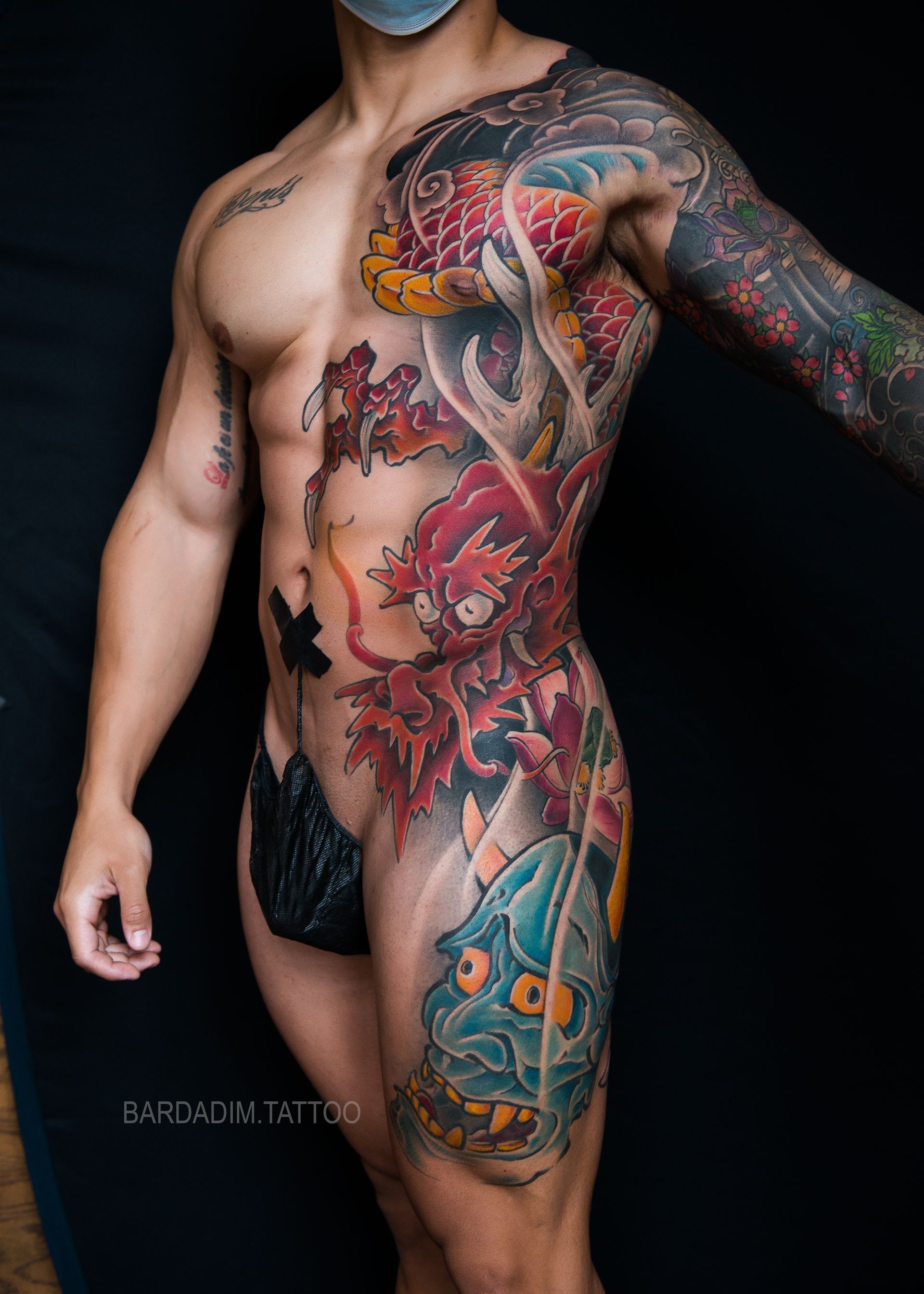
Few more examples of Japanese Full Sleeve Tattoos by George Bardadim, Bardadim Tattoo Studio, Brooklyn, NY.