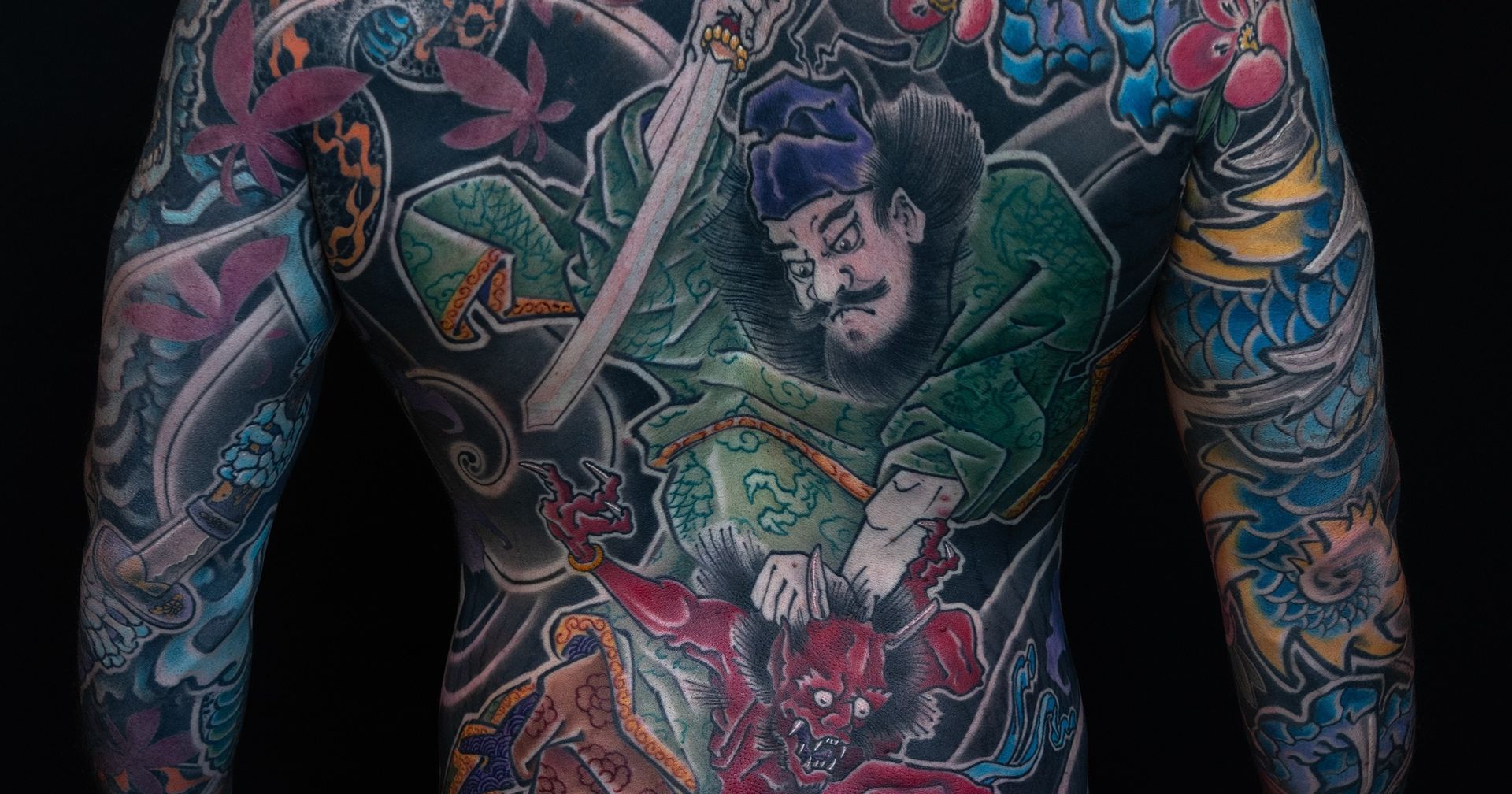
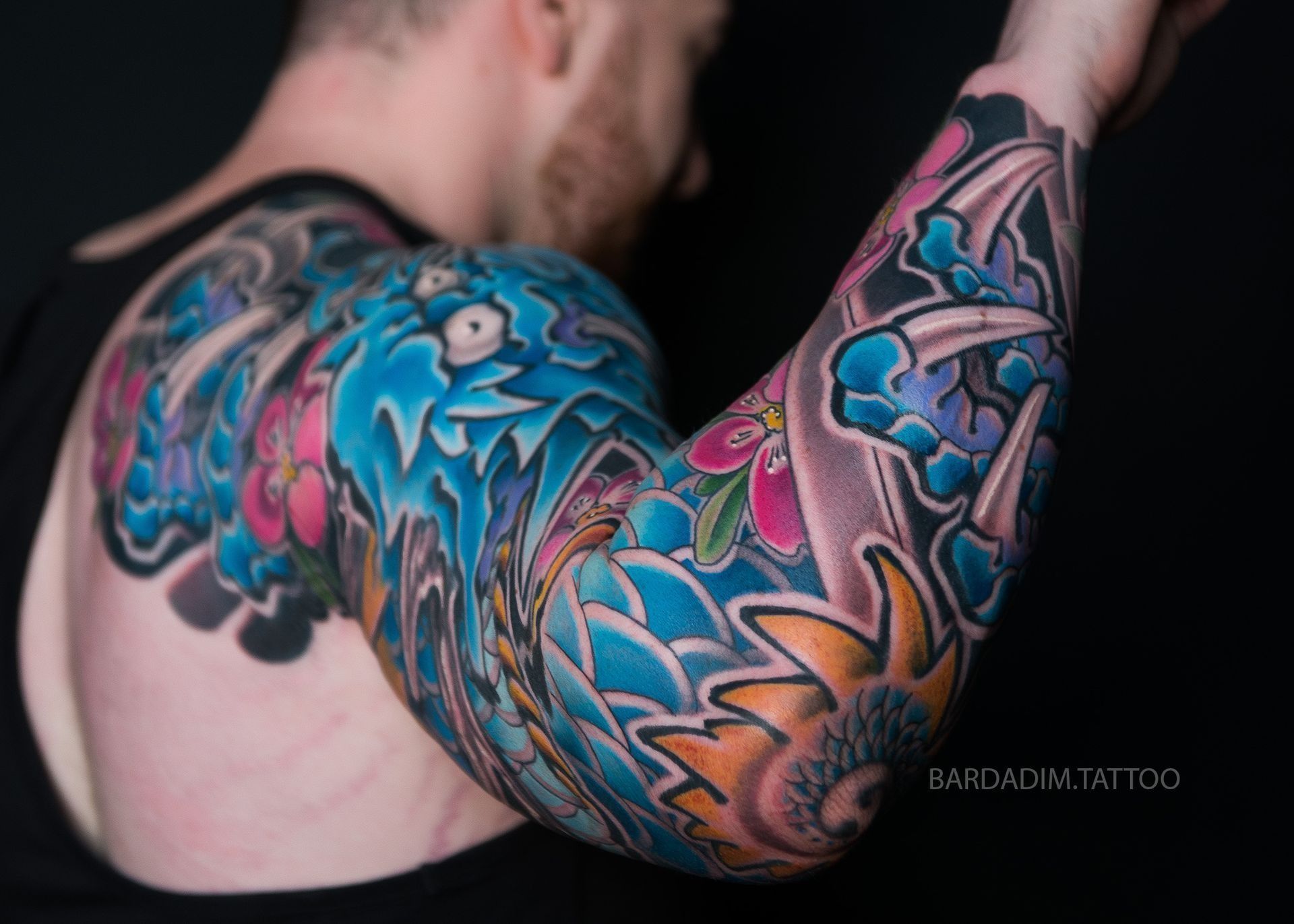
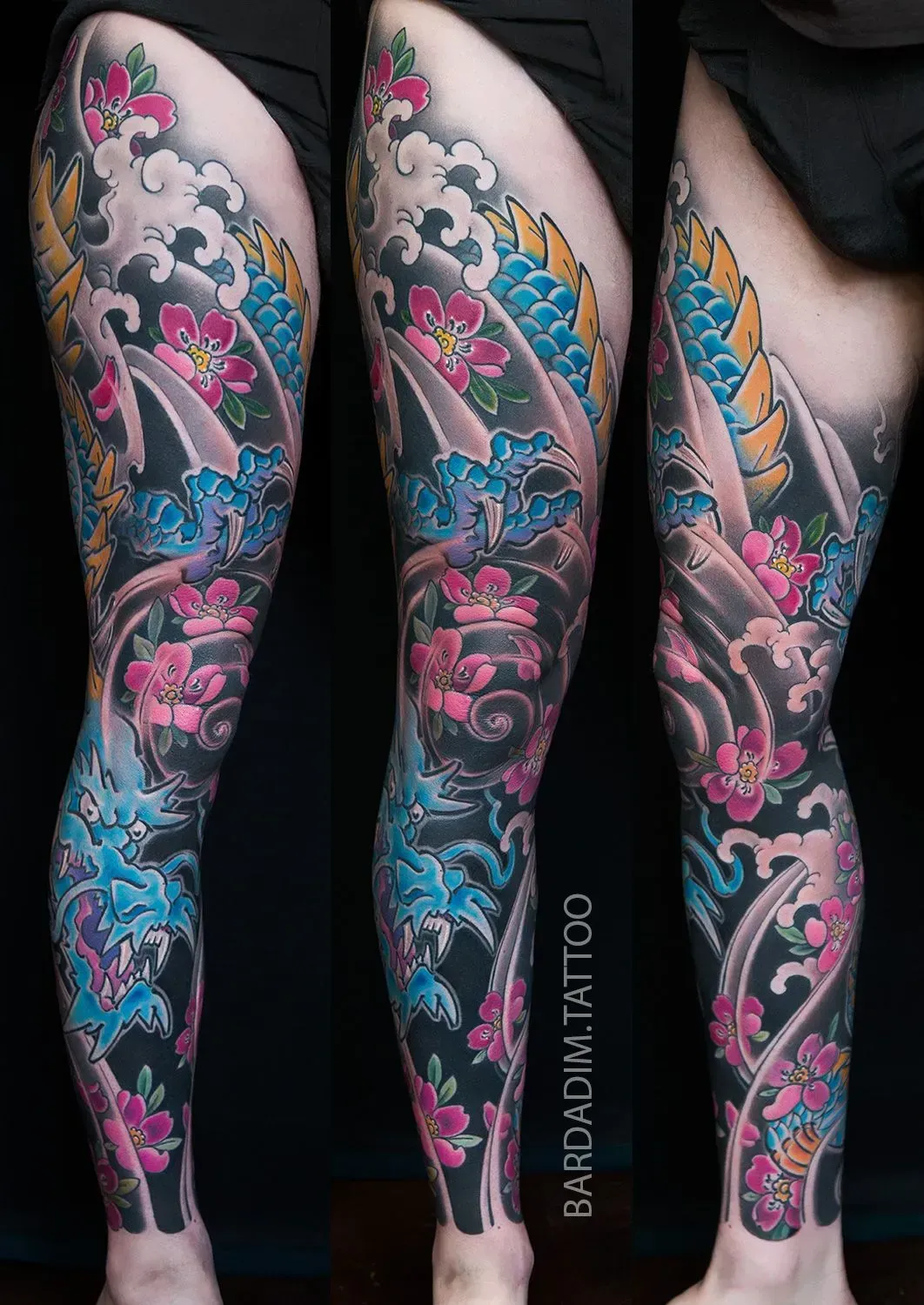
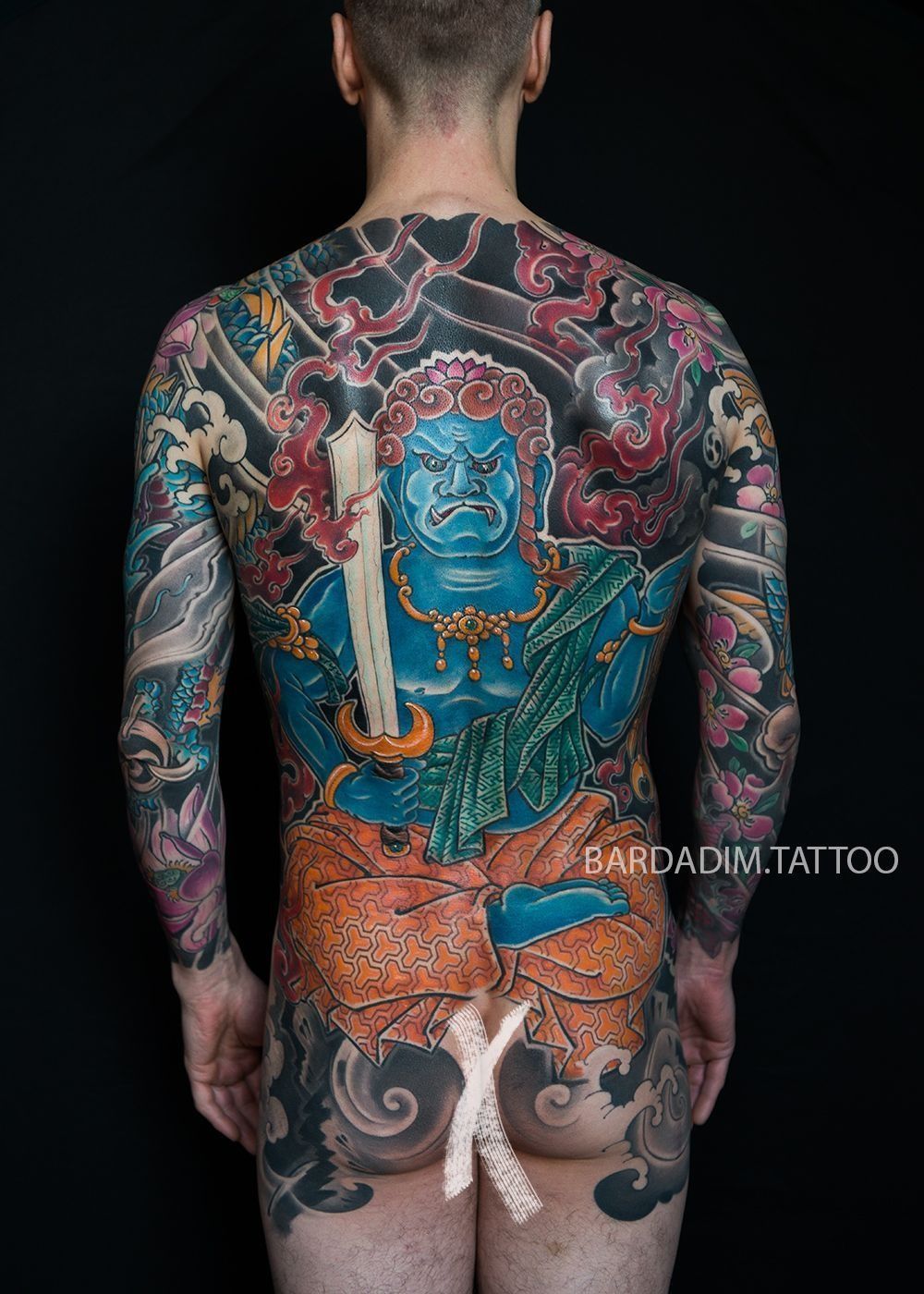
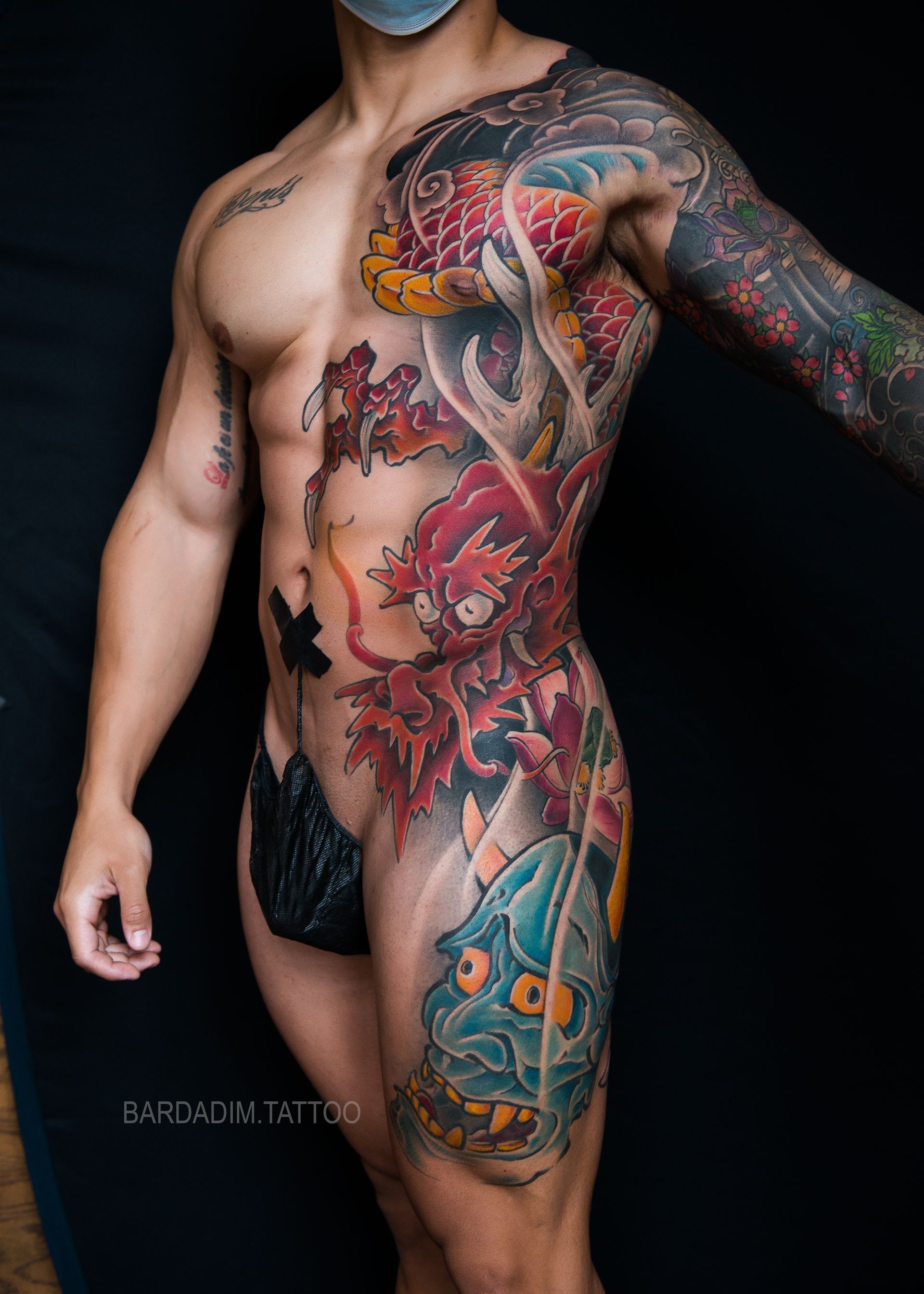
Gakubori compliments the main theme by expressing the world around it.
This is achieved by adding backgrounds such as clouds, waves, and flowers. It has the effect of making the main theme stand out in the same way as framing a painting.
The Literal translation of Gaku 額 is “framed”, Bori 彫り is “tattoo”. Gakubori has specific shapes and formula.
Only the arms and back piece are possible to arrange independently with Gakubori.
The abdomen and legs are assumed to be connected to them and they alone by themselves can not be completed with Gakubori.
The abdomen is added together with the legs after the arms and back are finished.
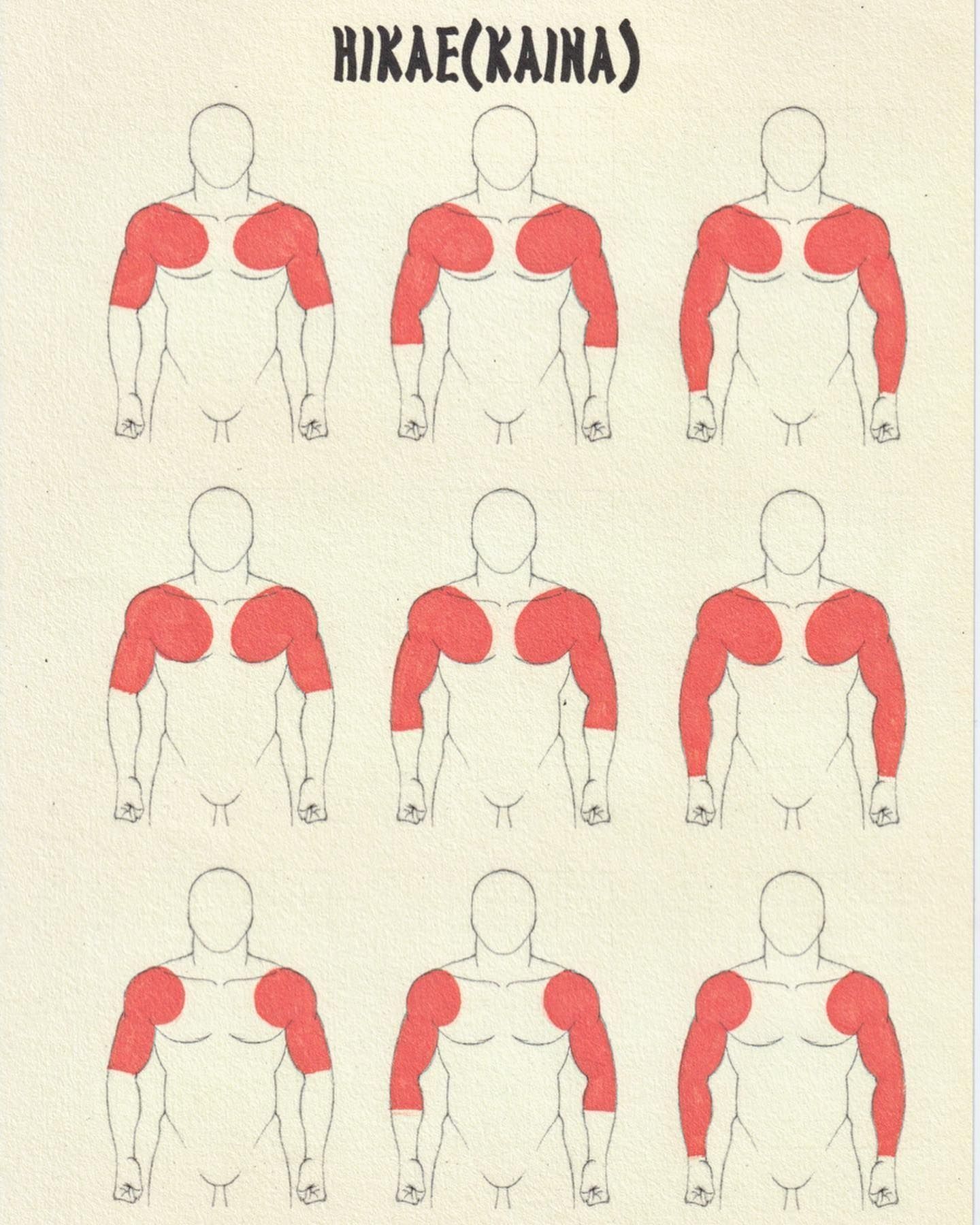
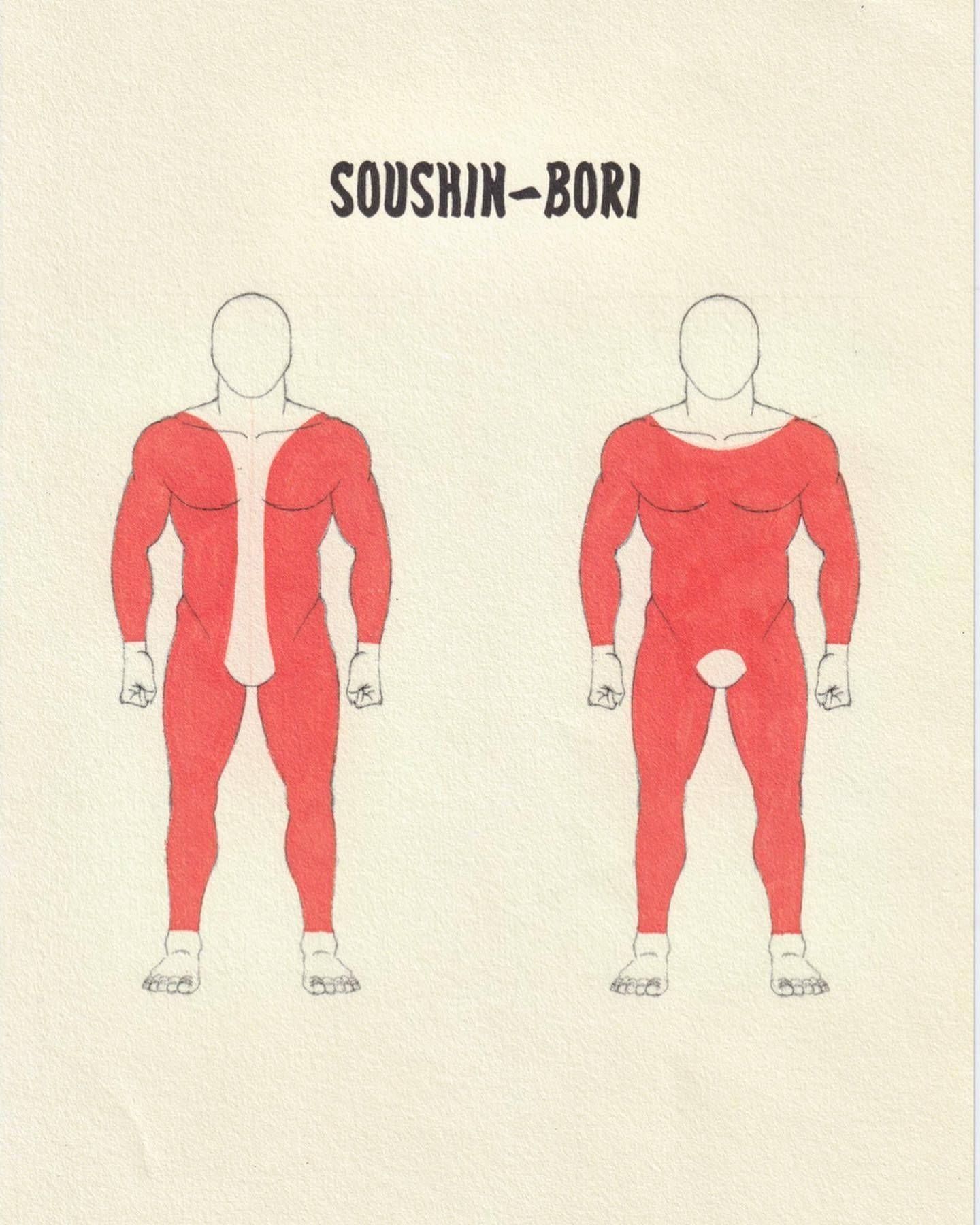
• Gaku of the arm must be from the chest(Hikae). Stopping just above the elbow(Go-bu), below the elbow(Shichi-bu, Hati-bu), or all the way up to the wrist(Nagasode).
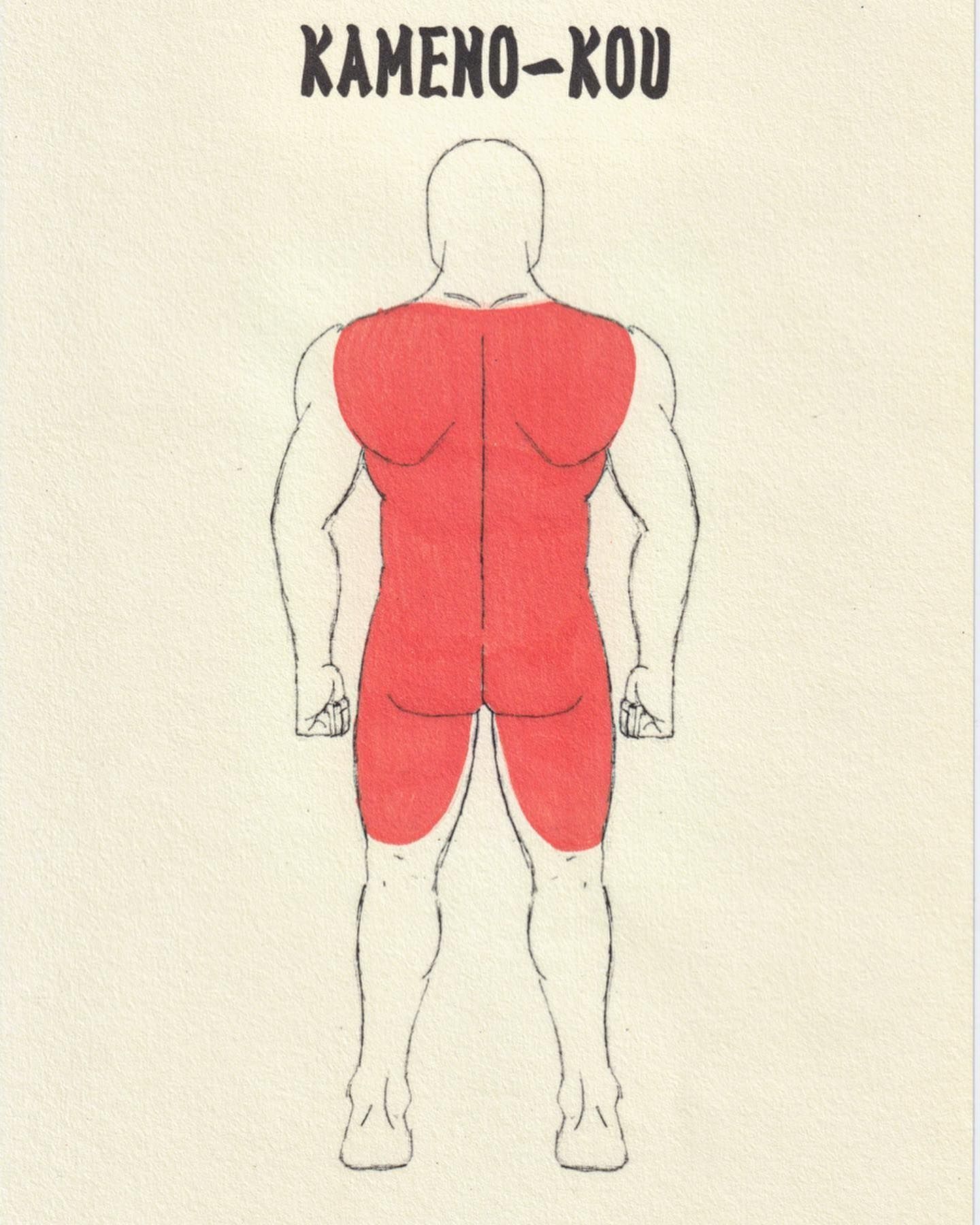
• The form of Gaku on the back is from a little above the back of the knee to just under the neckline(Kameno-kou, Sewari).
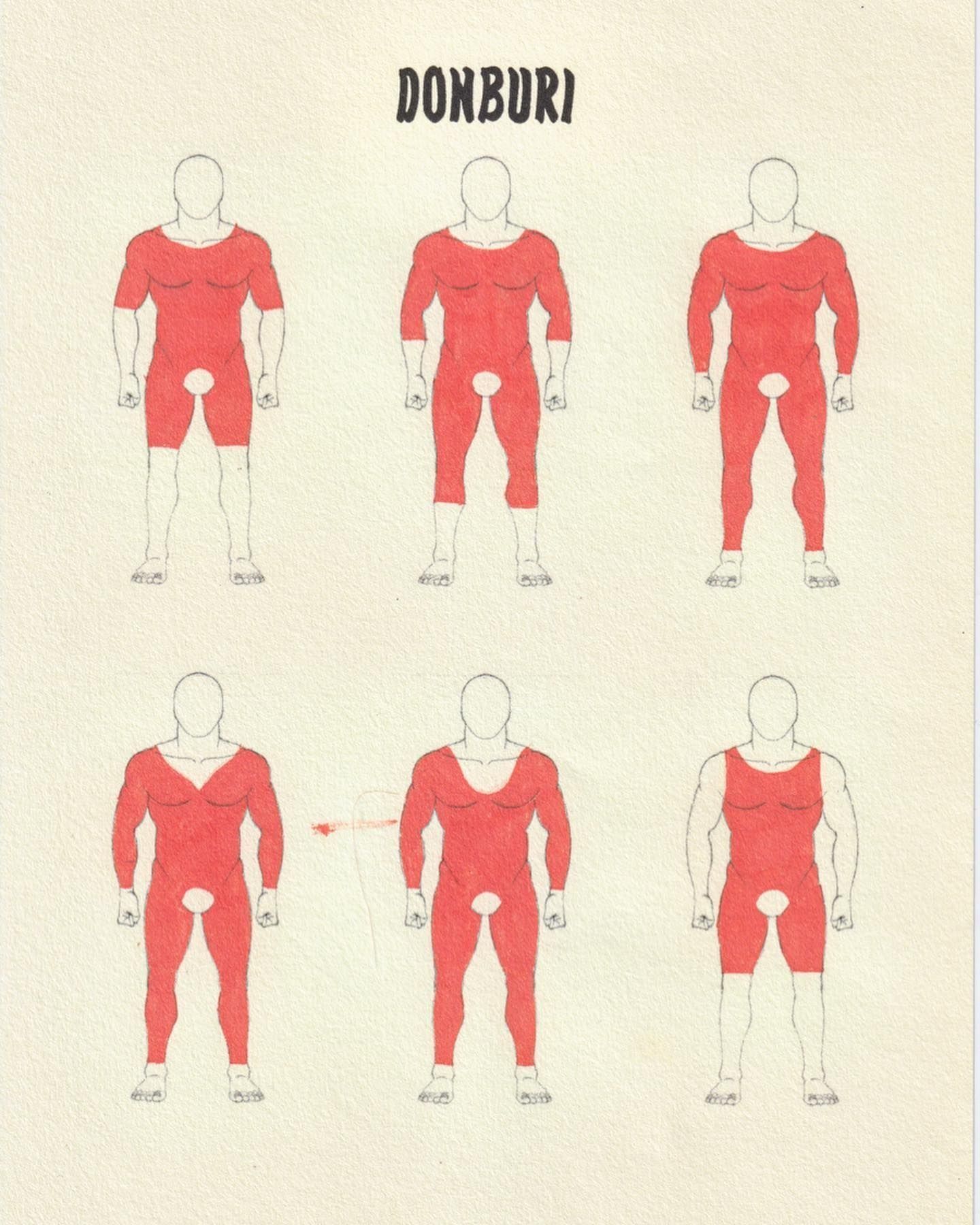
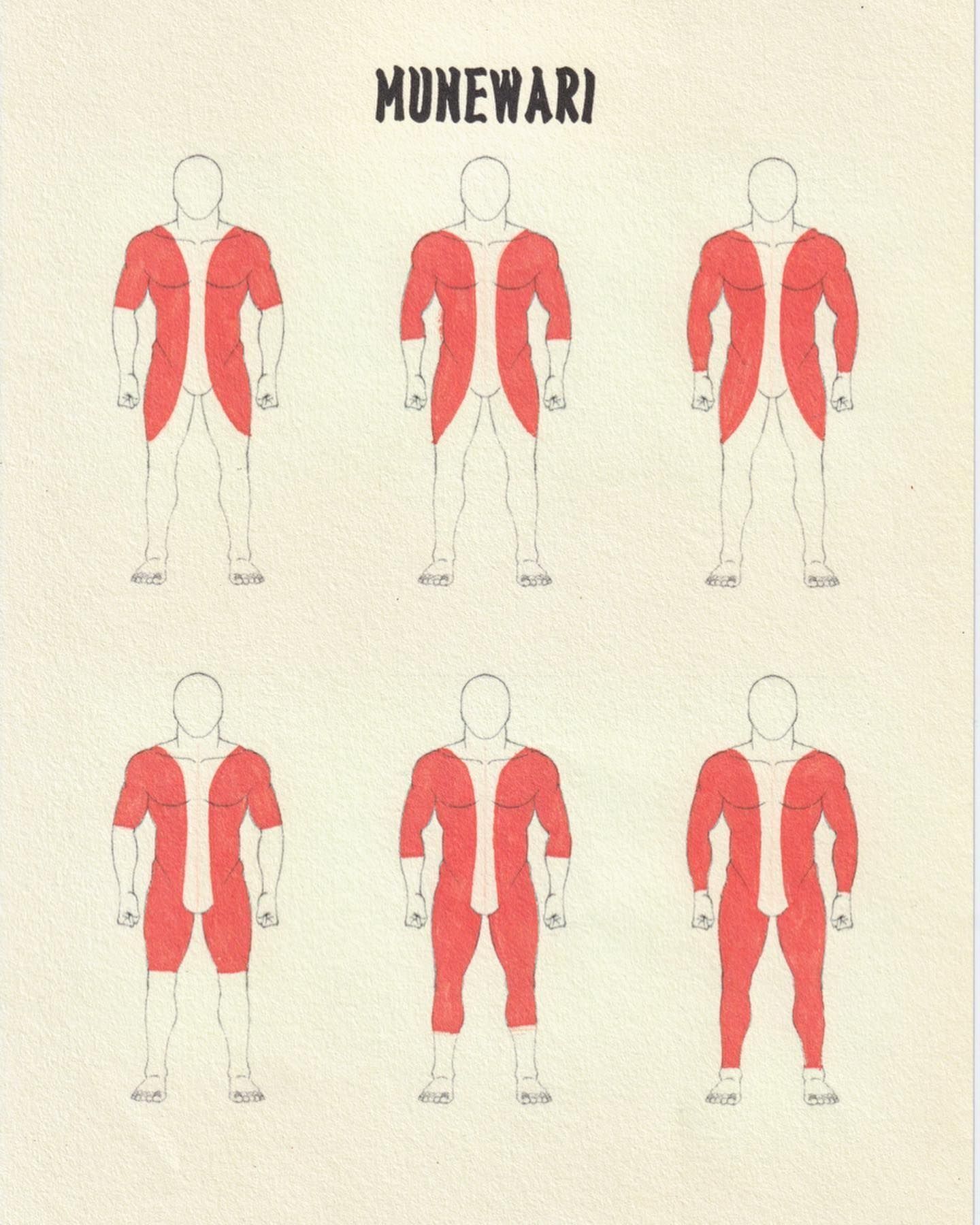
• The form of front Gaku consists of two types, one which features a gap of untattooed skin roughly one fists width positioned vertically in the middle (Munewari), and a type that fills the whole area (Donburi).
• The leg forms of Gaku in the case of Munewari can be straight down on thigh and drawn in an arc to connect with the bottom of Sewari, or it can be tattooed up to just above the knees (Han-zubon), or tattooed to under the knee(Hati-bu), or tattooed to just above the ankle (Naga-zubon).
• In the case of Donburi, it can be Han-zubon, Hachi-bu or Naga-zubon.
It can only be called Sousin-bori(full body tattoo) after filling the entire body with the exception of the hands, feet, head, neck and genital area. These areas are extra option.
These shapes of Gaku and names vary slightly depending on the tattoo family(Ichimon) or region.
Gakubori is the most important thing for traditional Japanese tattoos, and its quality affects the whole work.
Material by
Kensho The Second.