Foundation of the Sleeve
This
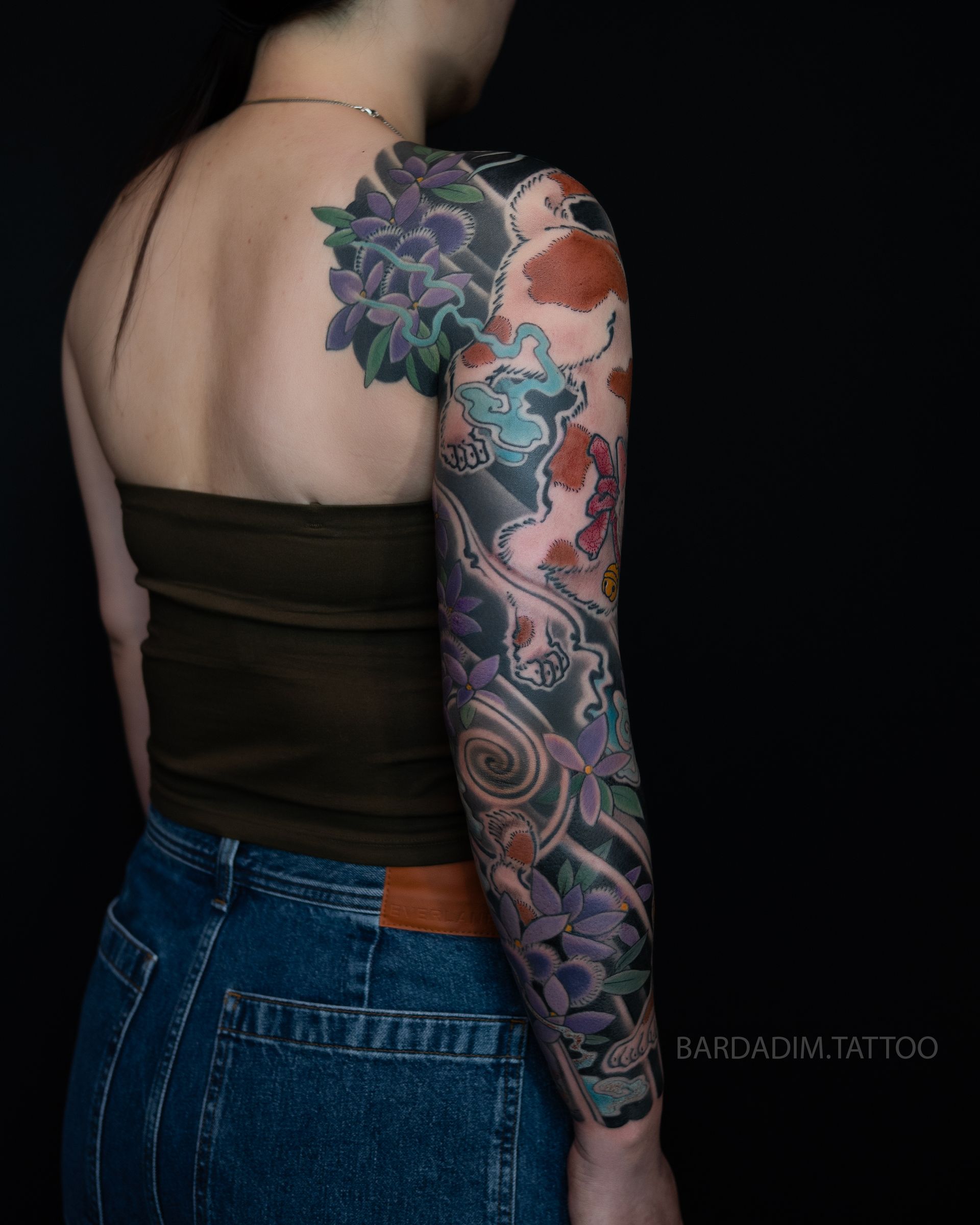
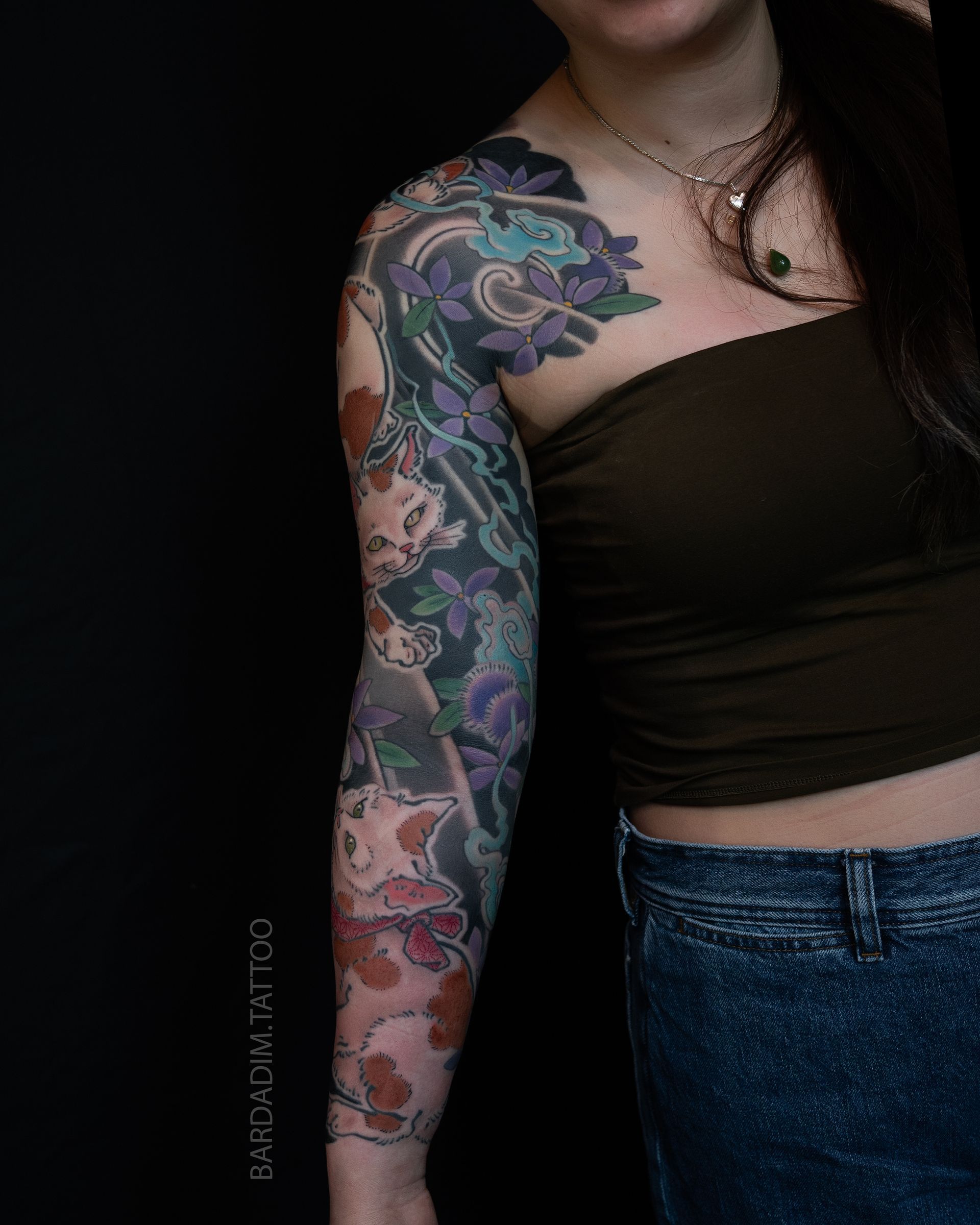
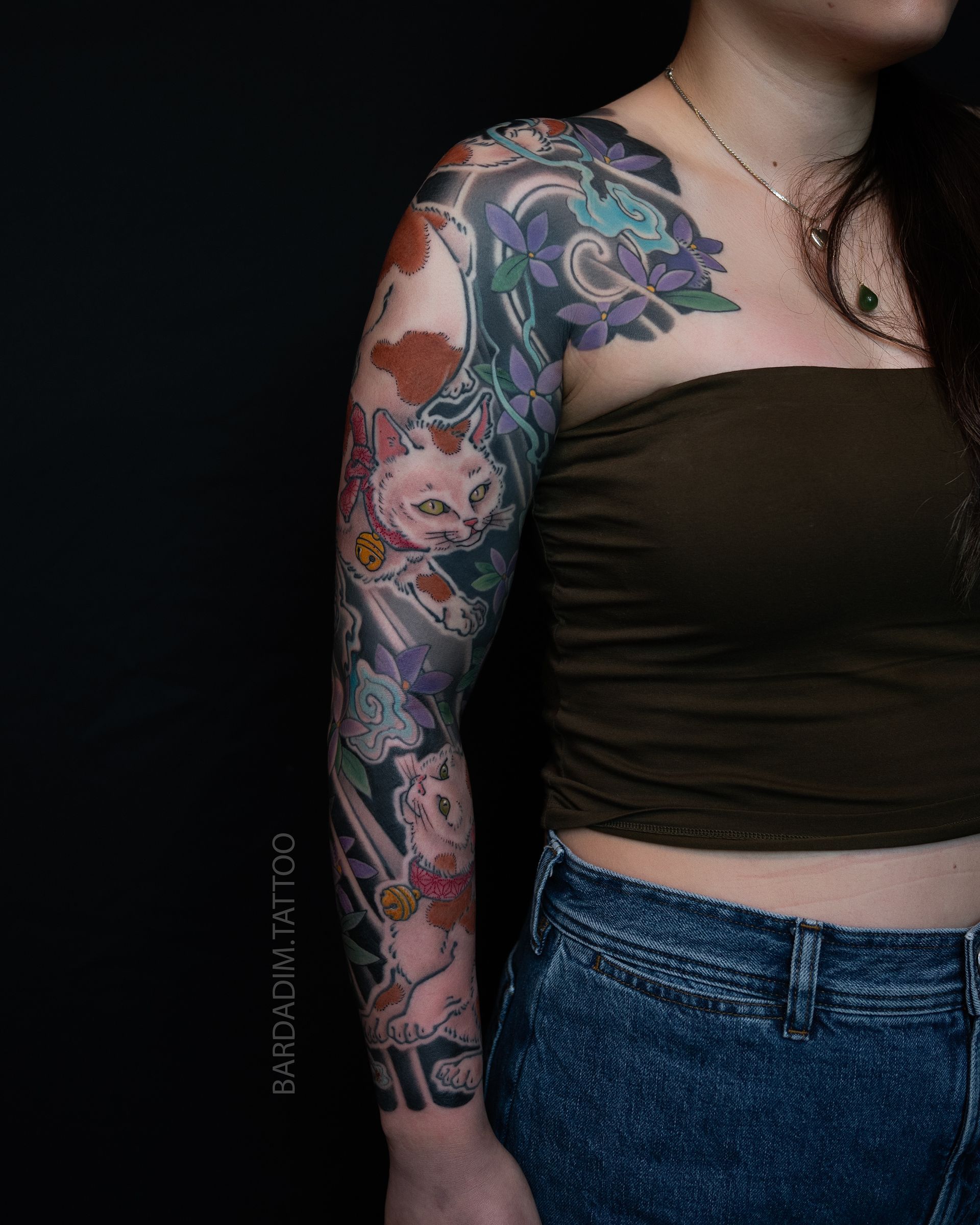
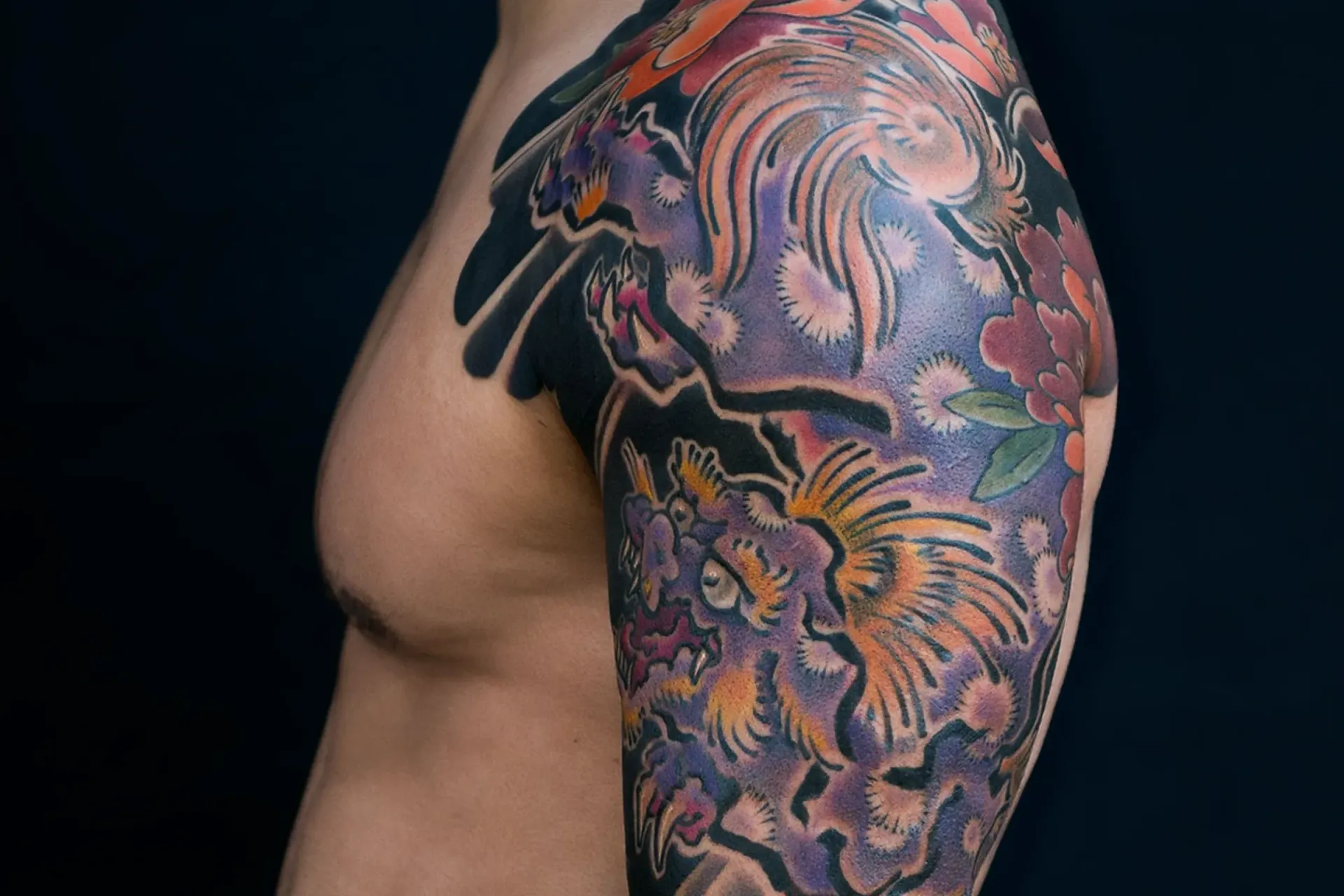
full arm sleeve was built around a pair of monster cats as the central force of the composition. Rather than treating them as decorative figures, they function as structural anchors. Supporting elements include fireballs and yama-ajisai, known botanically as Hydrangea serrata and associated with mountain regions in Japan.
The intention from the beginning was clarity. The sleeve needed strength, hierarchy, and breathing room. Every element had to support the primary forms rather than compete with them.
Structure and Scale
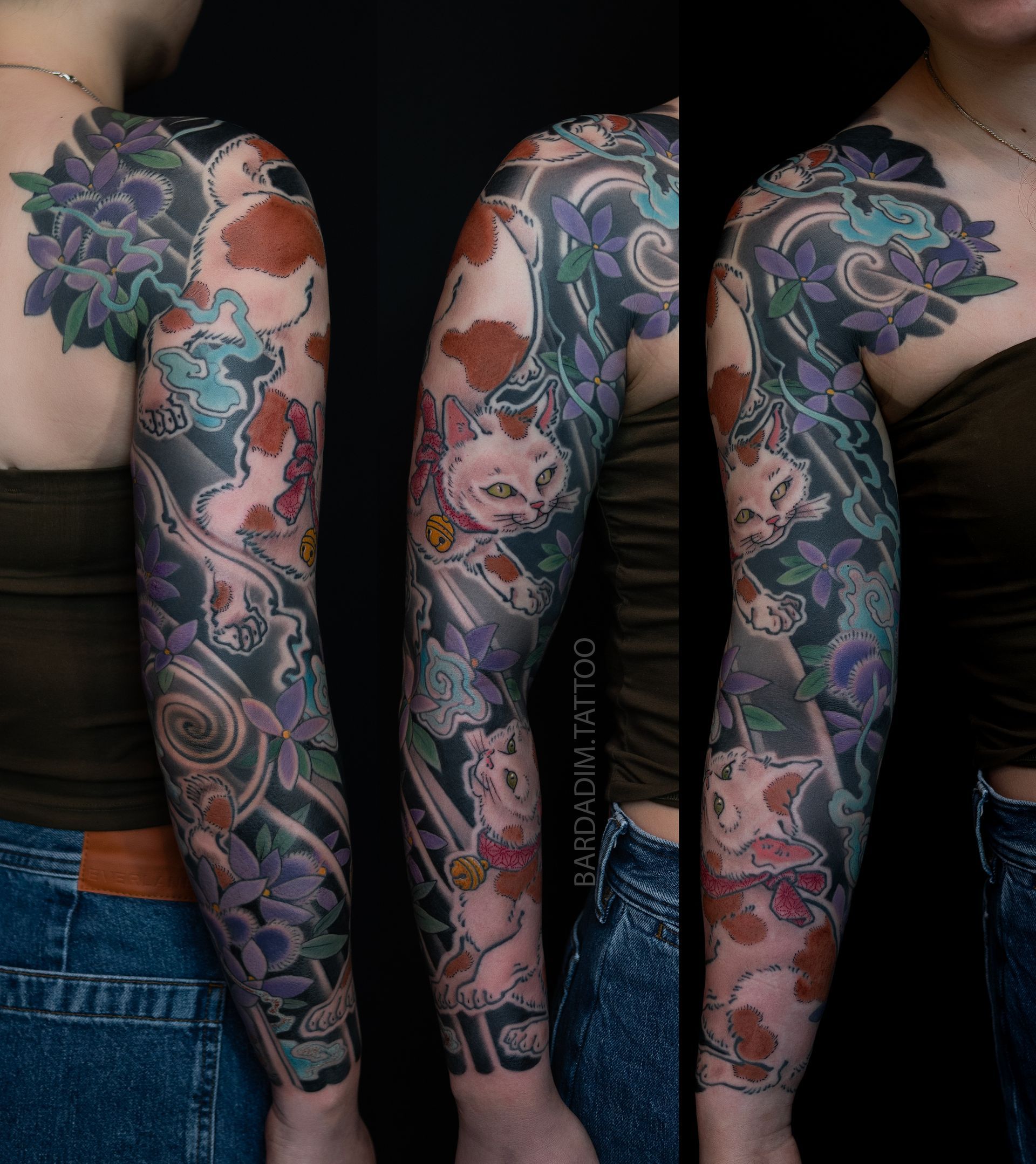
The project spans the entire arm from shoulder to wrist. It was designed as a unified panel rather than separate images placed along the limb. The sleeve reads as one continuous environment.
Because monster imagery carries expressive intensity, scale relationships were carefully controlled. The cats remain dominant. Fireballs and floral elements reinforce movement without overwhelming the structure.
The sleeve stands independently, without chest extension, which required the upper arm to hold the strongest visual weight.
Compositional Strategy
Twin Monster Cats as the Dominant Form
The twin cats create narrative tension and balance. One occupies the primary focal zone near the deltoid. The second supports rotational movement as the arm turns.
Their curves define the sleeve’s directional rhythm. Rather than facing outward symmetrically, they guide the eye in a controlled spiral around the arm.
Fireballs and Directional Energy
Fireballs are used as transitional anchors. Their circular forms soften shifts between figures and introduce controlled motion. They also serve as density regulators. Positioned strategically, they prevent empty voids while maintaining visual hierarchy.
Yama-ajisai and Seasonal Identity
Yama-ajisai introduces seasonal nuance and softness. Compared to larger traditional florals such as
peony or chrysanthemum, mountain hydrangea carries lighter clustered textures. These clusters allow subtle surface variation without visual heaviness. The floral forms frame the cats rather than compete with them.
Anatomical Architecture
Focal Control at the Shoulder
The deltoid acts as the natural crown of the sleeve. One monster cat head is positioned to utilize this convex surface, reinforcing dominance and clarity.
The shoulder area determines how the sleeve reads from distance. Strong focal control here stabilizes the entire composition.
Rotational Flow of the Arm
The sleeve respects the arm’s cylindrical anatomy. Figures wrap naturally rather than flatten across muscle groups.
From side view, transitions remain fluid. There are no abrupt visual breaks as the composition moves from bicep to tricep to forearm.
Controlled Density and Breathing Space
Density was carefully moderated. Fireballs and hydrangea remain supportive in scale. Negative space was preserved intentionally. This ensures long-term readability as the tattoo ages and allows the main subjects to remain visually dominant.
Building the Sleeve
The sleeve was constructed in stages. Early sessions focused on structural placement and line clarity. Confirming anatomical flow at this stage was critical.
Subsequent sessions introduced shading and controlled color saturation. Fire elements required balance to avoid overpowering the floral softness.
Each session reinforced hierarchy rather than adding unnecessary detail. The process followed discipline rather than impulse.
Final Balance
The completed sleeve reads coherently from multiple angles. The twin monster cats remain unmistakably dominant.
Fireballs provide movement and rhythm. Yama-ajisai adds seasonal atmosphere and textural softness.
The result is a full sleeve grounded in traditional Japanese structural principles while allowing expressive character within disciplined composition.