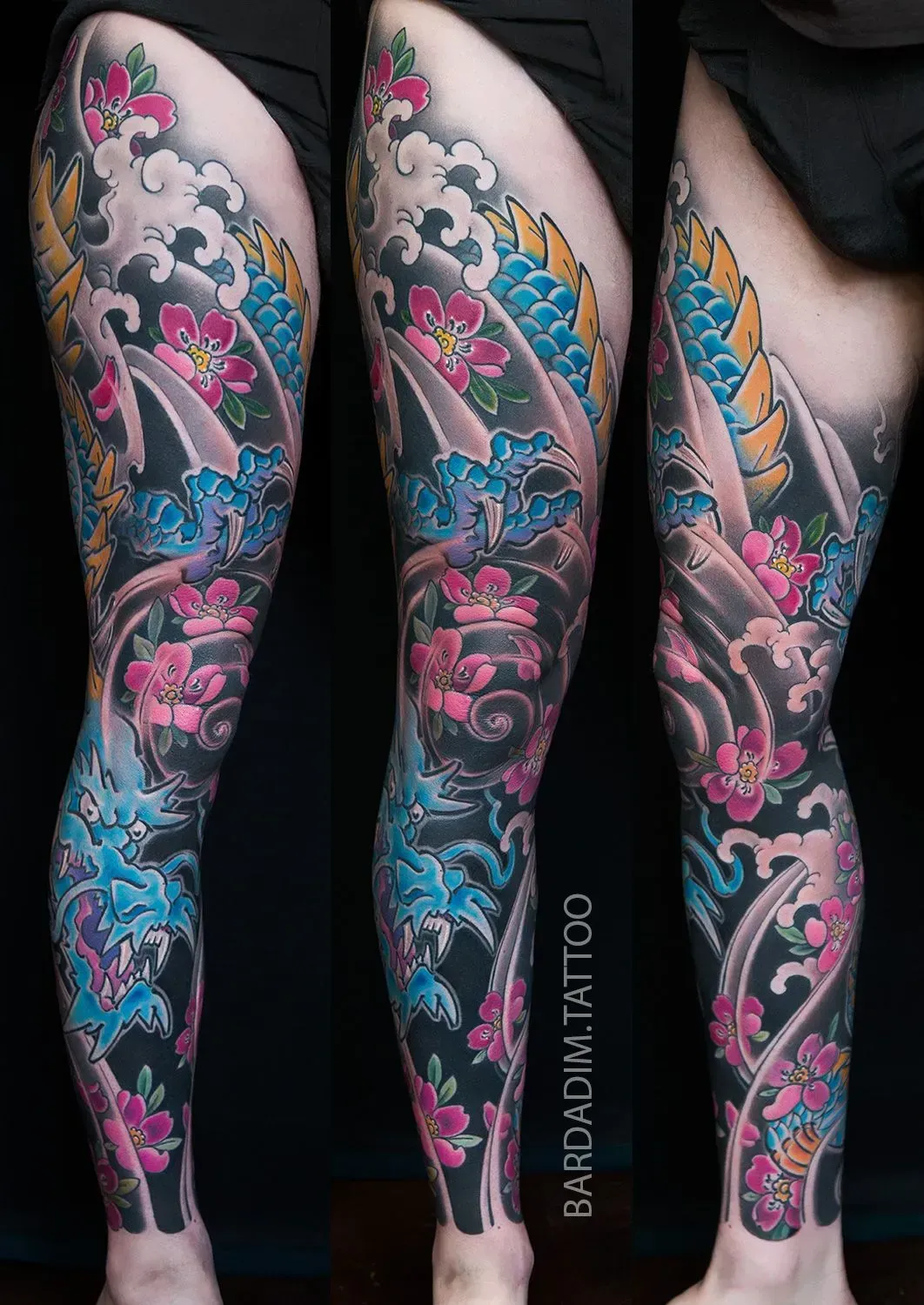
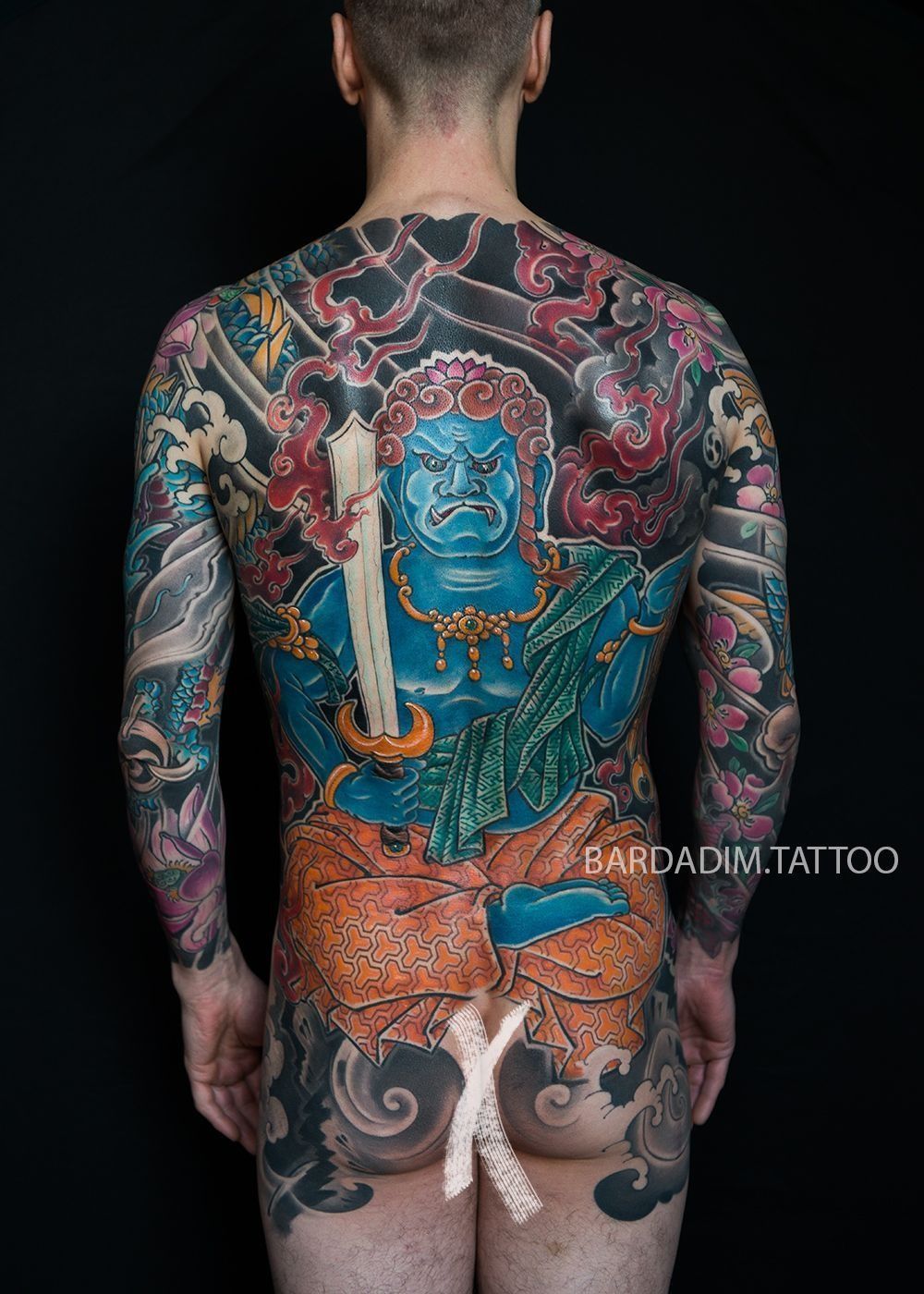
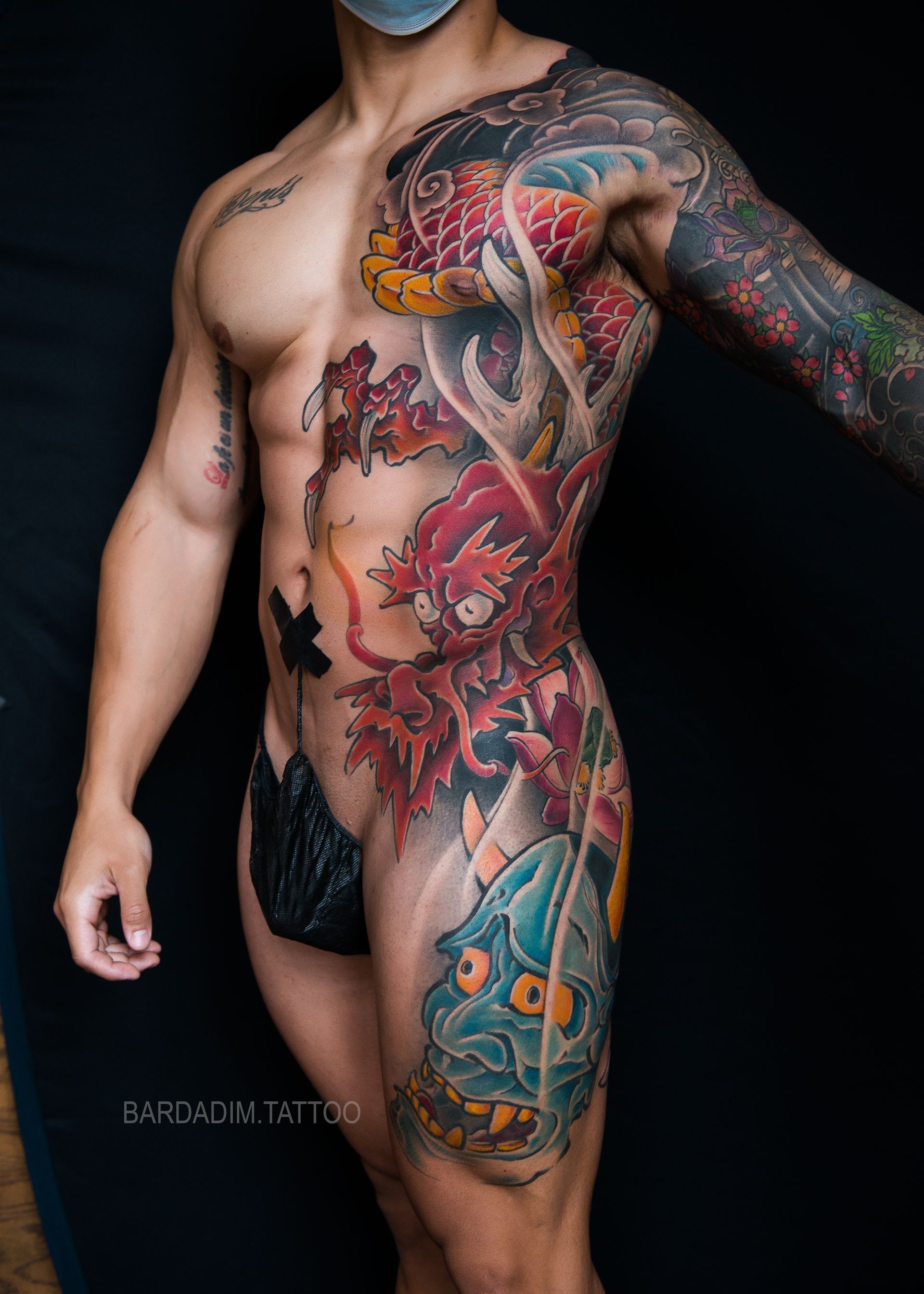
Orange Koi and Peonies Japanese Sleeve

George Bardadim • 13 March 2026

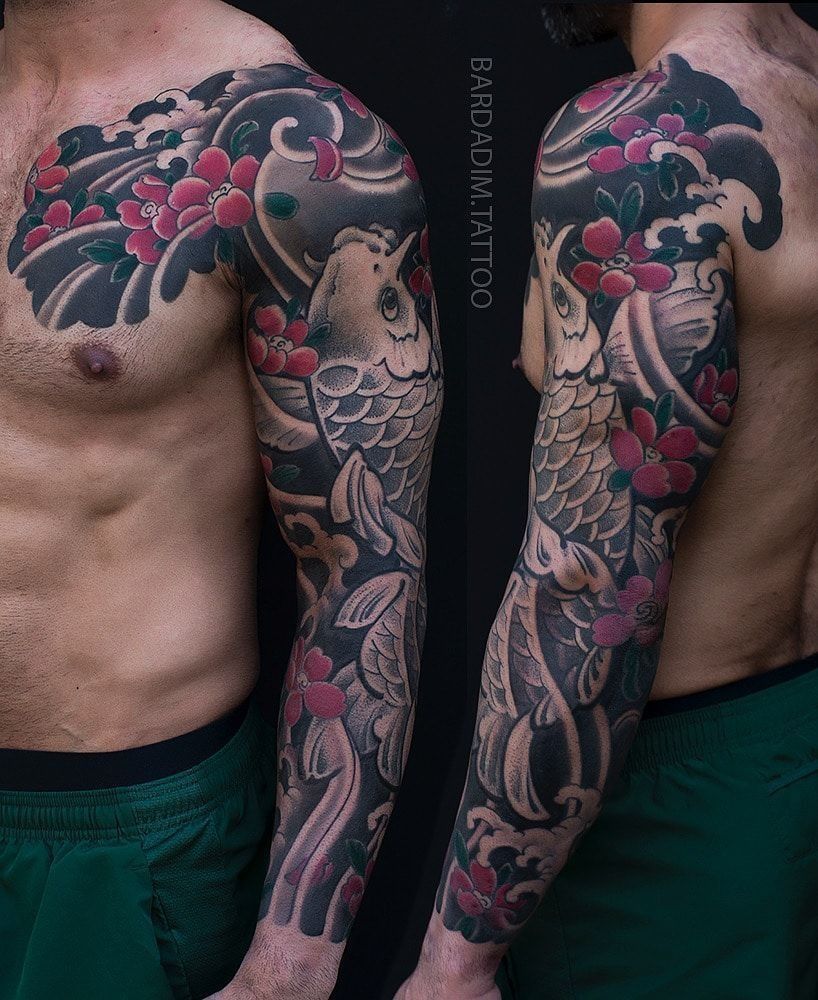
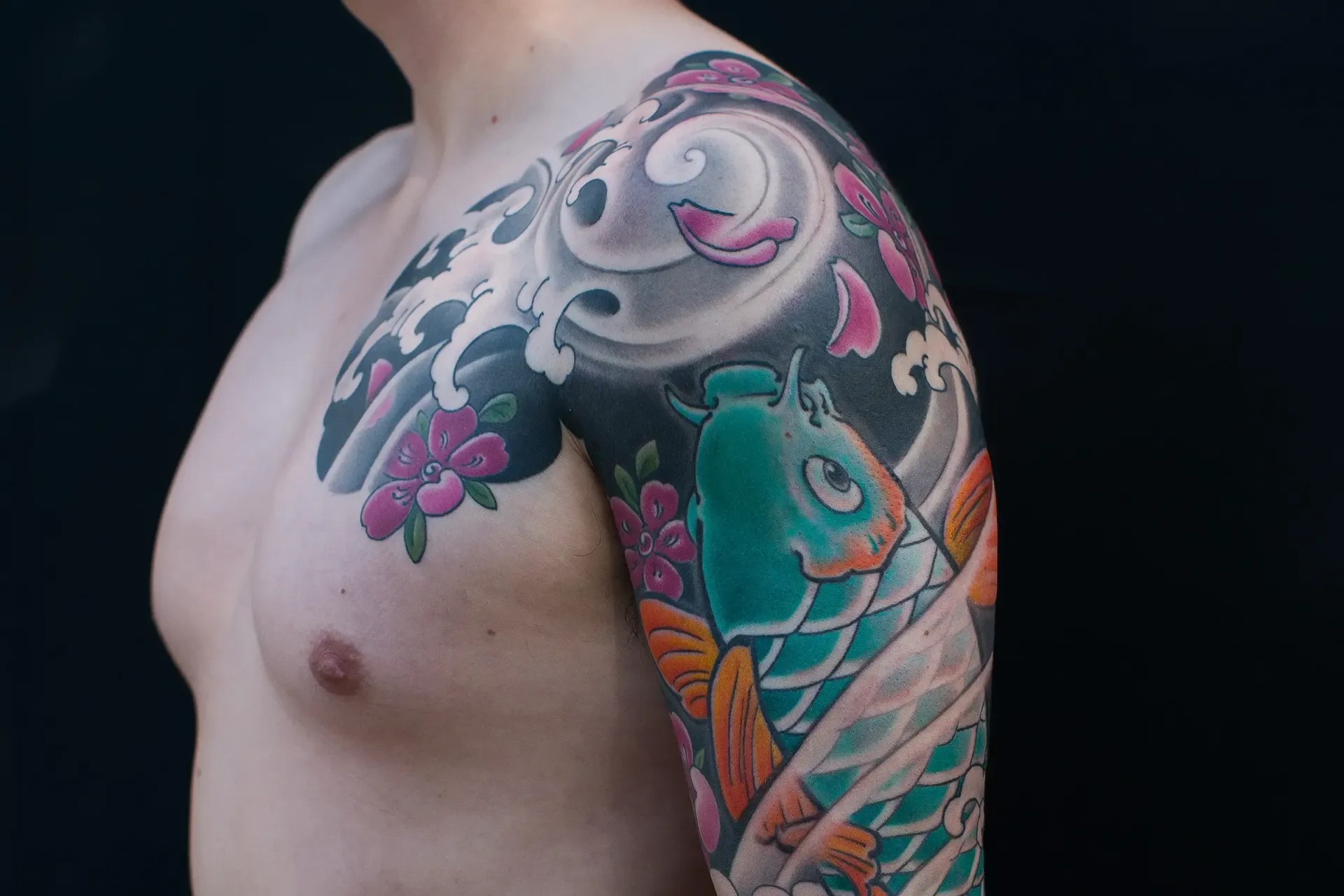
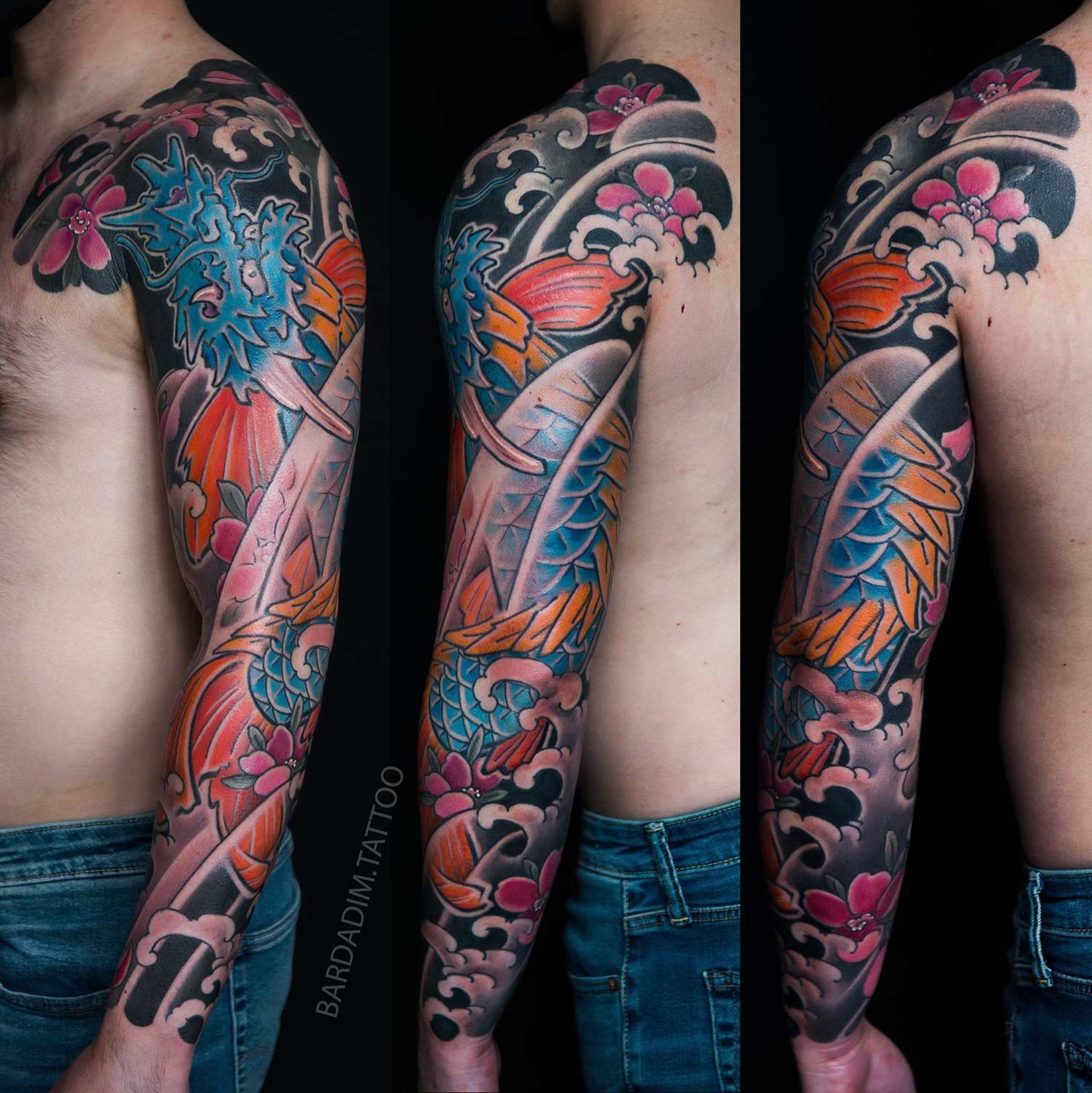
This sleeve is built around the movement of an orange koi paired with blooming peonies. The composition follows the traditional logic of Japanese tattoo design where a single primary subject guides the entire structure of the sleeve.


In Irezumi terminology, the koi functions as the shudai, the main subject that carries the visual direction of the tattoo. All other elements support this movement and help establish balance across the arm.


Peonies introduce softness and rhythm around the koi. Their rounded forms contrast with the elongated body of the fish and create natural transitions throughout the sleeve, allowing the composition to flow smoothly from shoulder to wrist.


Concept and Composition

The orange koi acts as the central visual anchor of the sleeve. In Japanese imagery the koi often symbolizes perseverance and the ability to move against strong currents.


In this composition the fish travels diagonally through the arm. The curvature of the koi’s body follows the natural structure of the muscles, allowing the tattoo to move with the anatomy rather than against it.


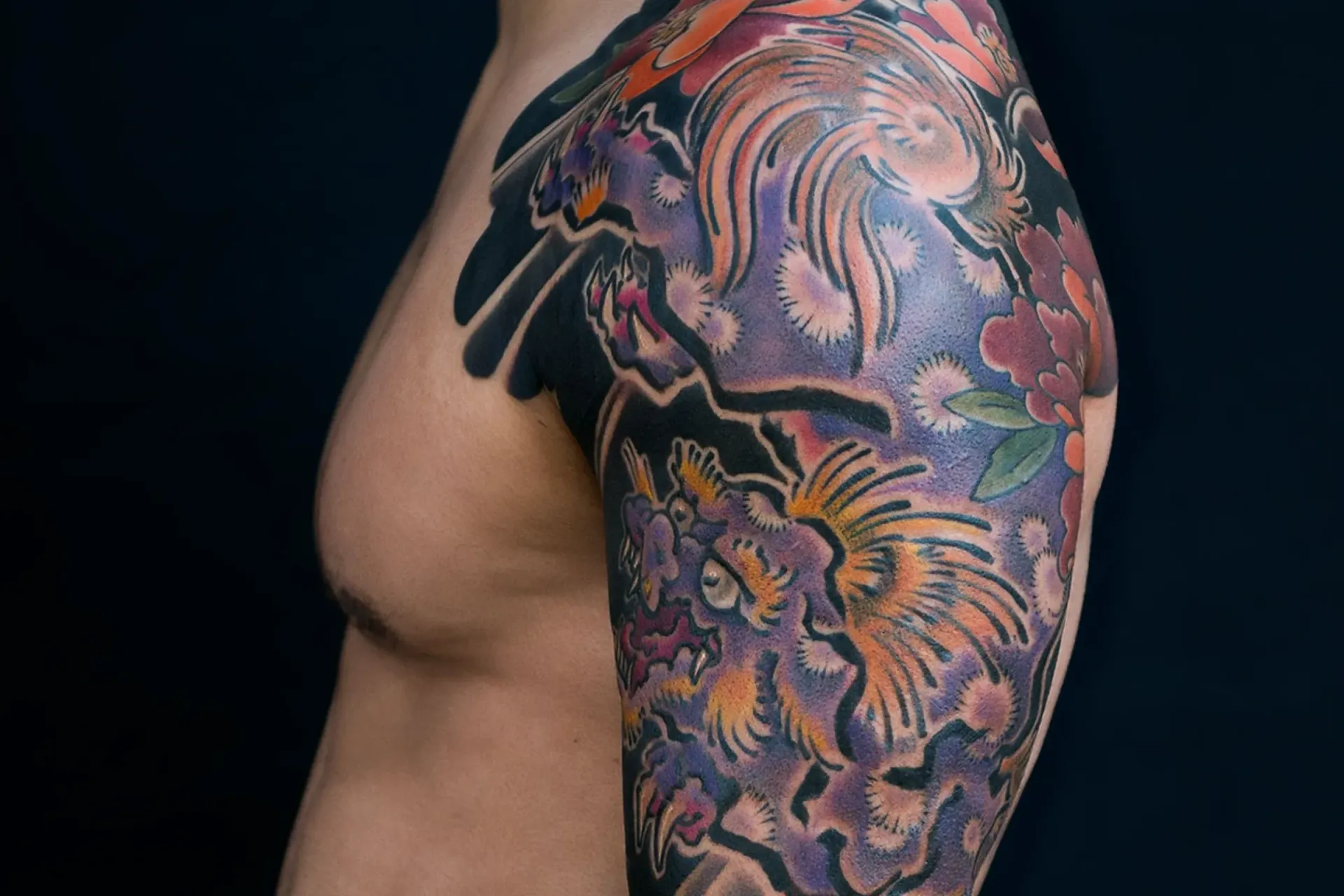
Peonies were selected as the primary floral element because they provide visual balance to the strength of the koi. Their layered petals introduce volume and softness, preventing the sleeve from becoming visually heavy.

This relationship establishes a clear hierarchy within the design. The koi remains dominant while the flowers support the overall rhythm of the composition.


Anatomical Flow

A successful Japanese sleeve must respect the anatomy of the arm. The shoulder acts as the primary visual anchor while the body of the koi travels through the upper arm and transitions toward the forearm.


The direction of the fish naturally reinforces this movement. As the koi curves around the arm, its body mirrors the rotation of the muscles, helping the tattoo feel integrated with the body.


The background structure supports this flow. Because the main subject is a fish, the sleeve uses water bars rather than wind bars, creating an environment consistent with the koi’s movement.


These water structures follow the same directional rhythm as the fish and help guide the viewer’s eye through the composition.

Peonies are placed strategically to stabilize the sleeve and maintain breathing space between larger elements.


Development of the Sleeve

Large scale Japanese tattoos are built gradually over multiple sessions. The sleeve began with the structural outline establishing the placement of the koi and the floral elements.


Once the framework was complete, the background structure was developed. In Japanese tattooing this supporting layer is known as keshoubori, the elements that unify the composition.


In this sleeve the keshoubori takes the form of layered water movement and darker background fields. These elements create depth while connecting the different areas of the tattoo into a single structure.


Color was introduced after the composition had fully settled. The bright orange tones of the koi contrast strongly against the darker background so the fish remains the clear focal point.


The peonies were colored more softly to support the composition without competing with the main subject.


Final Composition

Viewed as a whole, the sleeve maintains a clear balance between movement and structure. The koi leads the eye through the arm while the peonies introduce moments of calm within the design.


The water based keshoubori binds the entire sleeve together and reinforces the directional flow of the composition.

This relationship between shudai and supporting structure is one of the defining characteristics of traditional Japanese tattoo design. The main subject carries the visual narrative while the background allows the entire sleeve to function as a unified composition.


Let the Way flow onward:

Let the Way flow onward:

Beyond This Ink

Continue the journey through other Irezumi stories.

Koi-Dragon. Mystical Creature of Japanese Art.
by George Bardadim 14 July 2024
Explore the meaning of Ryūugyo, the koi-dragon of Japanese art and Irezumi. A symbol of transformation, perseverance, and the path toward enlightenment.
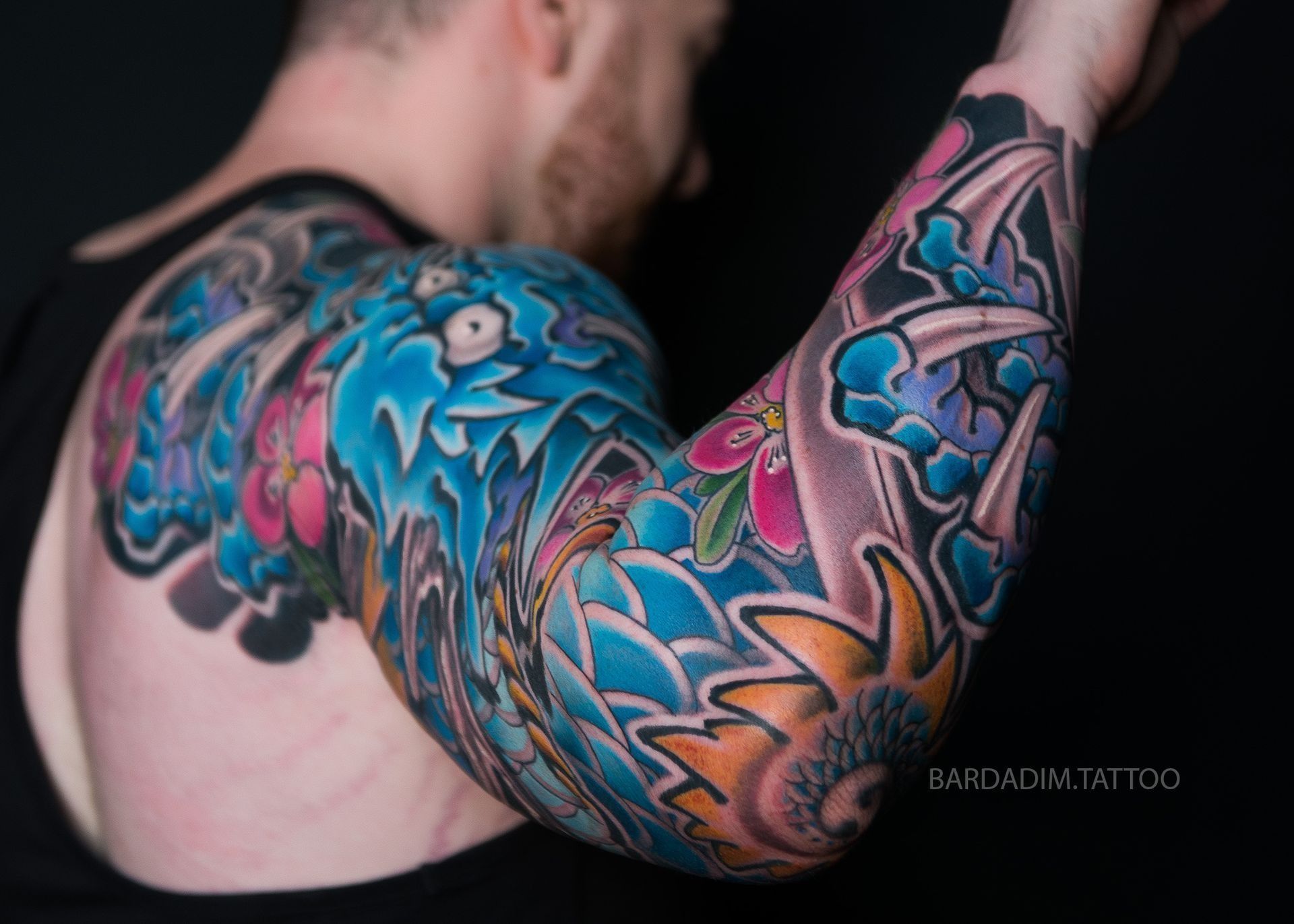
Man's back covered in elaborate, colorful Japanese-style tattoo featuring a blue deity holding a sword.
by George Bardadim 21 June 2024
Discover Fudō Myō-ō, the fierce guardian deity of Japanese Buddhism. Explore his symbolism, cultural meaning, and influence on traditional art, Ukiyo-e, and Irezumi.
A shirtless man with a full sleeve tattoo on his arm.
by George Bardadim 20 May 2024
Poppy Flowers and Skull-Looking Rocks
Show More …