Shoulder Panel to Wrist
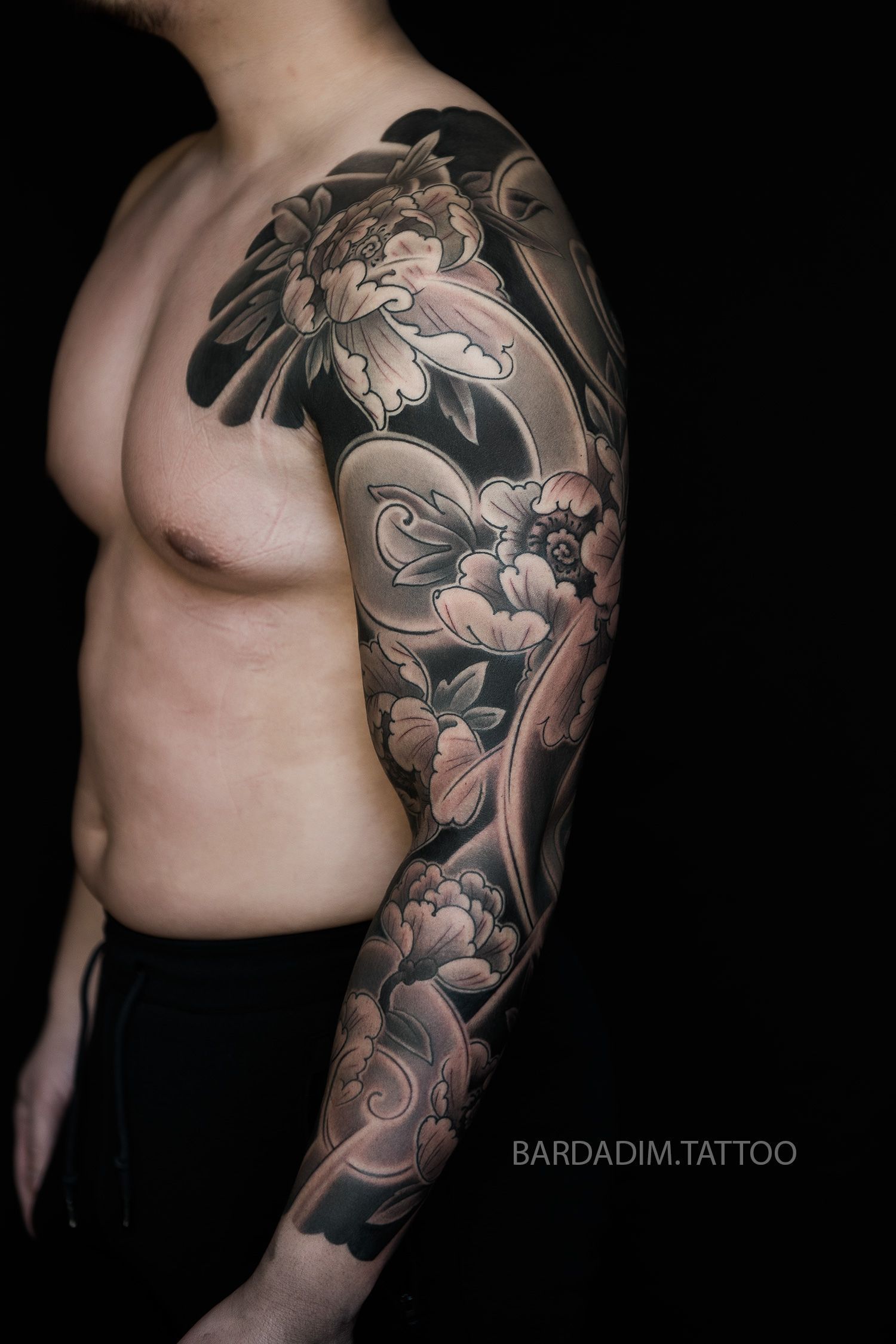
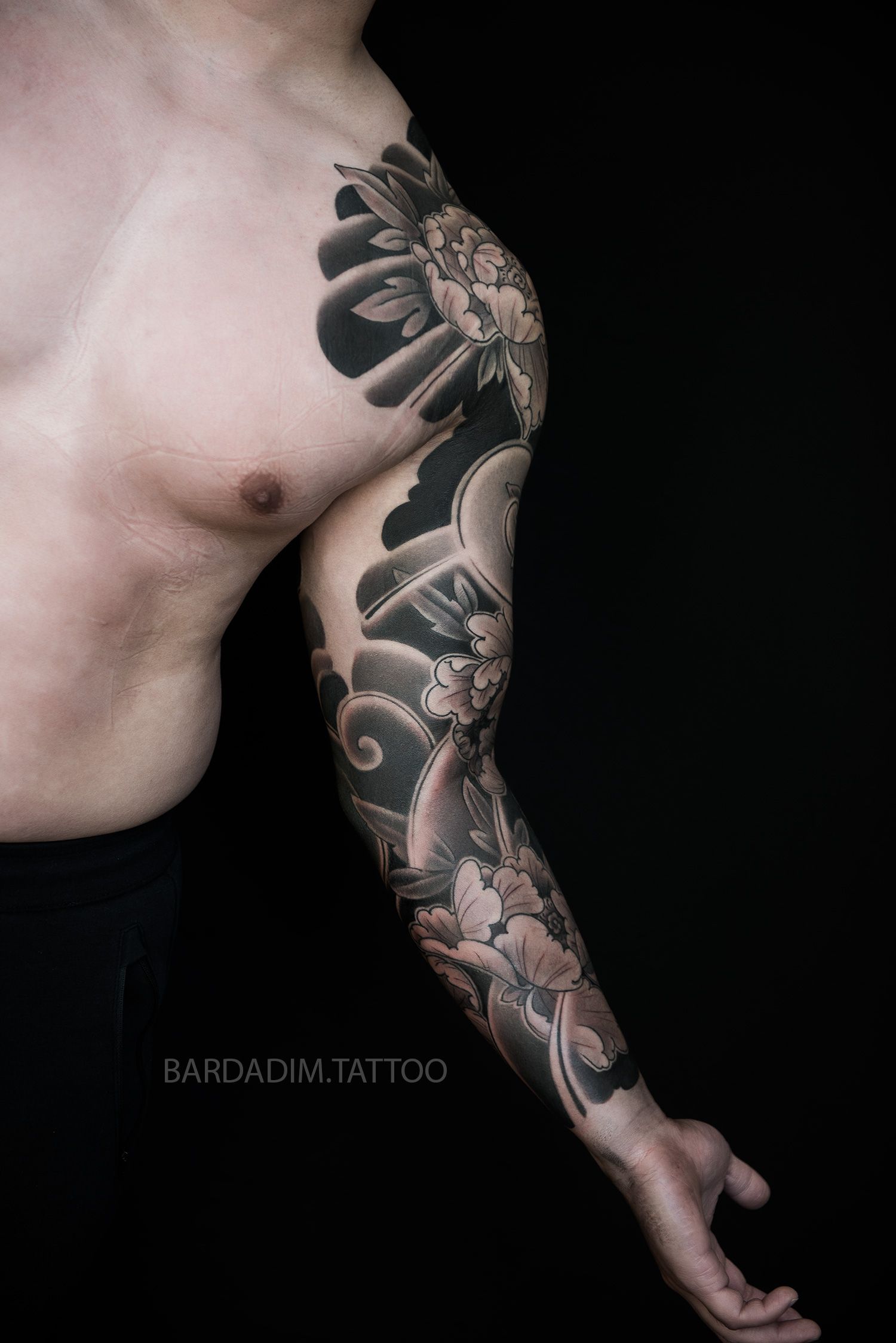
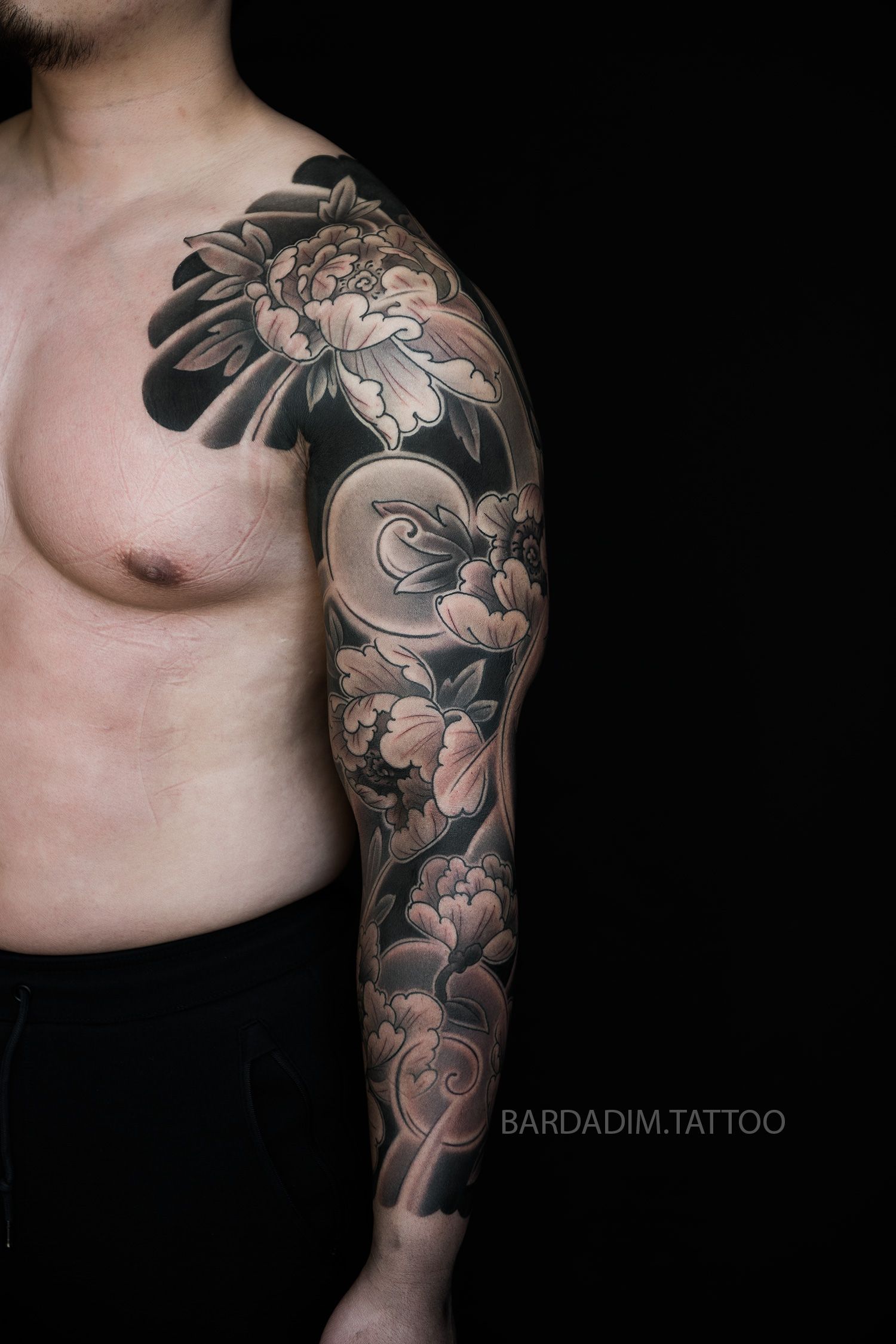
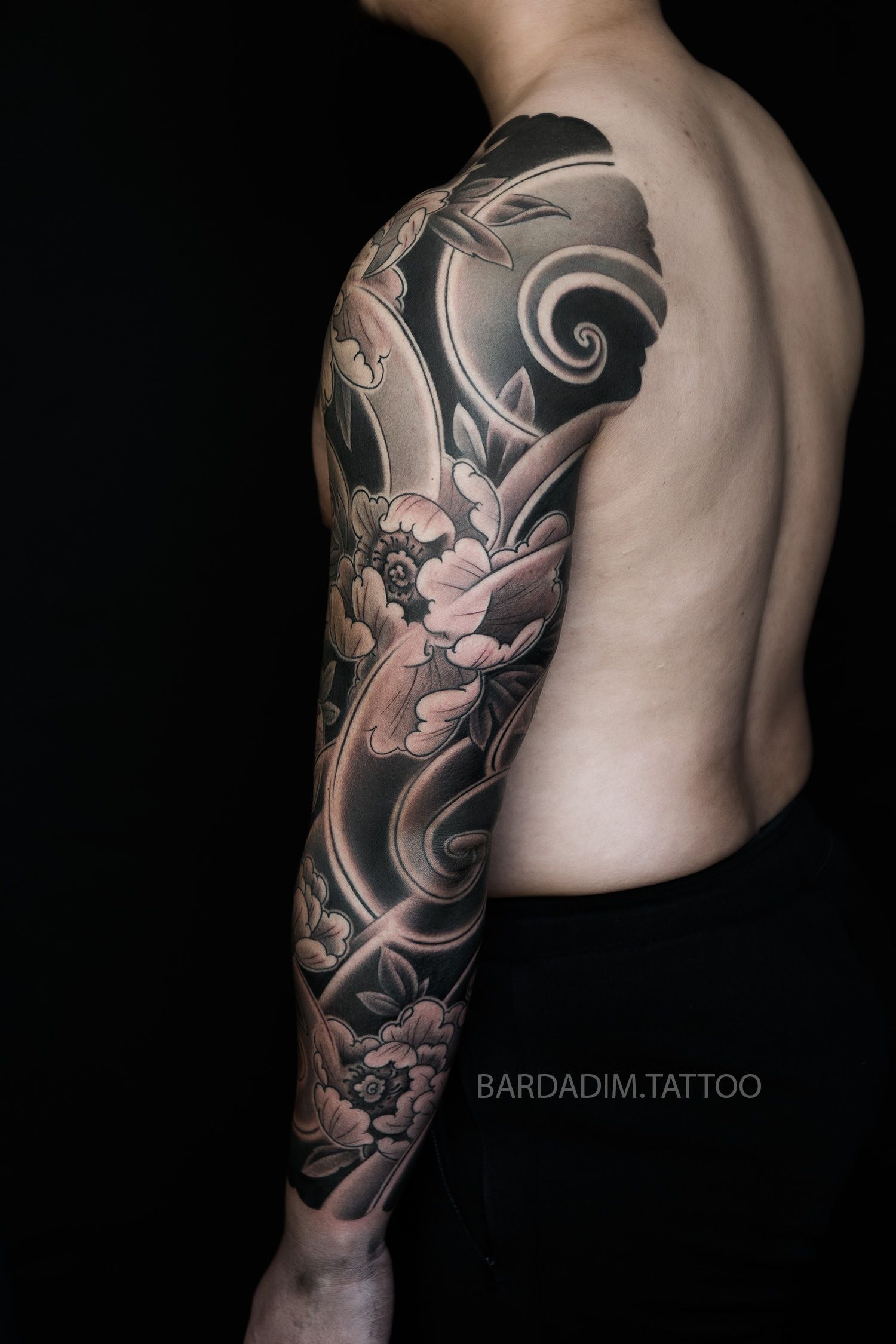
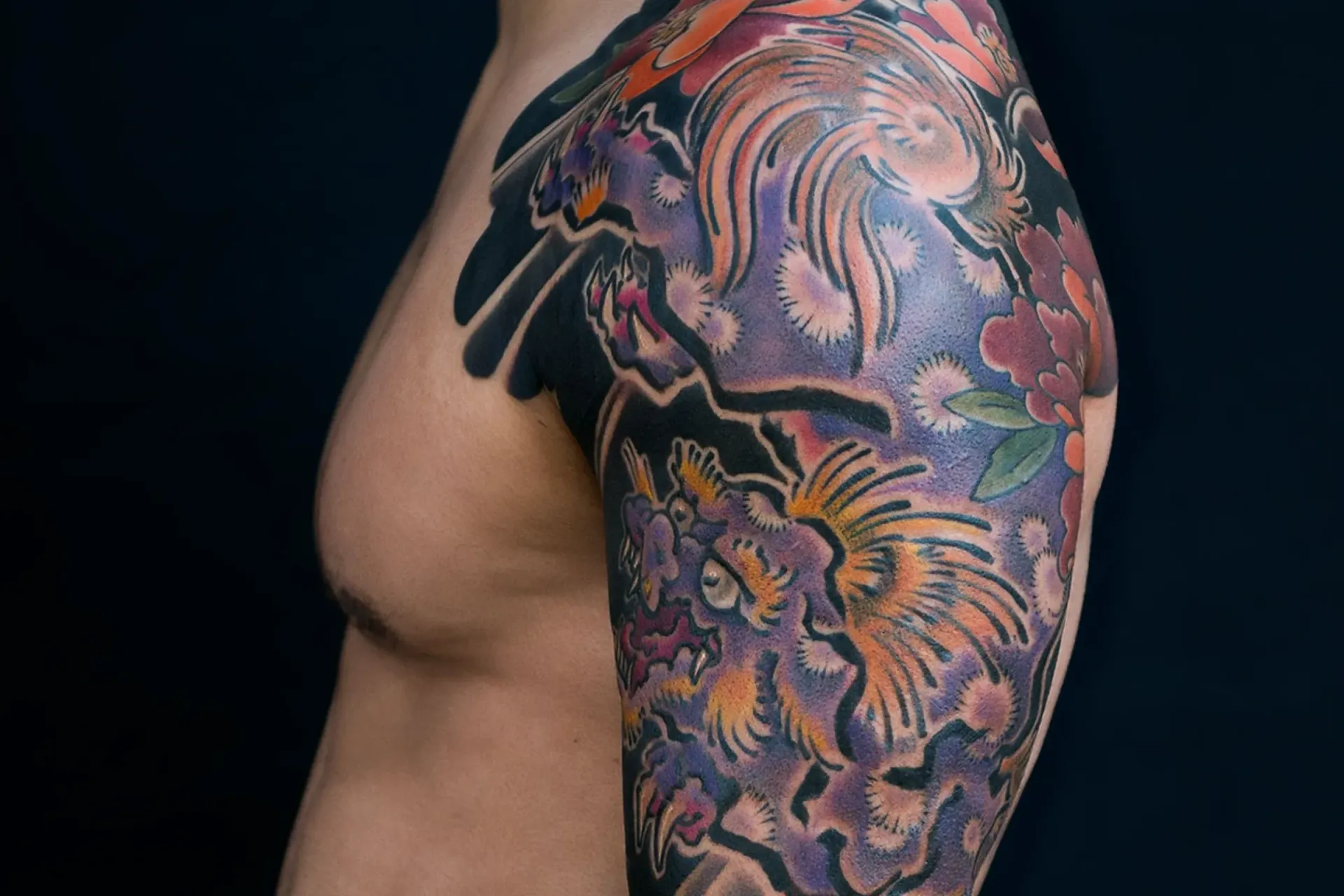
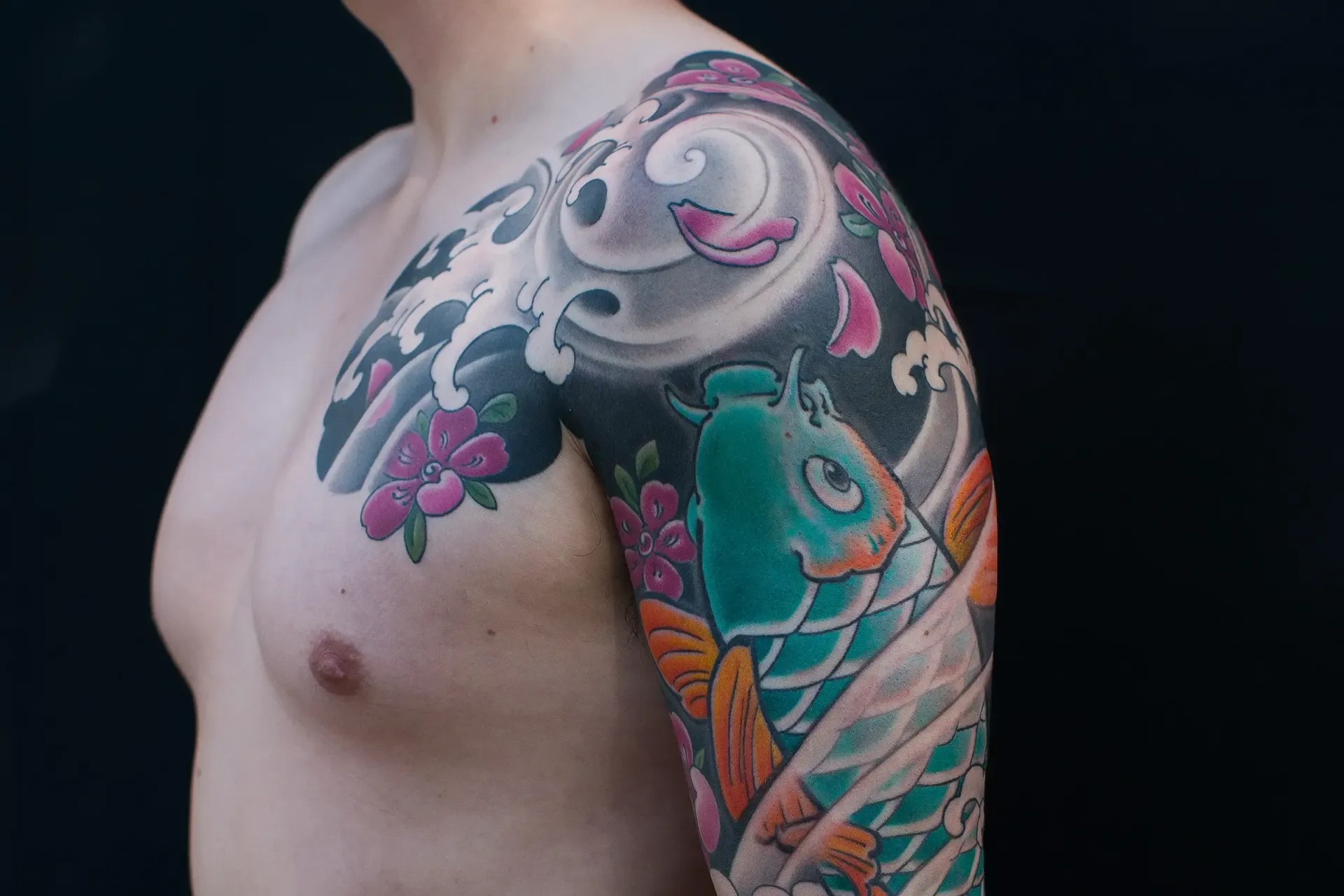
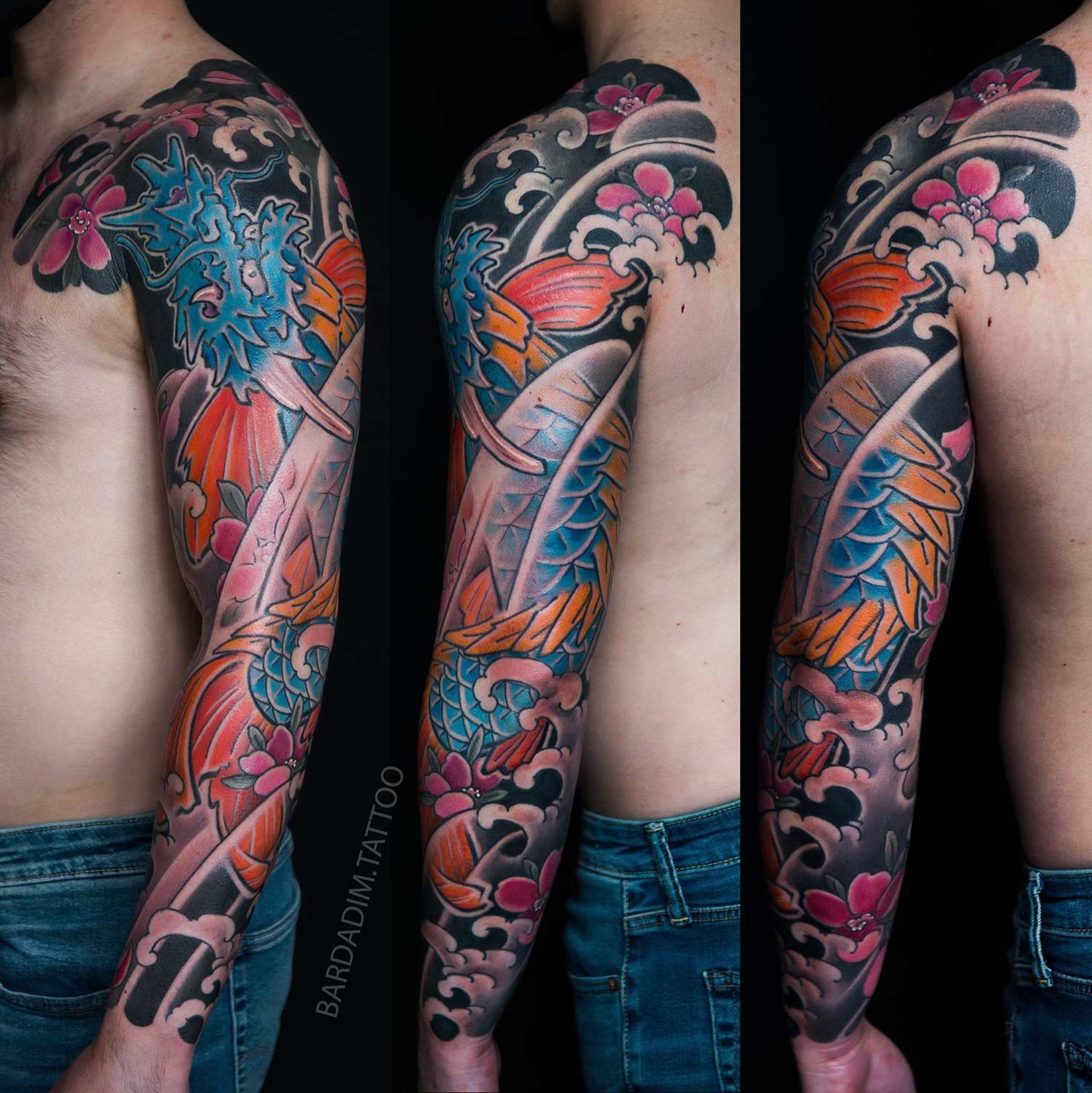
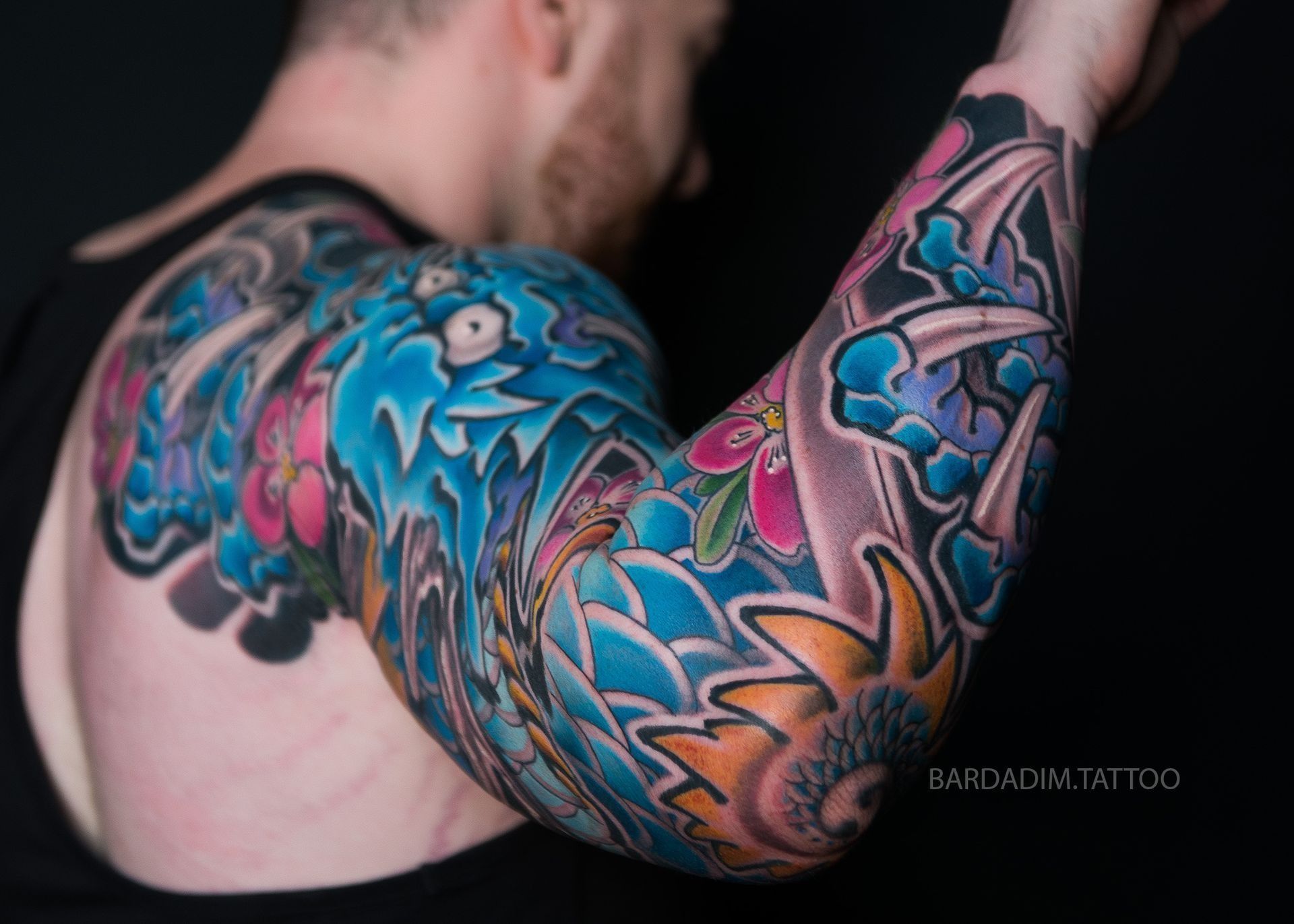
The coverage is a full arm sleeve with a shoulder panel reaching onto the upper chest and over the shoulder blade. The panel closes with the classic rounded hikae edge on the pectoral, and the sleeve runs unbroken from there to the wrist.
The palette is strict black and grey. The background is solid black wind with spiral turns, the transition zones are graded smoke, and the peonies themselves are the lightest value on the arm. There is no white ink doing the heavy lifting here: the flowers read as white because the skin inside them is left open and shaped with thin grey washes.
One Flower, Many Weights
The composition treats the peony the way a figure sleeve treats its cast. There is a lead: the large bloom seated on the shoulder cap, fully open, facing forward. Below it the supporting blooms rotate through different angles and stages, some in profile, some half turned, stepping down the arm to the forearm cluster near the wrist.
Between them the black wind does the structural work. Its spirals set a rotation that moves the eye down the arm, and its solid mass is what makes the open-skin petals glow. The darker the ground, the whiter the flower. Leaves and stems cross the boundaries between blooms so the sleeve reads as one growing system rather than a stack of separate flowers.
Following the Arm's Rotation
Flowers are forgiving forms, but a sleeve of them still has to obey the limb. The lead bloom sits on the deltoid, the widest viewing surface, where a full-face flower stays round instead of warping. The mid-arm blooms ride the biceps and triceps at three-quarter angles that tolerate the muscle's movement.
Through the elbow the design narrows to stems, leaves and wind: the zone folds thousands of times a day, so nothing detailed lives there. The forearm carries the final cluster, angled along the bone so it reads correctly with the arm hanging at rest. The wind spirals are placed to keep turning in the same direction as the natural twist of the forearm.
Value First, Petals Second
The build order for a monochrome sleeve is unforgiving, so the values were locked before any petal detail. The outline mapped every bloom and the full path of the wind. The black ground went in early and completely: it is the reference against which every grey on the arm is judged. The smoke gradients came next, setting the middle of the value range.
Only then were the peonies finished, with thin washes shaping each petal against the open skin. Working light into dark this way keeps the flowers crisp for the long term. As the piece ages, the black holds the structure and the flowers keep their contrast.
Restraint as a Statement
The finished sleeve is quiet, and that is the point. No color, no creature, no drama beyond the contrast itself. From a distance it reads as a rhythm of light and dark moving down the arm. Up close, each bloom rewards inspection with its own tilt and character.
Irezumi has always trusted the peony to hold meaning without shouting: abundance, honor, the dignity of a thing fully in bloom. Giving it the entire sleeve, in nothing but black and skin, is a bet that discipline reads stronger than spectacle. On this arm, it does.