Maple Leaves, Storm Clouds and Lightning Full Sleeve

George Bardadim • 27 June 2026

A Sleeve Without a Creature

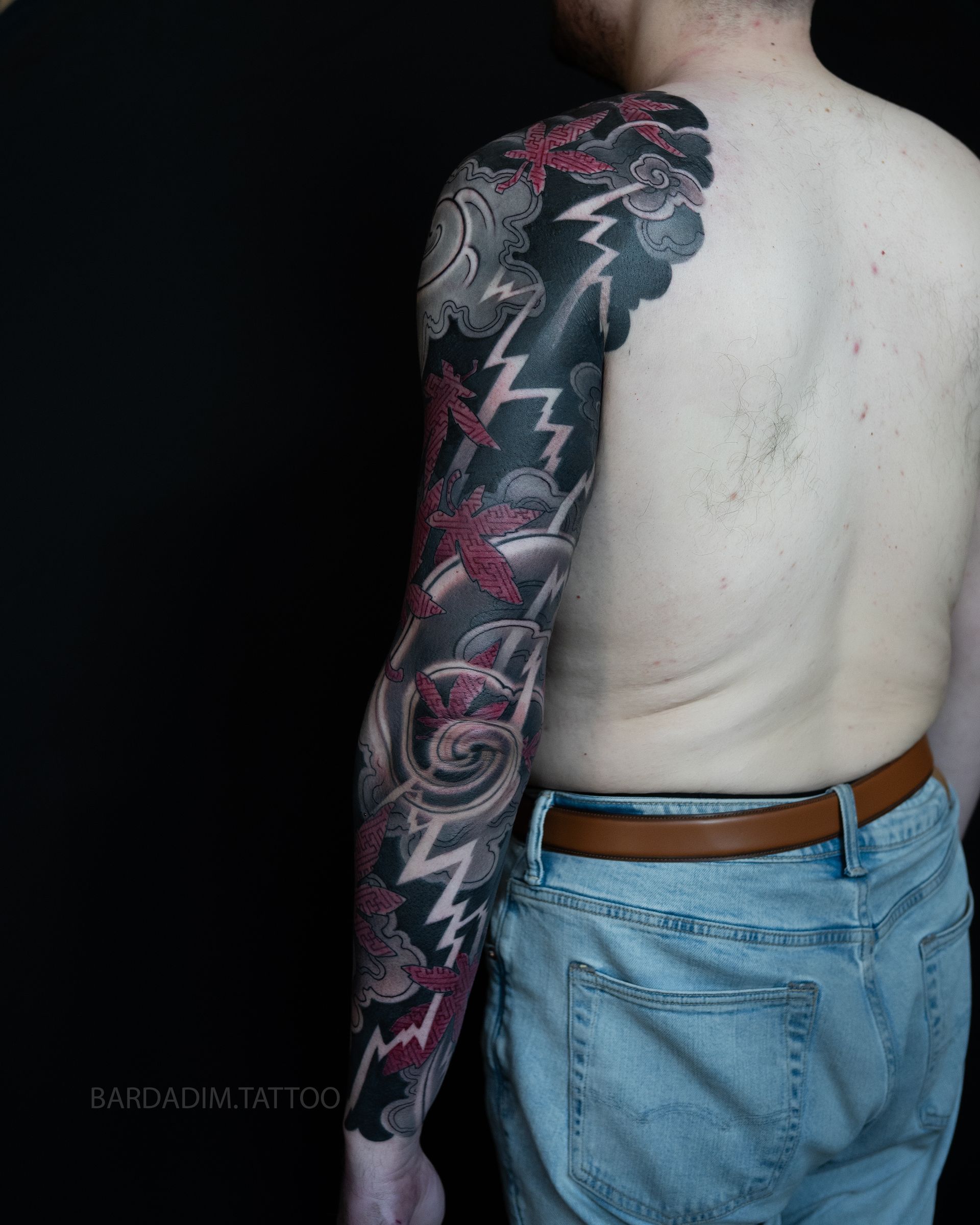
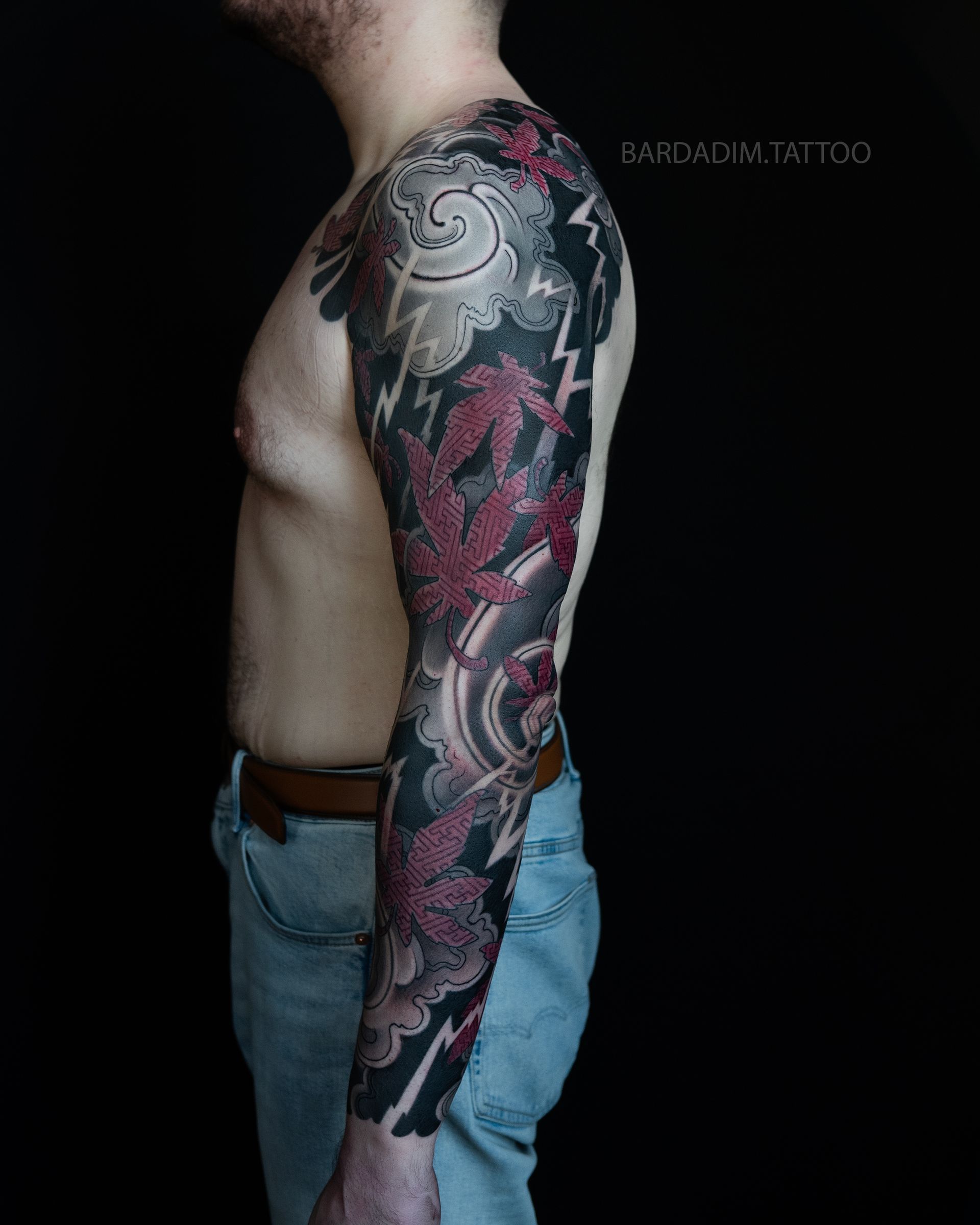
Most full sleeves are built around a creature. This one is built around weather. There is no dragon holding the composition together, no koi climbing the arm. The subject is an autumn storm: red maple leaves caught in moving cloud, with lightning cutting down through a black ground. Removing the central figure raises the difficulty, because nothing anchors the eye by default. The piece has to hold on movement, contrast and spacing alone.


Wrist to Chest

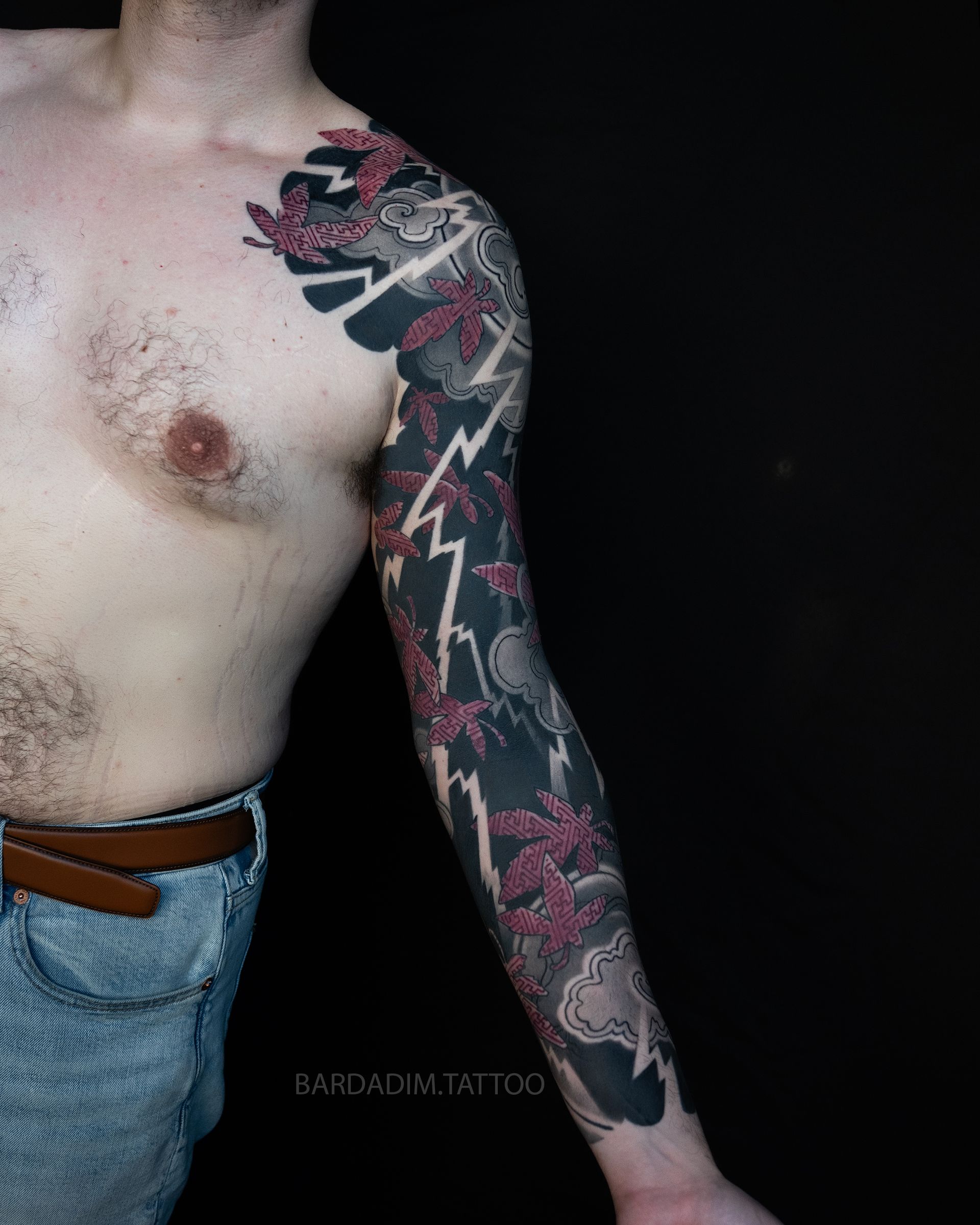
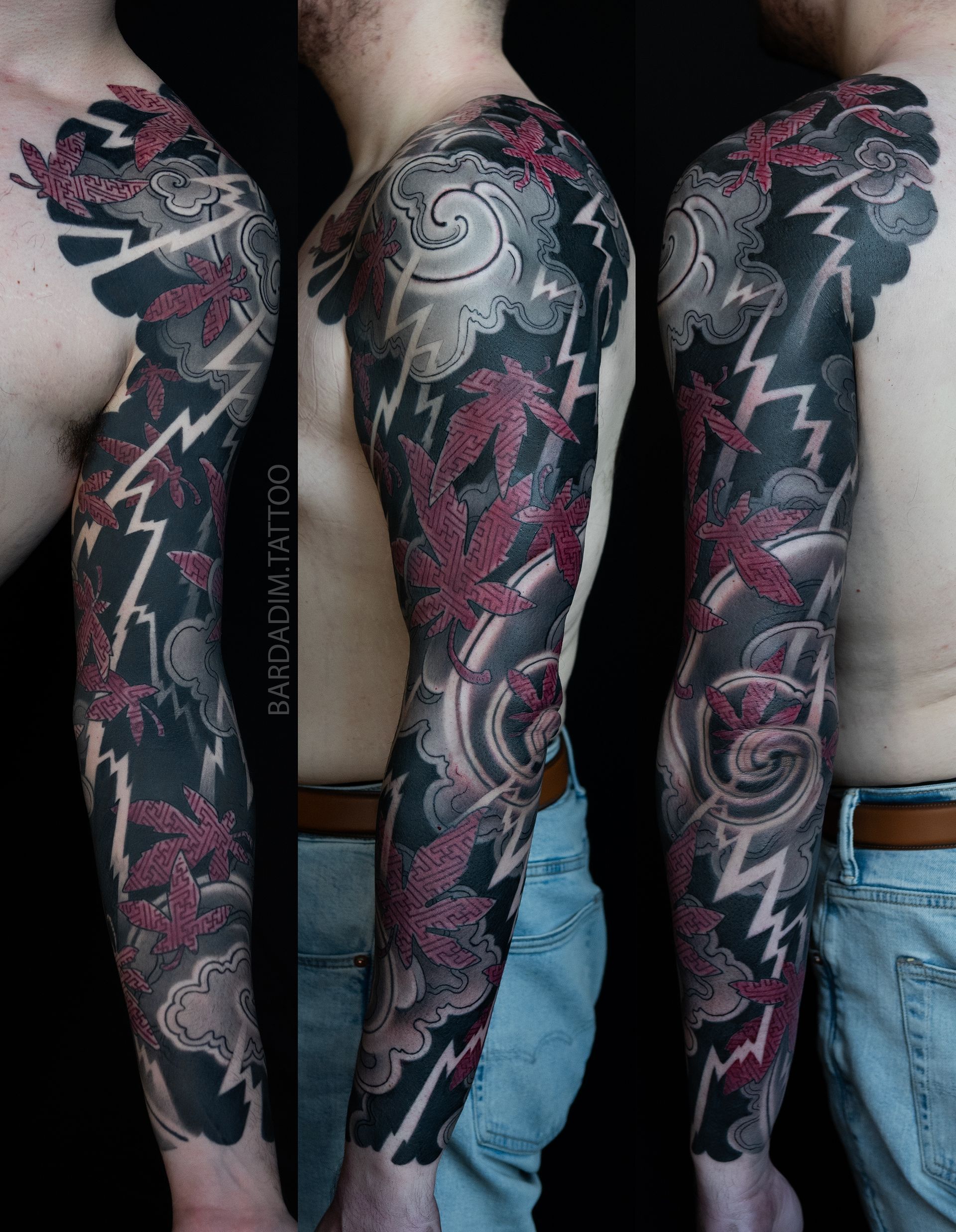
A full arm sleeve from wrist to shoulder, carried up over the deltoid and onto the upper chest, where it closes against bare skin on a clean mikiri line. The work is background-heavy: a black ground (gakubori) fills most of the field, with stylized storm clouds worked in grey, red momiji leaves as the color, and pale lightning reading as negative light through the dark. The maple leaves carry a sayagata key-fret pattern instead of naturalistic veining, which sets a geometric texture against the organic cloud forms.

Calm Leaves, Violent Sky

The shudai here is atmospheric rather than figurative: the storm itself is the subject. The composition runs on a single tension, the calm of falling autumn leaves against the violence of a thunderstorm. Momiji marks the season and the idea of transience; the lightning and driving cloud give it force. The sayagata fill on the leaves does real work: it is order placed inside chaos, a controlled, repeating pattern holding its shape while everything around it moves. The palette is deliberately narrow. Black ground, grey cloud, one red. Limiting the color makes the red read hot and keeps the lightning electric instead of decorative.

How the Storm Sits on the Arm

Clouds and lightning run with the long axis of the arm, so the storm reads as vertical energy travelling down the limb rather than wrapping flat around it. The maple leaves are placed across the rolling outer surfaces, the parts of the arm that stay visible as it turns, so the color stays legible whether the arm is at rest or raised. The black ground is shaped to leave the lightning as open skin tone, which means the bolts had to be planned as negative space from the start, not added on top. At the top, the chest extension gives the storm somewhere to resolve, and the mikiri boundary keeps that edge intentional instead of fading out.

Building the Black in Stages

This sleeve was built over nine sessions, not in one push, because a composition this background-heavy has to be staged. Linework and the structure of the clouds and bolts came first, establishing where the negative-space lightning would sit. The black ground was then built in passes, since gakubori at this density is hard on the skin and has to heal between sessions to stay even. Red was layered after the surrounding black had settled, so the color sat clean rather than muddying into the ground. The sayagata texture and the final shaping of the clouds came last, once the large shapes were locked.

What Holds Without a Hero

Finished, the sleeve does what a figureless composition has to do: it holds without a hero. The lightning keeps the eye moving down the arm, the red maple reads clearly at conversational distance against the black, and the sayagata gives the leaves a texture that survives healing instead of flattening. The narrow palette is what carries it. With only black, grey and red in play, the storm stays legible in motion and the autumn note stays present without softening the force of the weather around it.

Connected Post

Lotus Flower and Sayagata Pattern

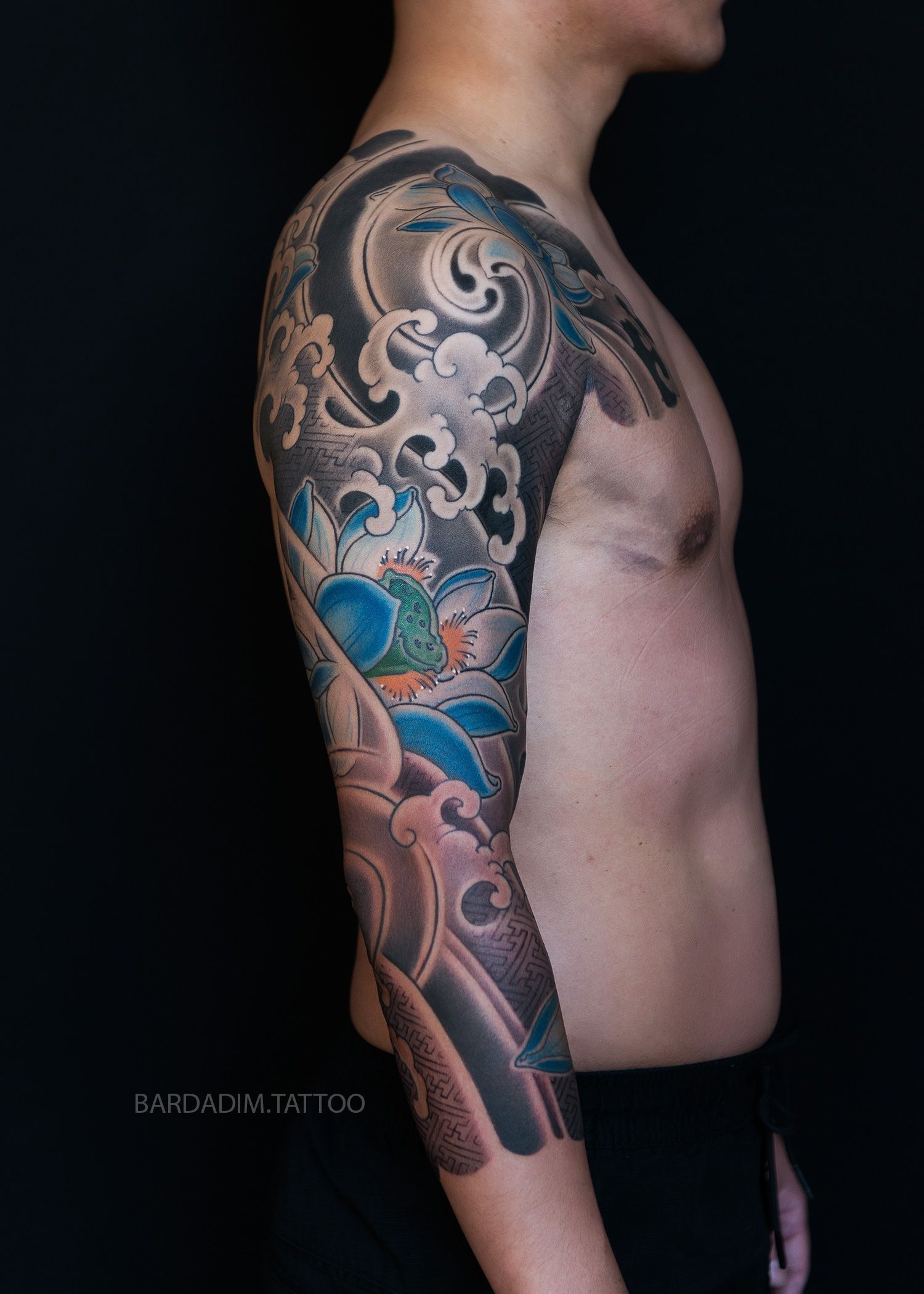
In the captivating world of tattoos, the combination of artistic expression and deep symbolism can create mesmerizing designs. One such design is the Irezumi tattoo sleeve, which often features the elegant lotus flowers and the intriguing sayagata pattern.


Side view of a person with a large colorful tattoo sleeve showing Lotuses and sayagata pattern

Let the Way flow onward:

Let the Way flow onward:

Beyond This Ink

Continue the journey through other Irezumi stories.

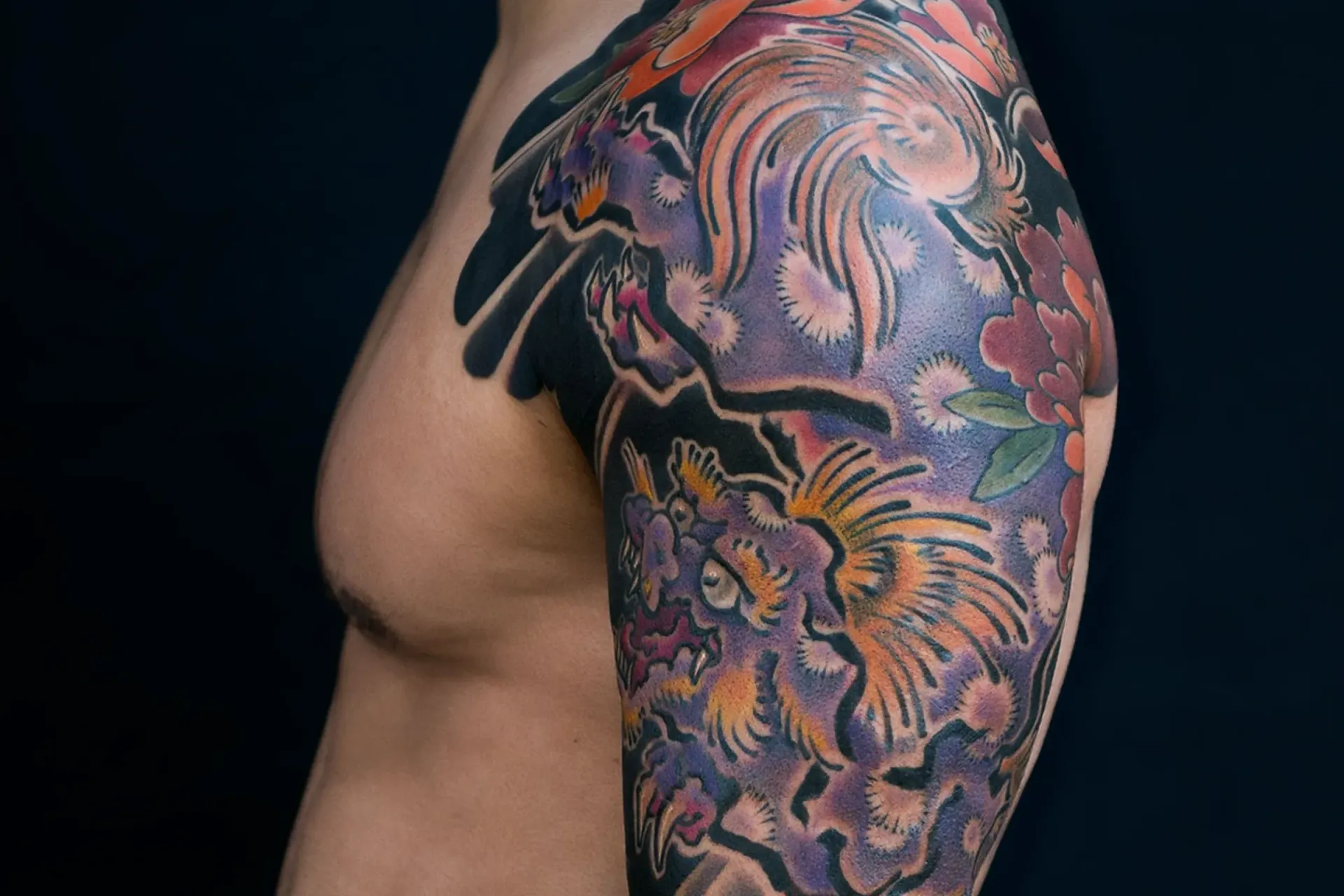
Shishi Guardians and Peonies | Full Japanese Sleeve by Bardadim Tattoo
by George Bardadim 29 November 2024
A full Irezumi sleeve featuring two Shishi Lions and peonies a Gaku-bori composition symbolizing courage, protection, and beauty. Traditional Japanese tattoo by Bardadim.
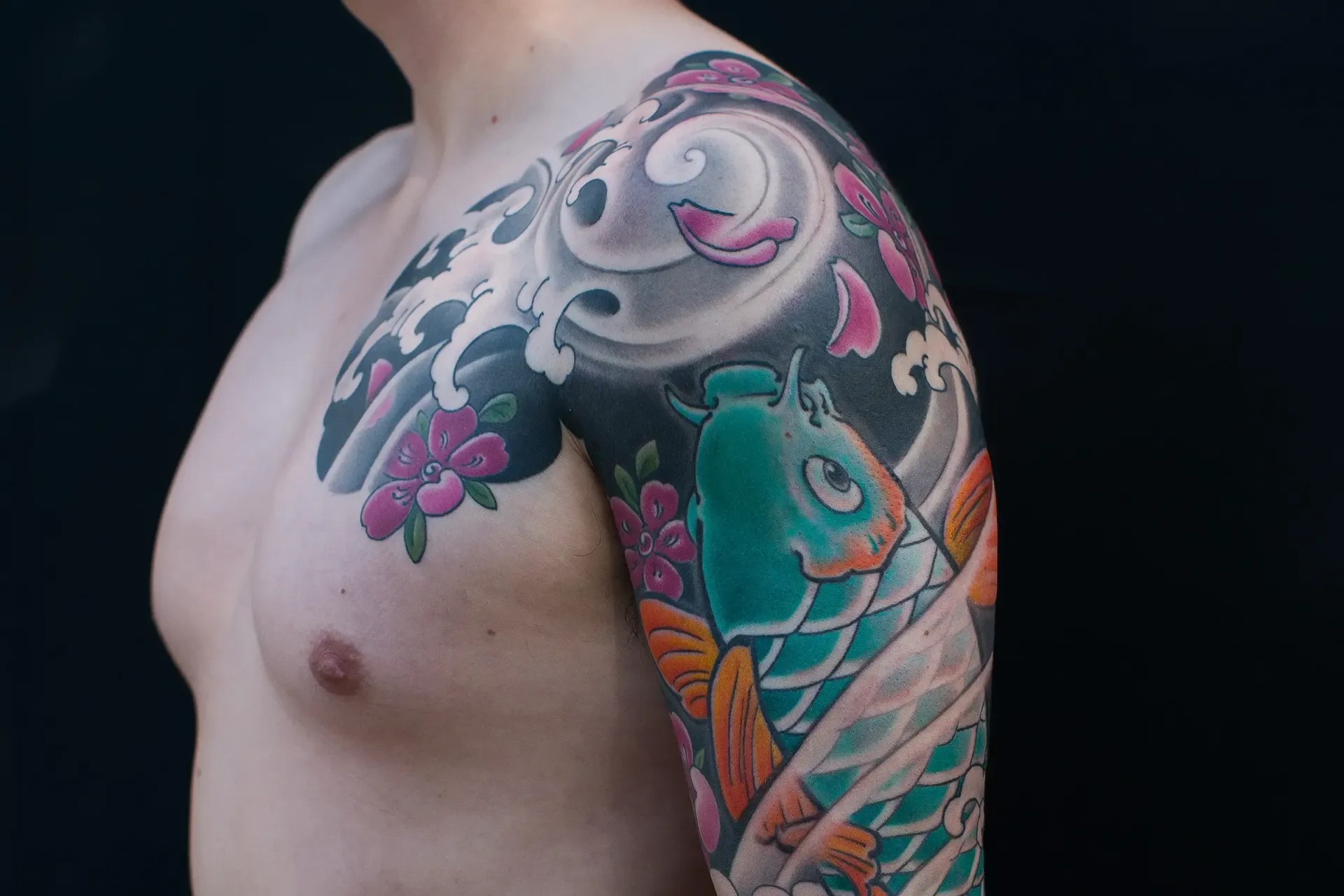
Japanese sleeve tattoo showing anatomical flow — koi and waves following natural muscle lines
by George Bardadim 7 November 2024
Discover the meaning and structure of this Japanese koi sleeve by Bardadim Tattoo - a masterful balance of shudai, keshoubori, and anatomical flow.
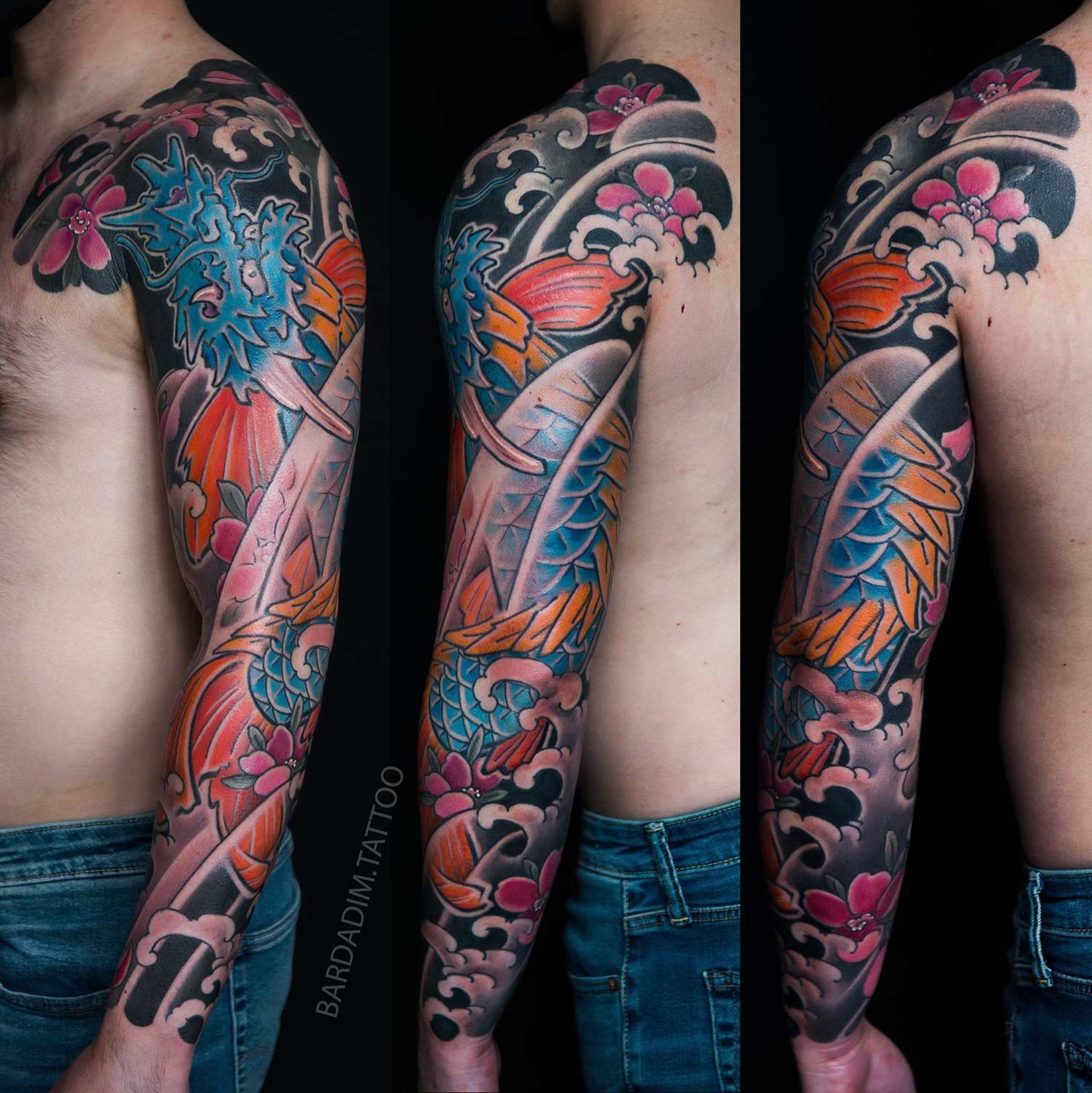
Koi-Dragon. Mystical Creature of Japanese Art.
by George Bardadim 14 July 2024
Explore the meaning of Ryūugyo, the koi-dragon of Japanese art and Irezumi. A symbol of transformation, perseverance, and the path toward enlightenment.
Show More …