The Art and Flow of Traditional Irezumi Backpieces
Introduction
The back is the largest uninterrupted surface on the body. In traditional Irezumi, it becomes the main stage where the story unfolds. This size allows for the clear depiction of the primary motif, the shudai, supported by background elements that provide depth and flow. From here, the rest of the bodysuit grows naturally: arms, chest, sides, and legs all respond to the lines and energy set in the backpiece. Without this foundation, the full-body composition lacks unity and direction.
What Makes the Back the Core
In the world of traditional Japanese tattooing, the backpiece is more than just a large tattoo, it is the heart of the bodysuit. Covering the expanse from the base of the neck to well below the waist, it anchors the entire composition. In Irezumi, every element flows from this central form, reflecting centuries of artistic practice and the quiet discipline of Zen. The backpiece is where balance, movement, and harmony converge, transforming the body into a living canvas.
Two Classic Layouts
New Paragraph
Two Classic Layouts
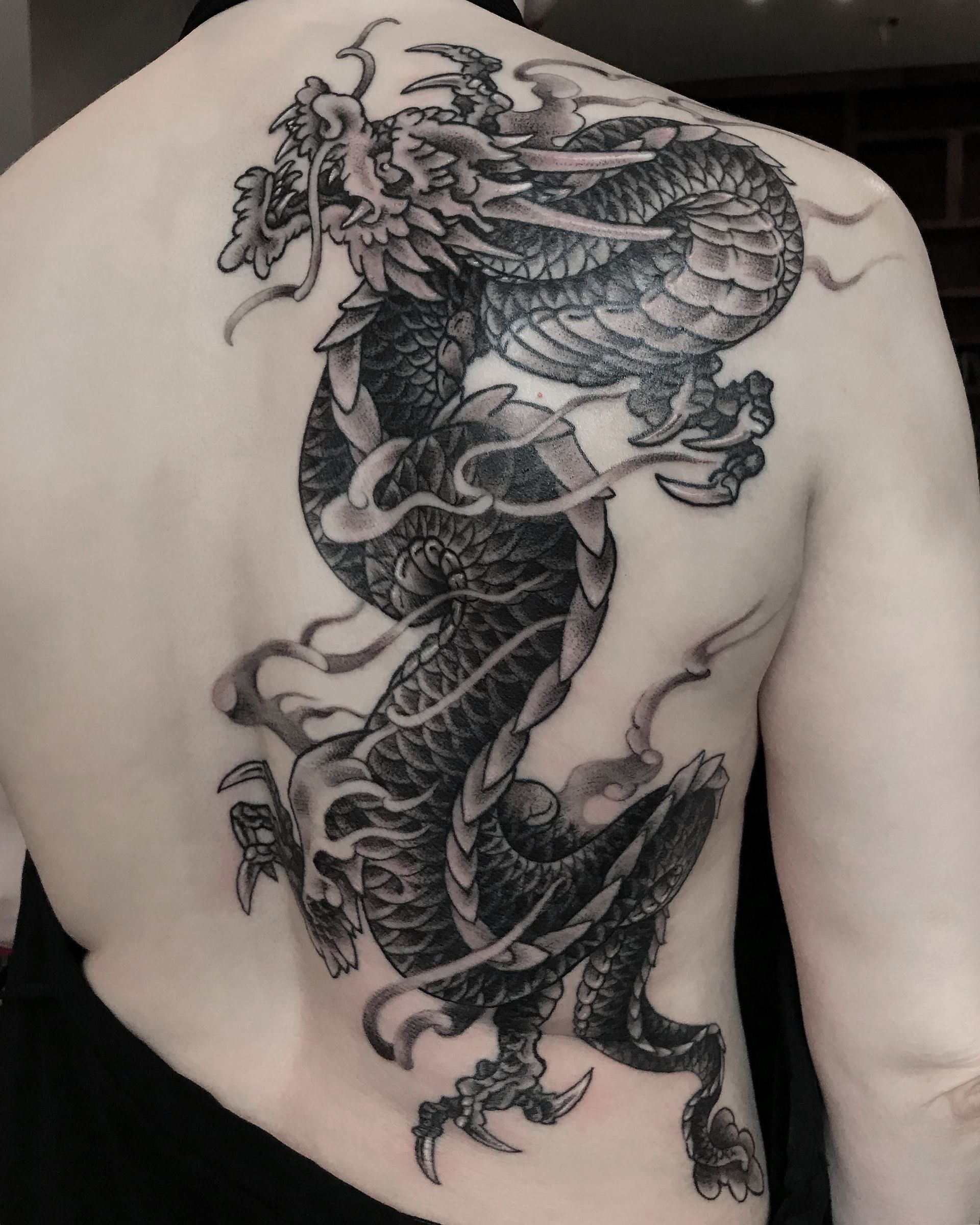
Unframed
Senaka Nuki-Bori
In this style, the central figure is left unframed, with no surrounding background elements. The design floats freely on the skin, creating a minimal and open composition. Nuki-Bori is often chosen as a stand-alone work, valued for its quiet presence, or as the starting stage for a future bodysuit. The open edges make it possible to integrate background later, allowing the piece to expand organically.
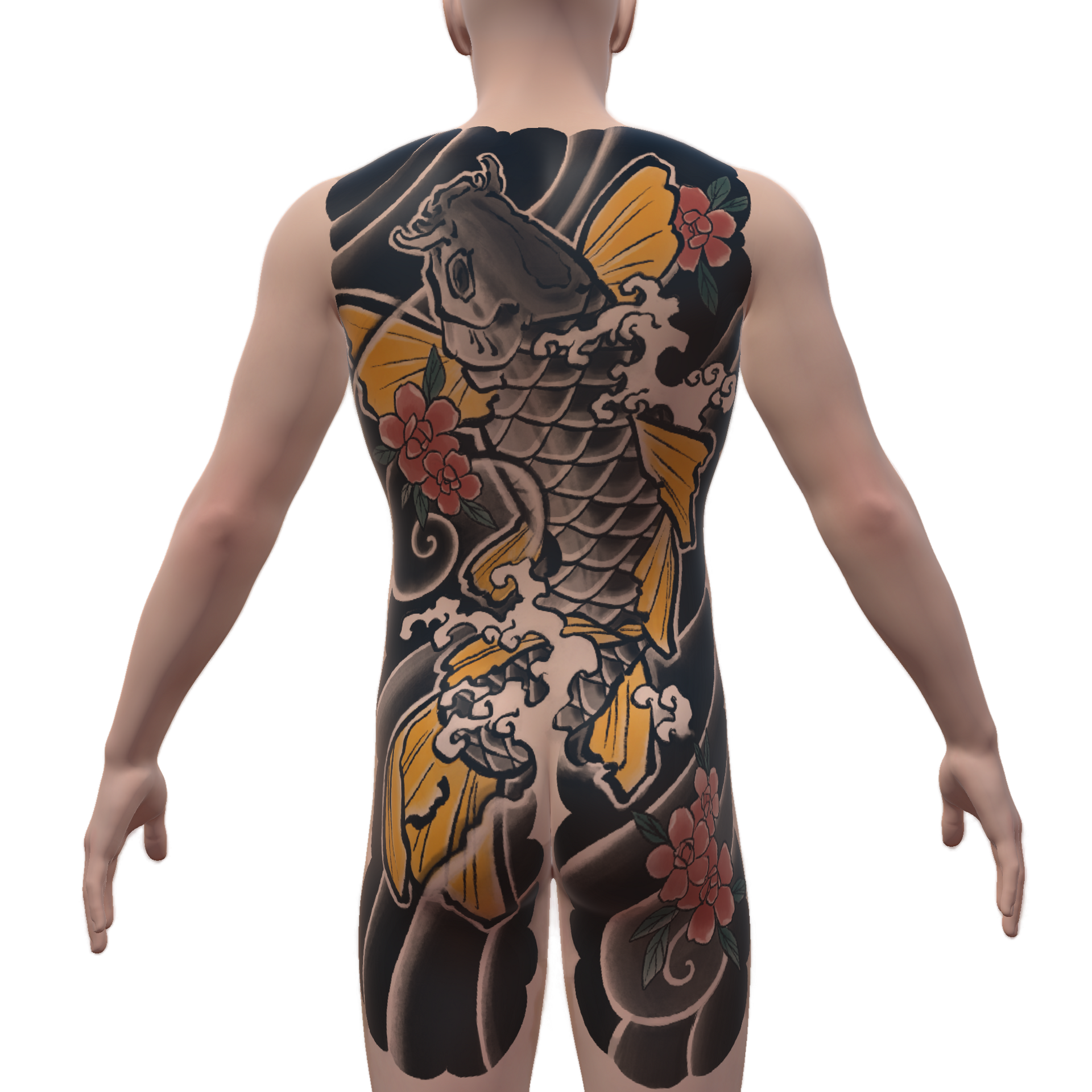
Framed
Senaka Gaku-Bori
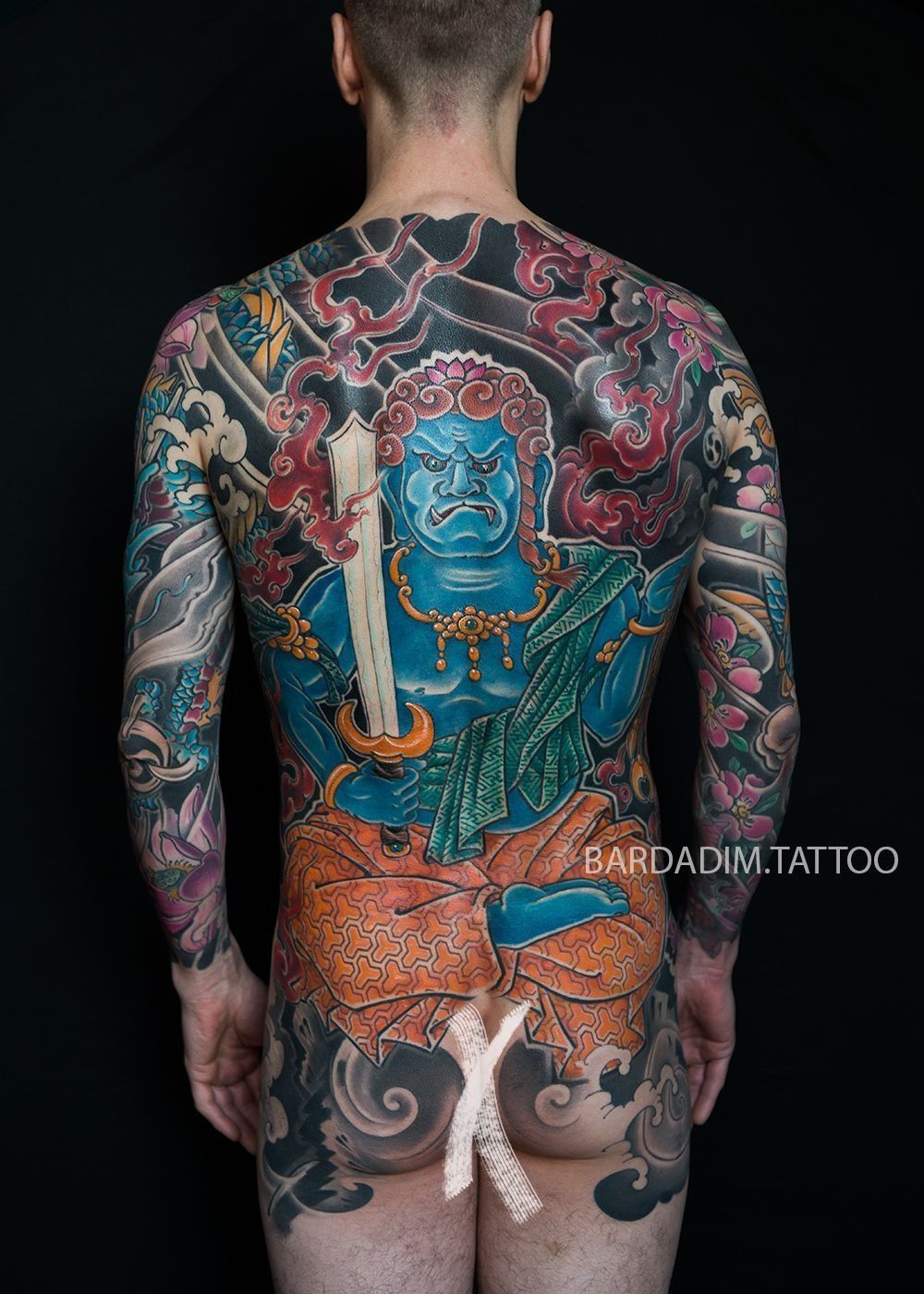
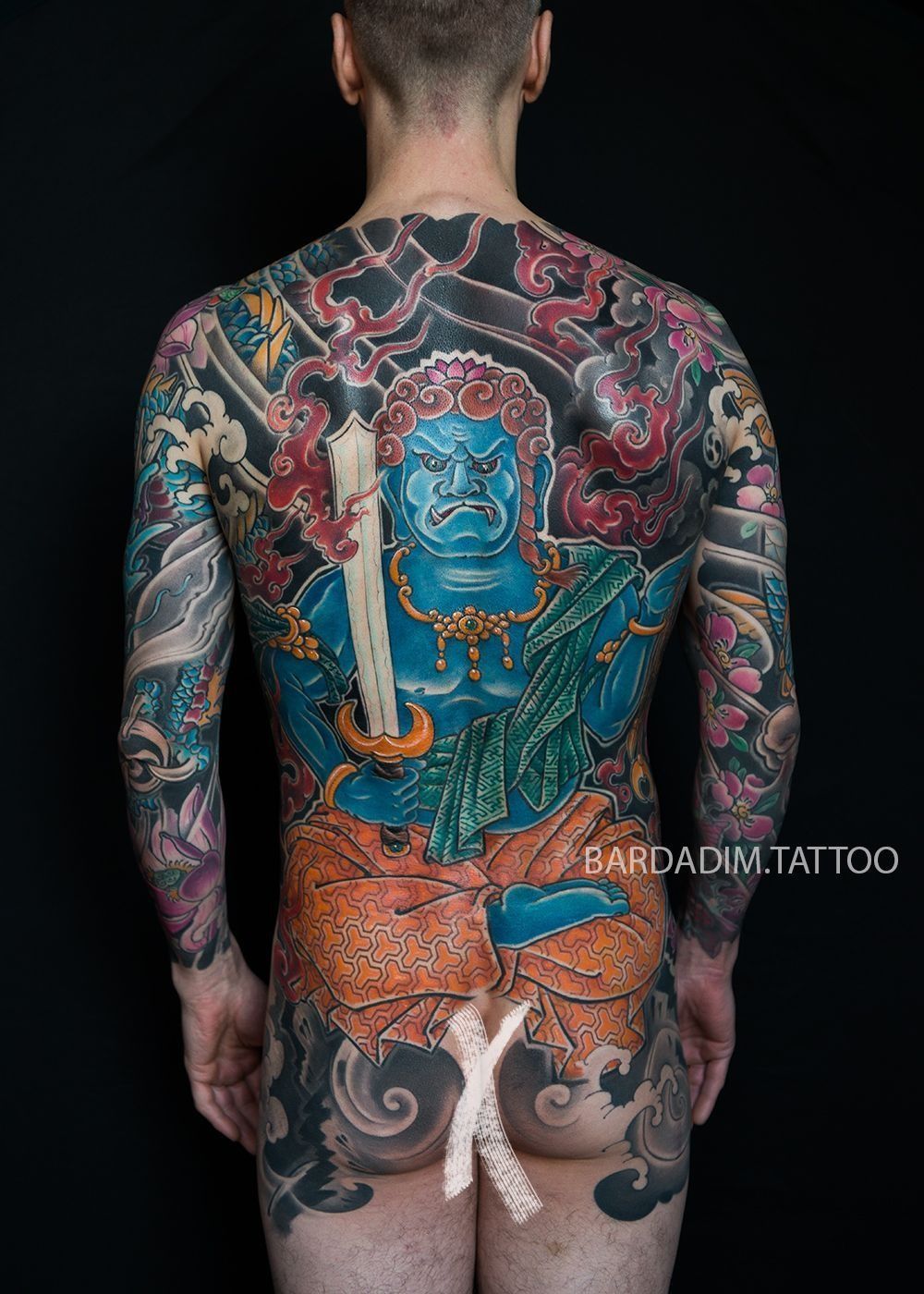
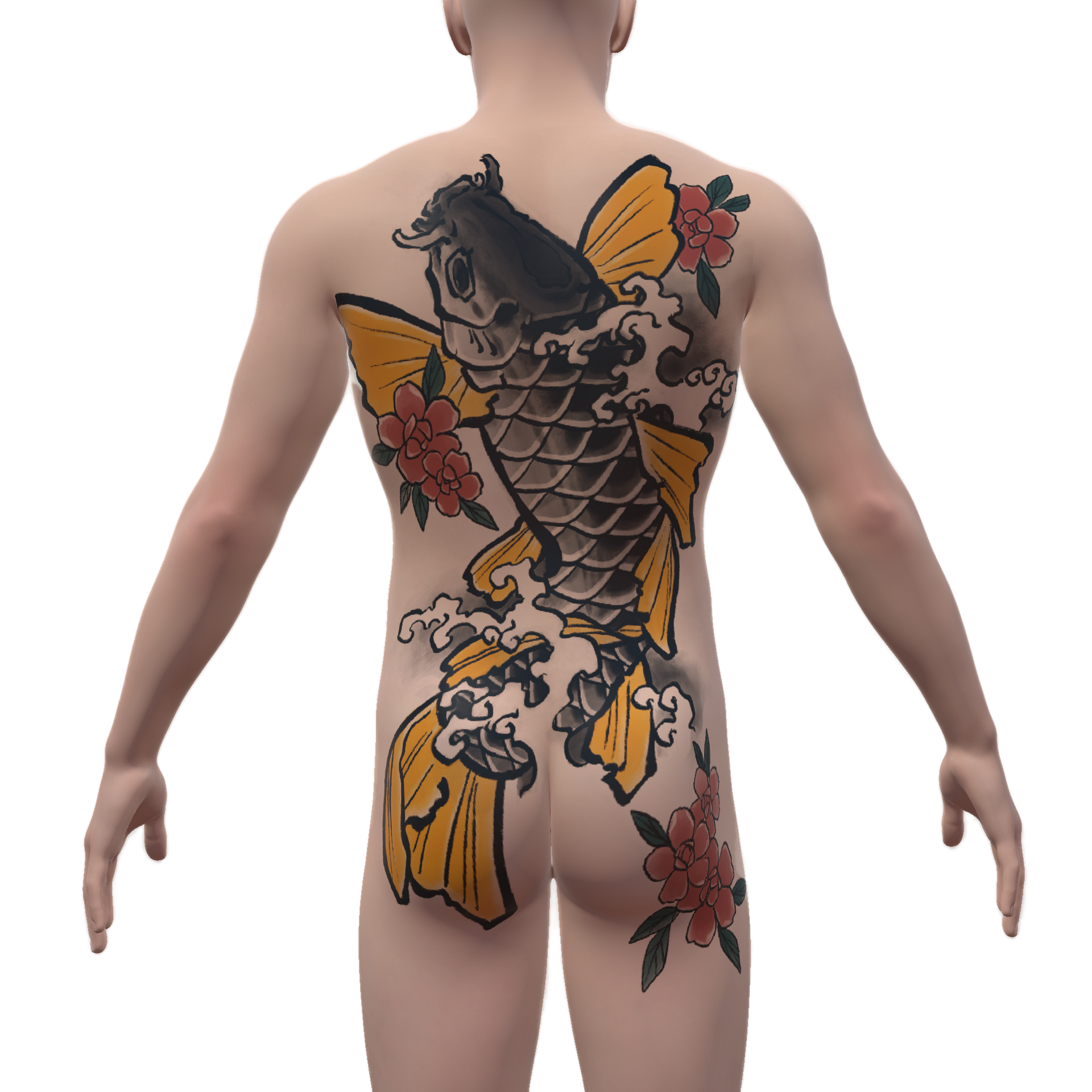
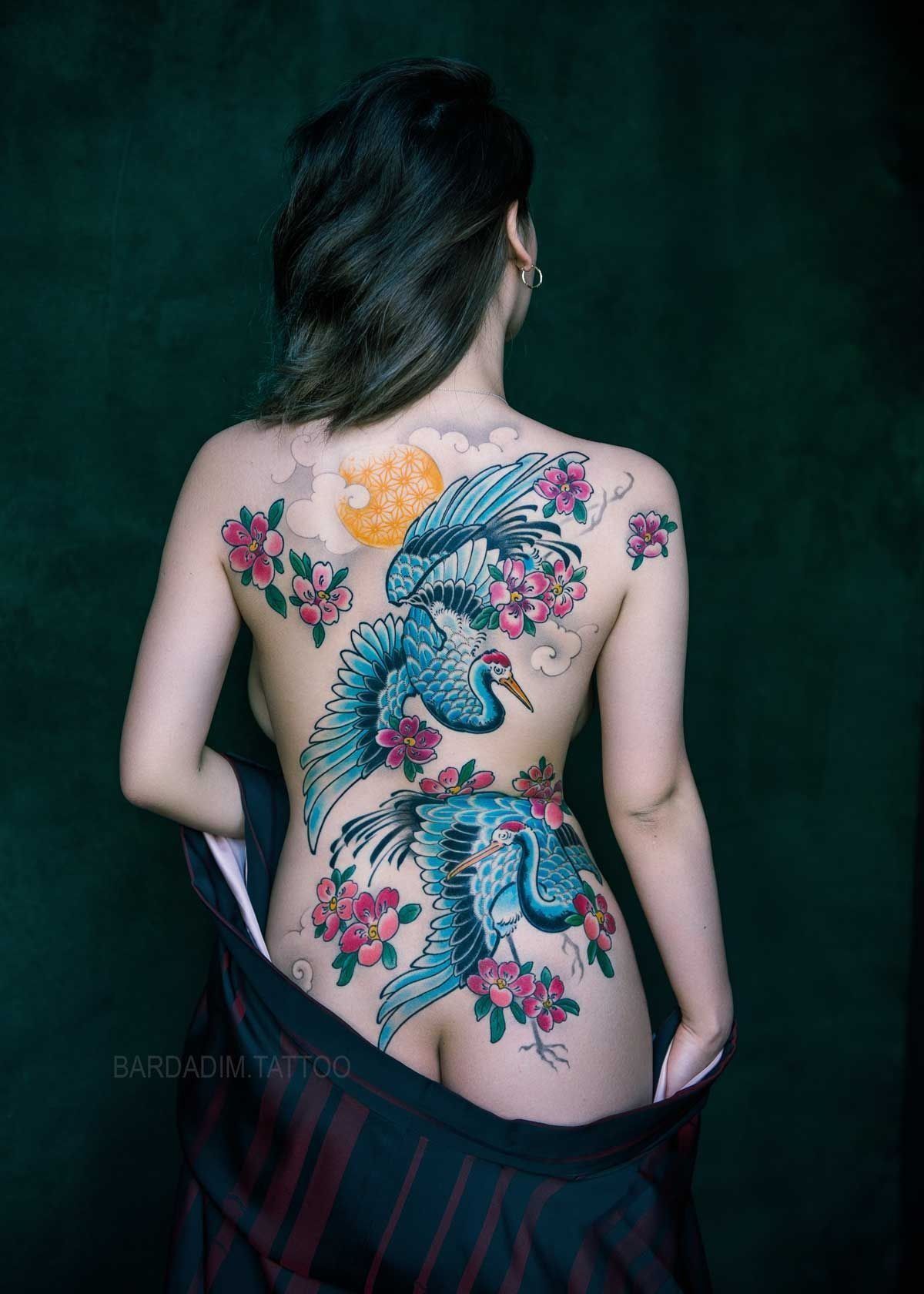
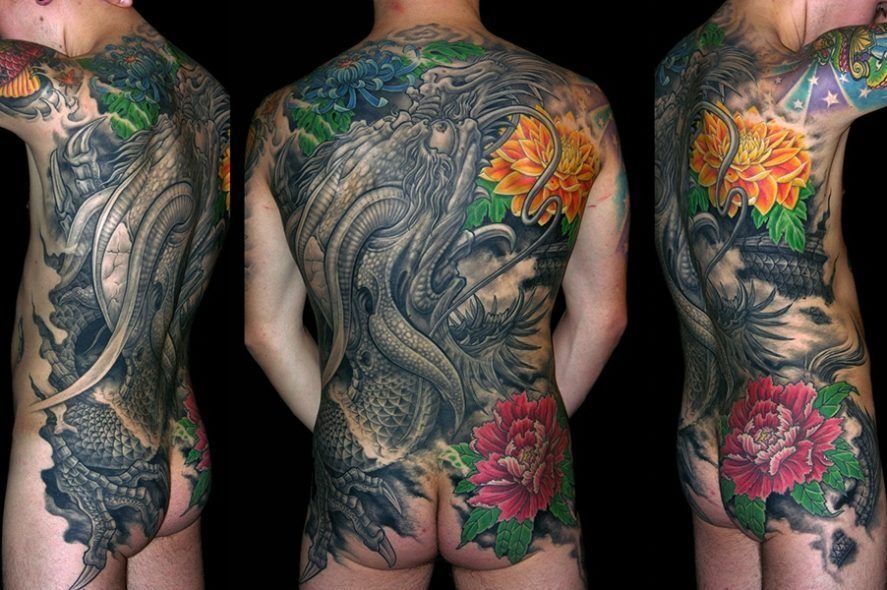
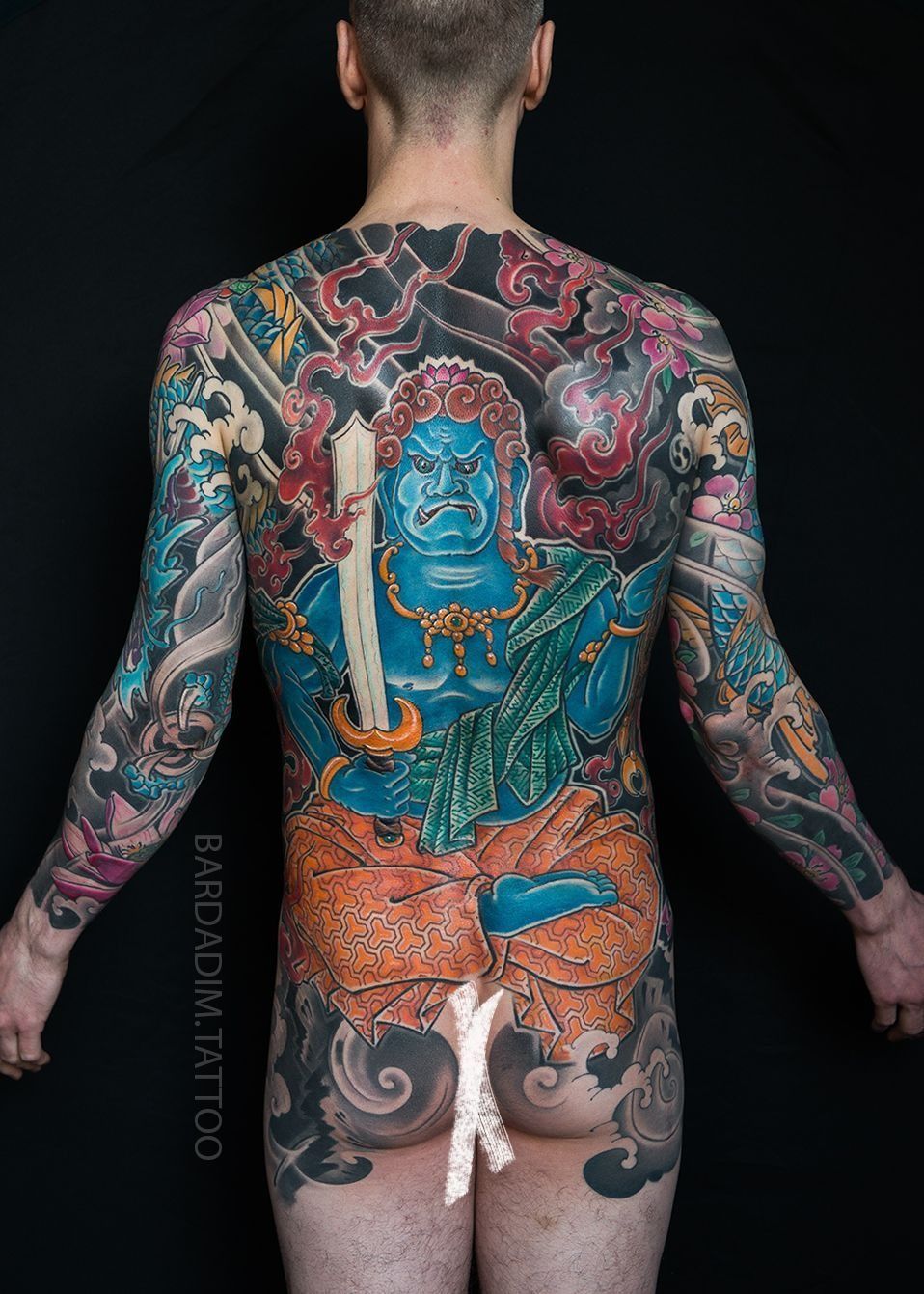
Can be also called 'Se-Wari' or 'Kame-no-Koh'. Here, the main figure is surrounded by a background - wind bars, clouds, water, rocks, or floral patterns - that frames the composition and creates dynamic movement. This framing guides the eye, balances the design, and allows it to flow seamlessly over the natural contours of the body, extending onto the buttocks and upper thighs. The frame is not decorative alone - it is essential to the structure and strength of the piece.
Why the Back Piece Comes First
In the sequence of a traditional bodysuit, the backpiece is completed before other sections. This ensures that the most important element, the main theme dictates the flow and proportion of the rest. Starting elsewhere risks breaking the rhythm and forcing adjustments later. With the back finished, the artist can plan sleeves, chest panels, and legs in perfect harmony, ensuring every section connects like pieces of a single puzzle.
Balance: Motif and Background
A successful backpiece is not simply a large image, it is a careful relationship between the central motif and its surroundings. The main figure must breathe, while the background provides structure, flow, and context. Traditional background elements, such as wind, waves, or clouds, are used to support and emphasize, never to compete. Borders (mikiri) define the edges of the tattoo, creating a natural transition between ink and bare skin, and guiding the viewer’s eye without abrupt cuts.
No Partial Back Tattoos
In our studio, we do not create designs that cover only a portion of the back, such as a single shoulder blade, one side of the spine, or anything ending above the buttocks. These fragment the composition and disrupt the body’s natural flow. A true backpiece must be complete, balanced, and integrated. Partial work compromises the visual harmony and is not in keeping with the traditions of Irezumi.
Continuity Beyond the Waist
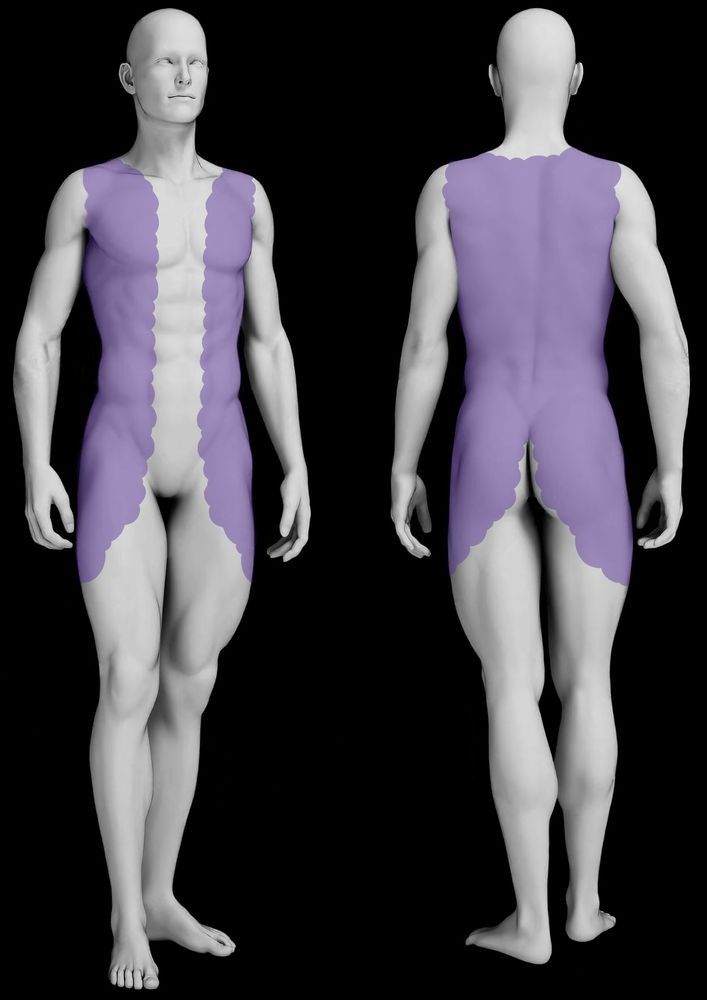
A traditional backpiece does not stop at the beltline. Ending there is like stopping a river in mid-flow, it interrupts the energy and leaves the composition incomplete. In proper layout, the design extends naturally over the buttocks and often onto the upper thighs. This continuation ensures visual balance, respects the proportions of the body, and maintains the integrity of the bodysuit’s flow.
Zen in Motion
Irezumi is a practice of patience. A full backpiece takes time, often many months or years to complete. Each session builds upon the last, like layers of meditation. The process is as important as the result: it requires commitment, trust between artist and client, and an understanding that the tattoo will grow into the body’s rhythm over time. In this way, the backpiece becomes more than an image, it becomes a part of the person’s presence.
A traditional Irezumi backpiece is not just art — it is a living statement of harmony, movement, and dedication. It is the starting point of the bodysuit, the anchor that guides every other element. Whether framed or unframed, it must flow beyond the waist, balance motif and background, and reflect both the wearer’s spirit and the centuries-old traditions of Japanese tattooing.
Unframed
Senaka Nuki-Bori
In this style, the central figure is left unframed, with no surrounding background elements. The design floats freely on the skin, creating a minimal and open composition. Nuki-Bori is often chosen as a stand-alone work, valued for its quiet presence, or as the starting stage for a future bodysuit. The open edges make it possible to integrate background later, allowing the piece to expand organically.
from The Irezumi Way
“Each line is a lesson. Each session - a step.”