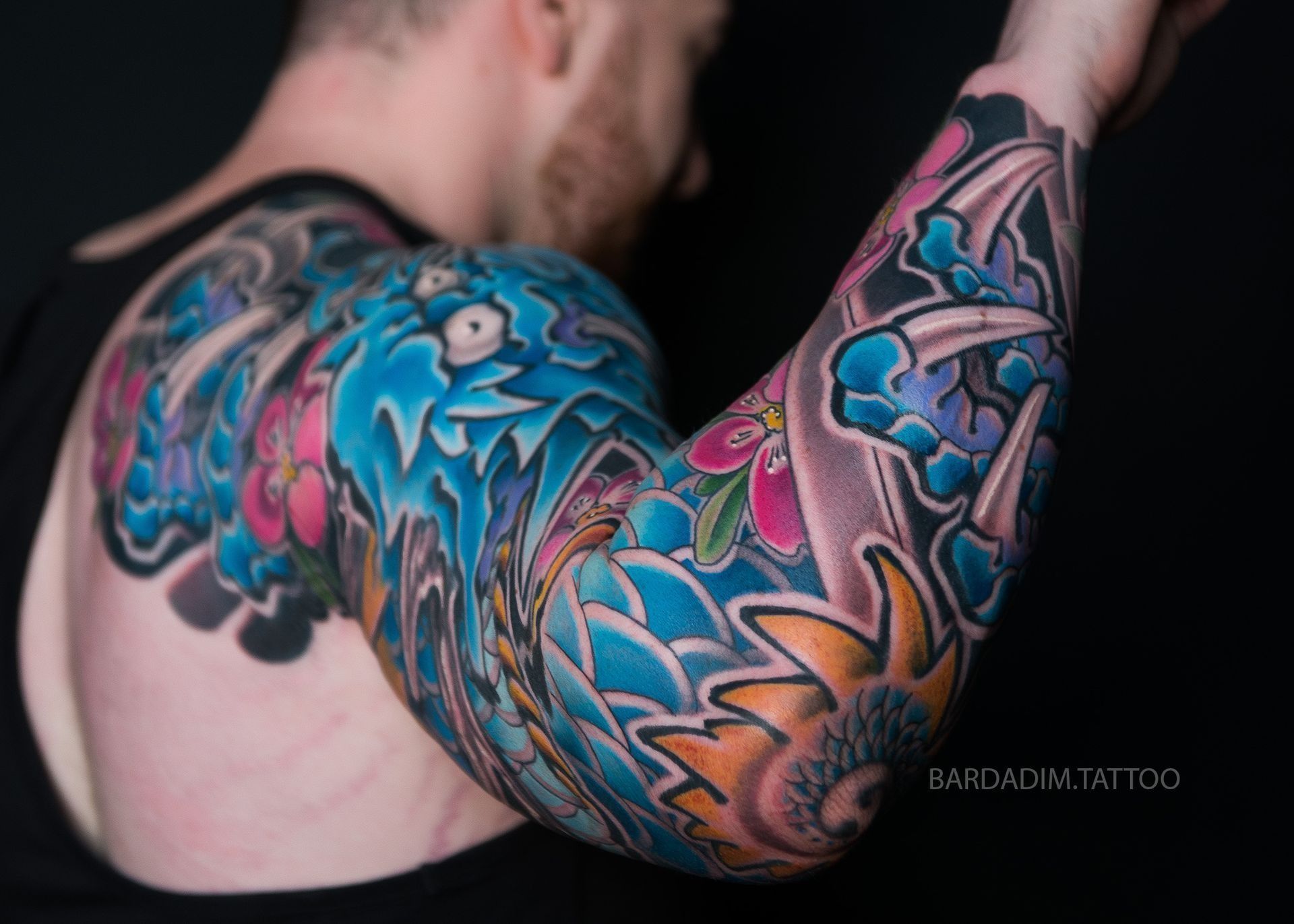
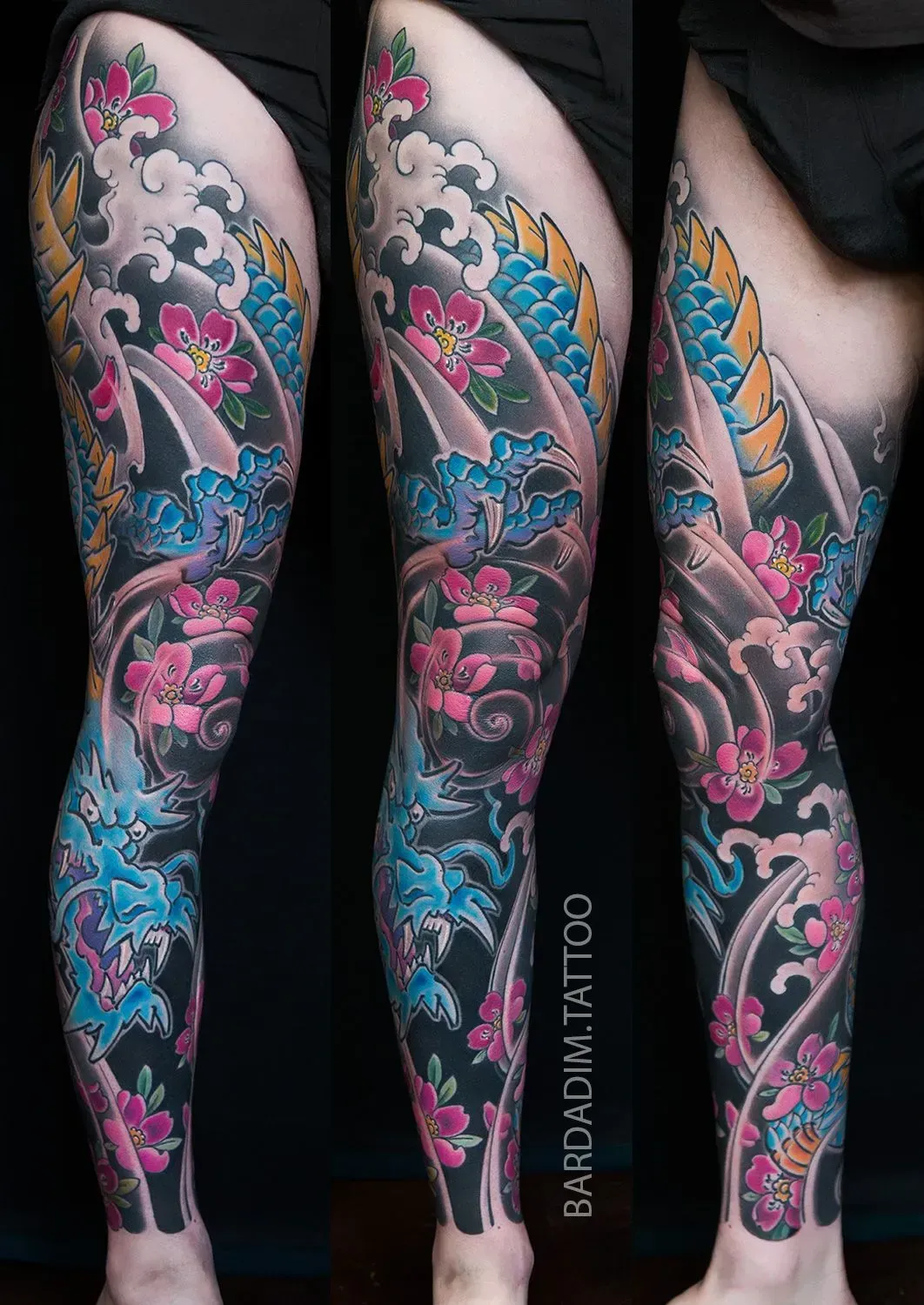
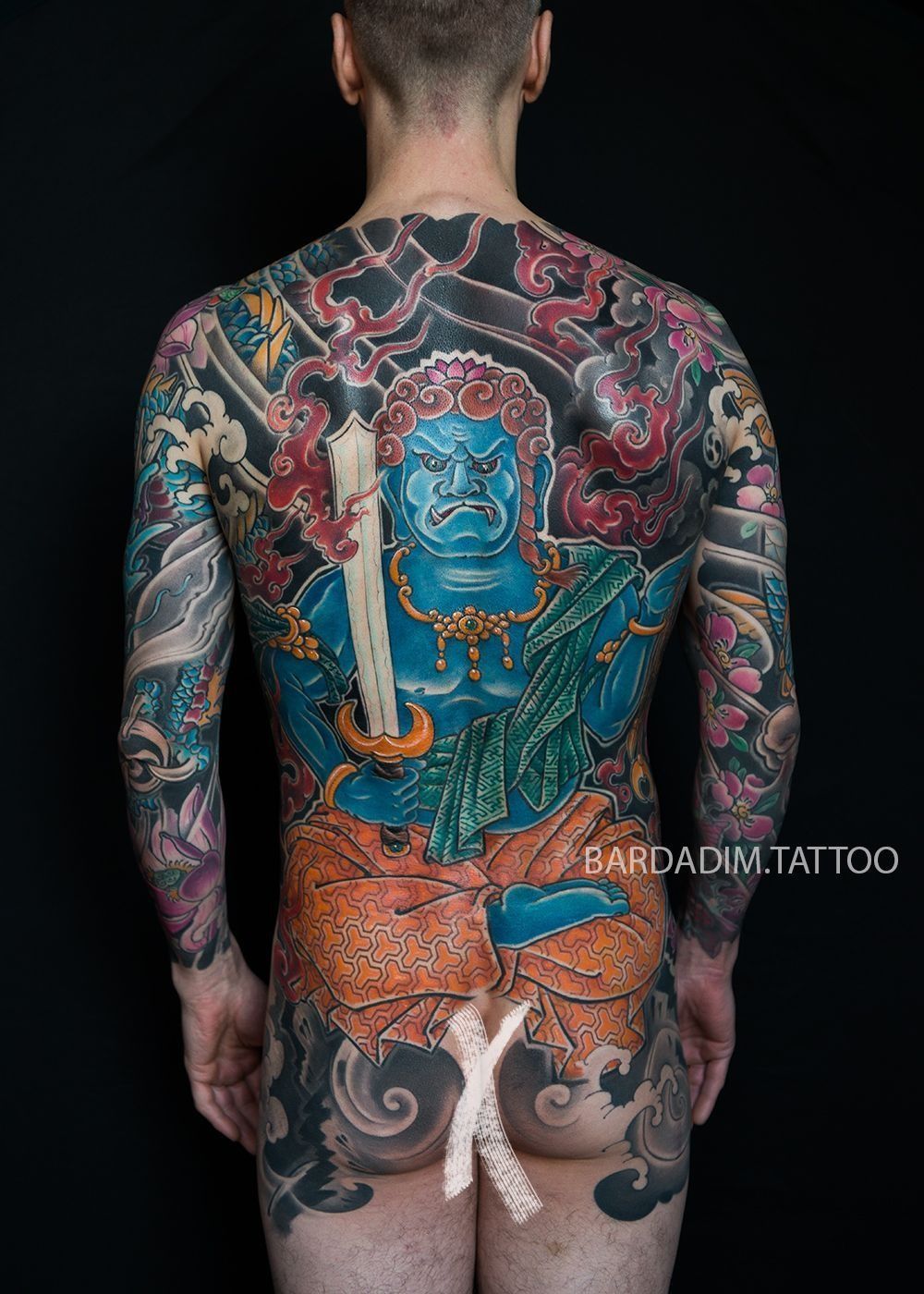
Gaku-bori tattoos are not standalone designs; they are expansive pieces that cover significant body areas, making their edges a crucial design element. Mikiri is essential in Irezumi and is integral to the initial design concept. Various styles exist, many named after natural motifs.
Inspired by pine needles, it features a series of straight lines that form its border. This style is rarely found in modern Irezumi.
Features a wavy border inspired by the rounded petals of the botan (peony) flower. While rooted in floral design, it typically incorporates elements of waves and clouds, creating a graceful and fluid edge.
Features a sharply defined mikiri with a straight edge that resembles a clean slice made by a katana.
Akebono, meaning "daybreak," features a subtle border that gradually lightens in color, mimicking the soft transition of sunlight at dawn.
Literally meaning "gravel border," this design features an edge that gradually fades out with a series of small dots.
Irezumi works
The living form of my art.
Irezumi Language
Symbols that speak through silence.
Irezumi Flow
Movement shaped by mindful design.