
Anatomical Flow
Anatomical Flow
Anatomical Flow
Anatomical flow is the principle that every line, shape, and edge in an Irezumi composition is built to follow the body's natural structure. Muscle direction, joint placement, and body lines are not constraints to work around. They are the architecture the design grows from.
When the body moves, a properly composed Irezumi piece moves with it. It looks alive because it was drawn for a living body, not for a flat canvas. In Gendai Irezumi this is not a stylistic preference but the structural principle that makes long-term, large-scale Japanese tattooing readable across decades.
Traditional Context
Classical Irezumi developed for the body as a living surface. Long before Western flash and standalone tattoos, Japanese masters worked on full sleeves, backpieces, and bodysuits where the design had to read while the body bent, lifted, twisted, and aged. Several principles came out of this:
- Composition follows muscle structure: the deltoid, the biceps line, the lats, the obliques, the quad sweep
- Mikiri closes where the design requires: along the chest for a sleeve's hikae, beneath the buttocks for a backpiece, or partway down a limb for a shorter length
- Background lines and rhythm follow the body axis, not cut across it
- The shudai is oriented along the body's natural axis, not floated on it
The body is treated as the primary structure of the composition. The design adapts to the body. The body does not adapt to the design.
Structural Logic
Anatomical flow operates at every layer of the composition:
- Shudai placement: the main motif is oriented and scaled to read along the body's natural axis (a koi swimming up a sleeve, a dragon climbing the back)
- Mikiri: a full sleeve always reaches the chest and includes the hikae, so its border never sits at the shoulder. Otherwise mikiri placement is deliberate, closing at an anatomical transition or running partway along a muscle (a three-quarter sleeve ending mid-forearm, a hikae covering part of the chest) according to the mikiri style and the design
- Background: lines and rhythm follow body contours and run along major muscle groups
- Transitions between zones: the flow of one zone becomes the entry of the next (sleeve into chest panel, backpiece into buttocks and thigh)
When anatomical flow is broken, the consequences are visible. Borders drawn against the muscle look amputated. Motifs floated against the body axis look stuck on, not built in. Compositions that cut the body the wrong way, a backpiece stopping at the waist, a single shoulder blade, a forearm in isolation, fragment both the body and the work.
The body carries a thousand subtle directions: the way the deltoid curves, the way the lats wrap toward the spine, the way the calf sweeps into the ankle. A well-composed Irezumi piece treats every one of these as information, not as obstacles.
In My Practice
Anatomical flow is the first thing I assess in any new project, before subject or symbolism is even discussed. The body tells me what kind of composition is possible.
In practical terms:
- I do not accept projects that fragment the body's natural flow: a half backpiece ending at the waist, a partial shoulder, a forearm-only design
- I place every mikiri deliberately, at an anatomical transition or partway along a muscle as the mikiri style and the design require
- I orient every shudai along the body's natural axis
- I draw every background line so it follows muscle structure rather than crossing it
For multi-zone projects, anatomical flow is what allows a sleeve, a chest panel, a backpiece, and a leg sleeve to be designed years apart and still read as one composition. Each zone is planned with full awareness of how its flow will resolve into the next.
A tattoo that ignores anatomical flow can look striking on day one and on a flat photo. On a living body, over time, it falls apart.
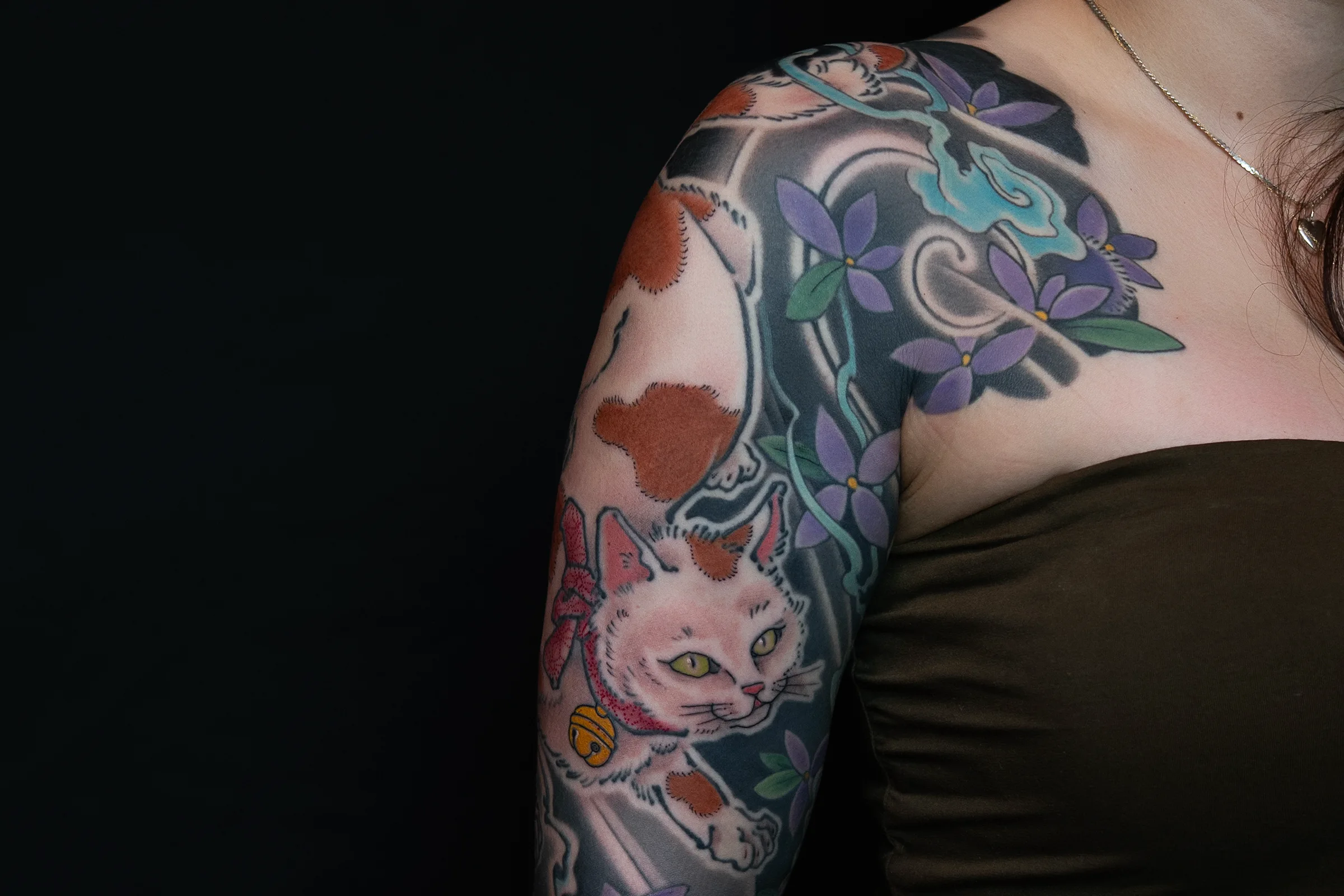
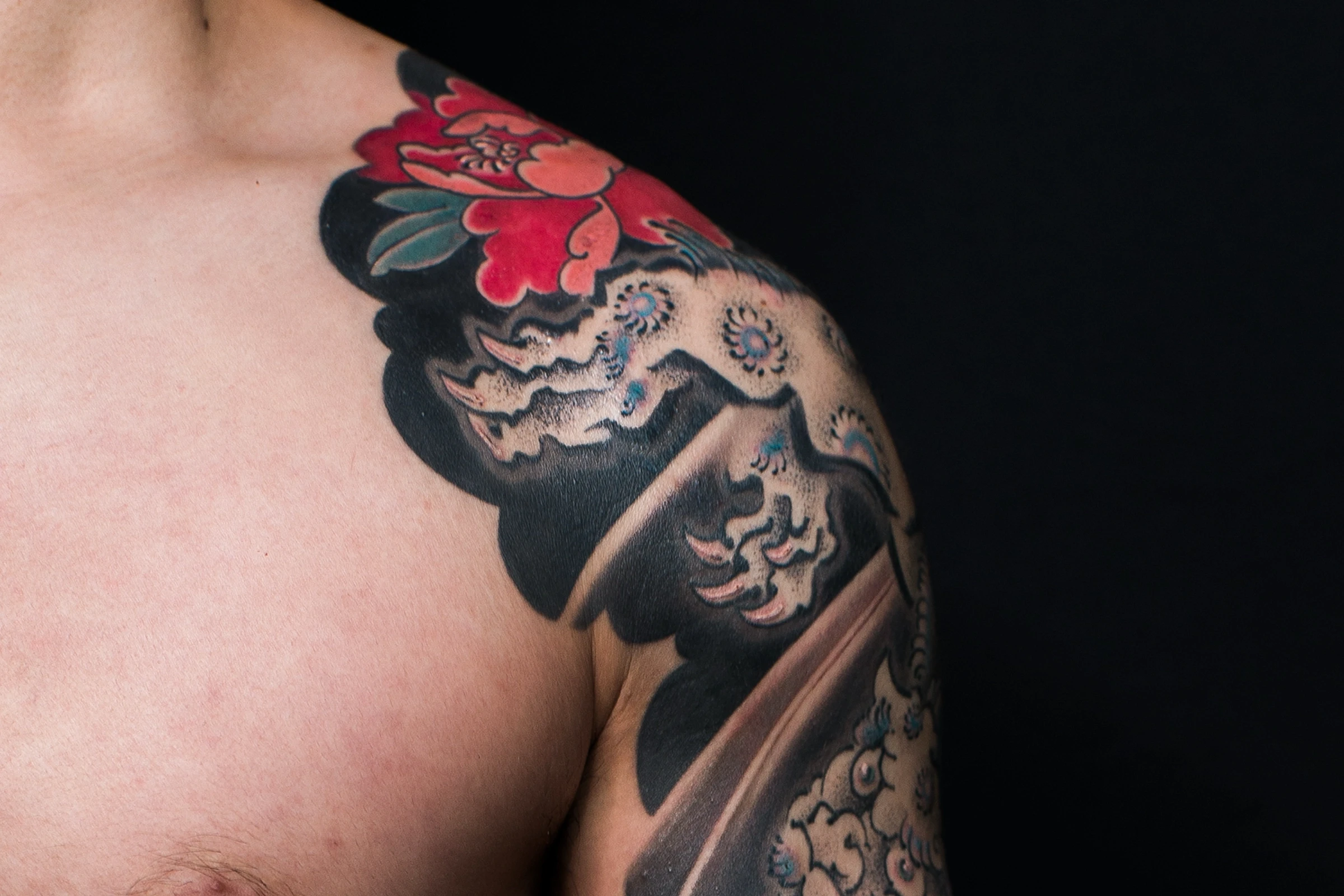
This Principle in Finished Work
Completed projects where this principle carries the structure.





This Principle in Finished Work
Completed projects where this principle carries the structure.


This Principle in Finished Work
Completed projects where this principle carries the structure.
More from Style
Other terms and principles that shape how a large-scale piece is built.
More from Style
Other terms and principles that shape how a large-scale piece is built.
More from Style
Other terms and principles that shape how a large-scale piece is built.

From Principle to Piece
Every term on these pages is a decision made on a real body. The booking guide explains how a project begins and what I need from you to plan it.
From Principle to Piece
Every term on these pages is a decision made on a real body. The booking guide explains how a project begins and what I need from you to plan it.
From Principle to Piece
Every term on these pages is a decision made on a real body. The booking guide explains how a project begins and what I need from you to plan it.
© 2026 All Rights Reserved | Bardadim.Tattoo
© 2026 All Rights Reserved | Bardadim.Tattoo
© 2026 All Rights Reserved | Bardadim.Tattoo