
Composition Structure
Composition Structure
Composition Structure
A large irezumi piece is a single designed structure, not a group of images placed near one another. It holds together because it is built on a few structural pillars and organized by a clear hierarchy among them. The pillars are the parts a composition needs; the hierarchy is the order of importance that keeps those parts from competing. Together they are what let a sleeve or a back read as one thing rather than many.
A large irezumi piece is a single designed structure, not a group of images placed near one another. It holds together because it is built on a few structural pillars and organized by a clear hierarchy among them. The pillars are the parts a composition needs; the hierarchy is the order of importance that keeps those parts from competing. Together they are what let a sleeve or a back read as one thing rather than many.
A large irezumi piece is a single designed structure, not a group of images placed near one another. It holds together because it is built on a few structural pillars and organized by a clear hierarchy among them. The pillars are the parts a composition needs; the hierarchy is the order of importance that keeps those parts from competing. Together they are what let a sleeve or a back read as one thing rather than many.
Traditional Context
Traditional horimono treats the body as the site of one continuous work, the way a building is designed for its ground. The composition is planned to fit the body's form and movement, not stamped onto it. This is the sense in which a tattoo is body architecture: every element has a structural job, and the whole is conceived before any part is placed. A piece assembled motif by motif, with no plan for how they rank or connect, is the opposite of this, decoration rather than structure.
Structural Logic
The pillars of a composition are the main subject, the supporting motifs, and the background, all tied to the body by flow and closed by the border. The main subject, the shudai, is the reason the piece exists and must dominate. Supporting motifs sit beneath it, present to frame and complete rather than compete. The background, often the year-round elements of water, wind, and cloud, unifies the whole and sets its depth. Anatomical flow binds these to the limb or torso so they move with the muscle, and the mikiri closes the field. Hierarchy is what ranks them: scale, placement, contrast, and density are used so the eye meets the shudai first and reads outward in order. When everything is rendered at the same weight the hierarchy collapses and the piece becomes noise, which is why restraint in the supporting elements is part of the structure, not a shortage of it.
In My Practice
I build from the hierarchy down. The shudai and its zone are settled first, then everything else is placed in service of it: supporting motifs sized and positioned so they lead to the subject, background kept calm enough to carry it, flow and border set so the whole agrees with the body. If a client wants several strong subjects at once, I treat that as a structural problem to solve, separate zones, a clear dominant, or a rethink, not as a reason to let everything shout. A composition planned as architecture from the start is what holds its reading as the body moves and as the years pass.
This Principle in Finished Work
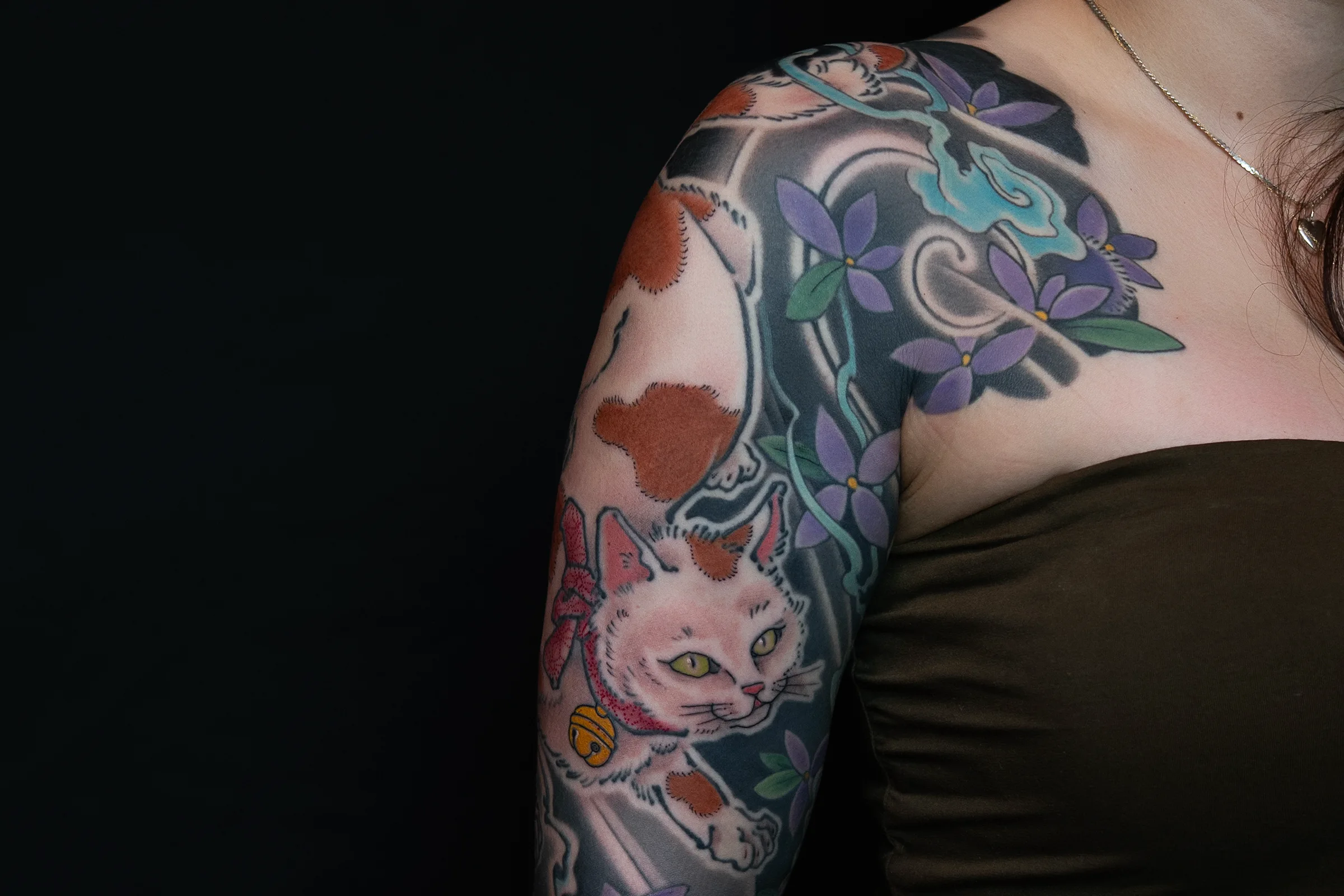
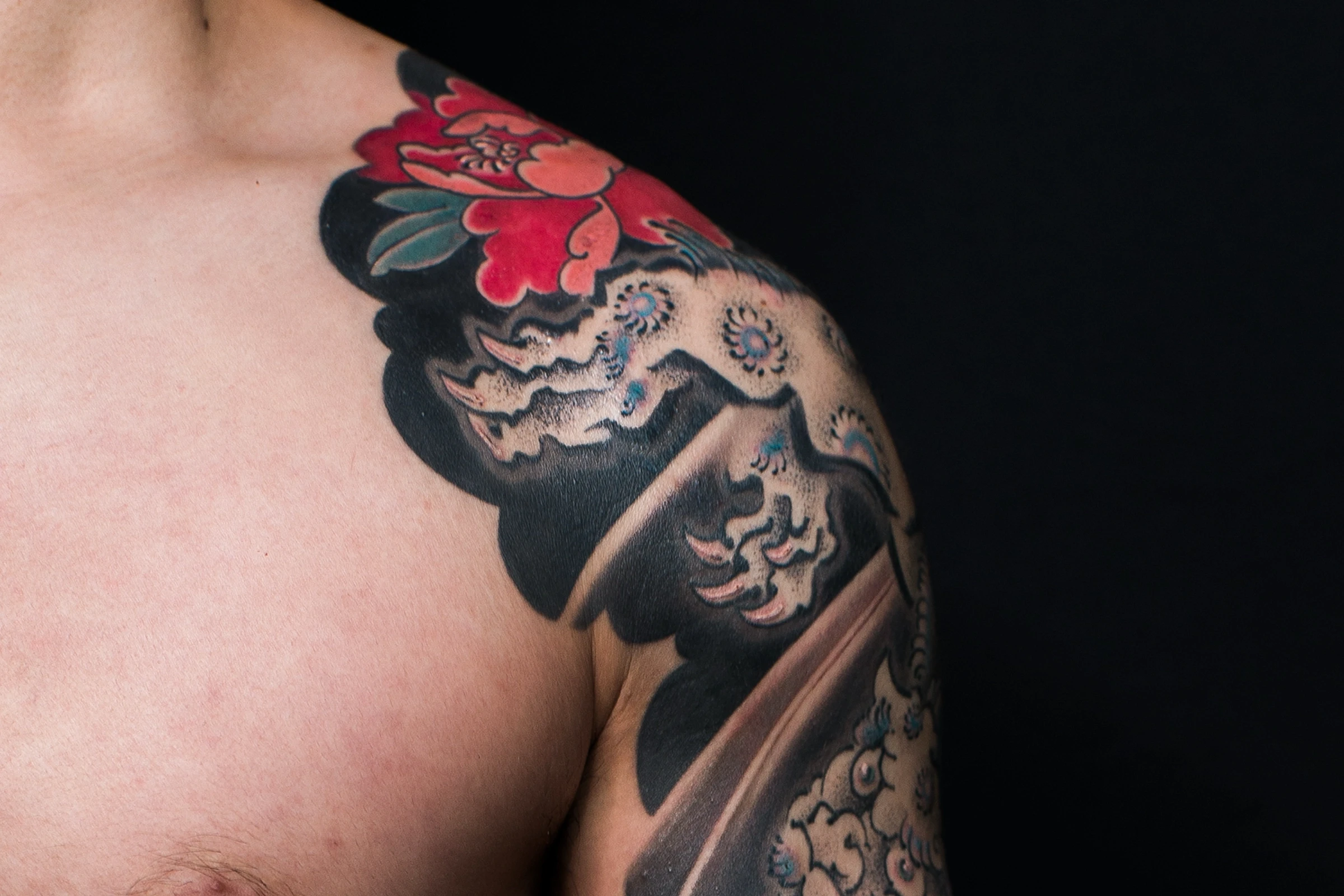
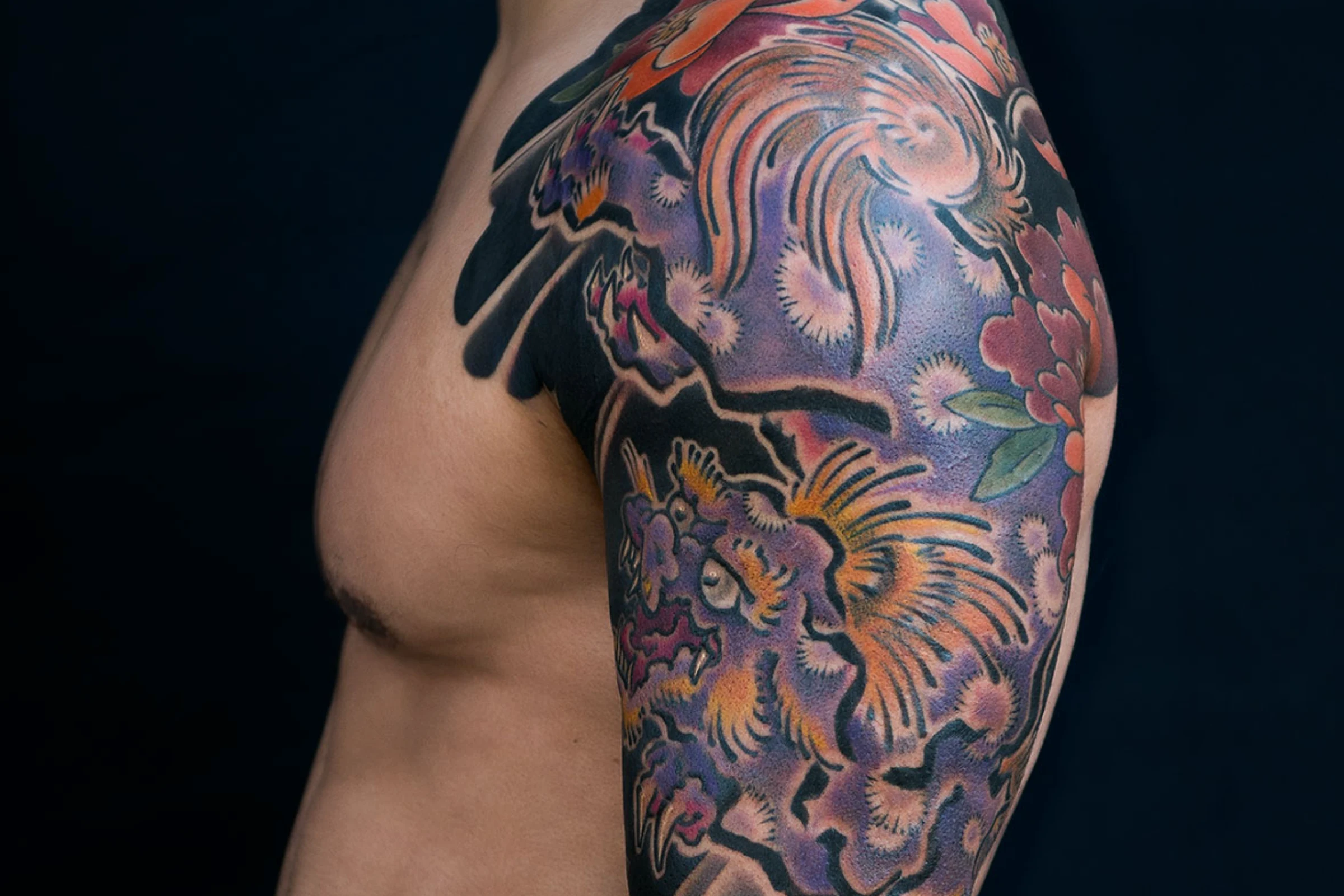
Completed projects where this principle carries the structure.






This Principle in Finished Work
Completed projects where this principle carries the structure.


This Principle in Finished Work
Completed projects where this principle carries the structure.
More from Style
Other terms and principles that shape how a large-scale piece is built.
More from Style
Other terms and principles that shape how a large-scale piece is built.
More from Style
Other terms and principles that shape how a large-scale piece is built.

From Principle to Piece
Every term on these pages is a decision made on a real body. The booking guide explains how a project begins and what I need from you to plan it.
From Principle to Piece
Every term on these pages is a decision made on a real body. The booking guide explains how a project begins and what I need from you to plan it.
From Principle to Piece
Every term on these pages is a decision made on a real body. The booking guide explains how a project begins and what I need from you to plan it.
© 2026 All Rights Reserved | Bardadim.Tattoo
© 2026 All Rights Reserved | Bardadim.Tattoo
© 2026 All Rights Reserved | Bardadim.Tattoo